Imagine a world where we could predict and receive high-certainty indications about diseases and health symptoms that might appear in our bodies. To make this dream come true, MS Tech, which specializes in biosensor technologies, offers an innovative development that aims to change the current early diagnostics paradigm, and most importantly, to care for everyone's health.
Since its inception, the company identified a primary need for an innovative scientific method designed to enable the detection and identification of molecules of explosives, toxic chemicals, dangerous drugs, and other materials—an area in which MS Tech achieved tremendous success. Its product line has been sold to more than 72 countries and is installed in airports, border crossings, power stations, nuclear reactors, ports, police stations, prisons, security companies, and more.
Revolution in diagnostics
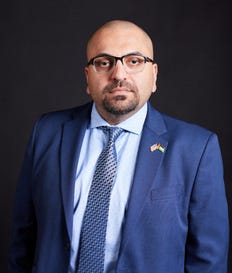
As in many cases across various sectors of the economy, the COVID period represented a turning point for MS Tech, which CEO Doron Shalom describes in detail. "Over the years, we received multiple requests for sensors and their adaptation to changing market needs. However, our business focus led us to concentrate exclusively on applications for the homeland security and defense industry. COVID changed this way of thinking. During this period, we worked with leading entrepreneurs and talented researchers to create a consortium supported by the Israel Innovation Authority that combines industrial companies and prominent members of Israeli academic institutions. Together we devised a new vision for the medical field focused on identifying biomarkers of diseases in body fluids (such as blood, urine, saliva, and others) at the point of care. The goal was to develop advanced sensing methods capable of providing an indication based on a simple test of biomarkers in body fluids. This represents a huge revolution because it enables us to obtain an indication about a disease that might affect a person even before it actually appears. This applies to common conditions like pancreatic cancer, fatty liver, Alzheimer's, mitochondrial diseases, and more. Once these begin to show, they might already be at an advanced stage. Our simple, easy-to-use, accessible method, designed to be available in clinics and homes, makes very early detection possible and could literally be a lifesaver."
Doron adds that "currently, most analyses are performed by taking samples and bringing them to a laboratory where expensive, slow, and cumbersome analytical systems requiring ongoing maintenance are operated. The clear advantage of our biosensors is that they yield results within minutes. Combined with IoT capabilities, this allows authorized personnel to make informed decisions almost instantaneously and without delays."
How does your technology change the status quo?
"The scientific method we invented and developed is based on piezoelectric crystals that, as we have already demonstrated, can be produced at different frequencies. In essence, the idea is to make these crystals capable of identifying a wide range of materials, from small molecules to bacteria, using a bank of different types of selective coatings - polymers, aptamers, and antibodies - which we know how to bind as part of an industrial manufacturing process performed at the highest level. We also have the ability to manufacture and adapt biosensors to different applications at low costs, compared to alternative methods performed in analytical laboratories."
You mentioned MS Tech's activity in the consortium. What do you mean?
"Our R&D efforts do not take place in a vacuum. They are part of the LIQUIDBX Consortium's activities The Consortium operates with the support of the Israel Innovation Authority, together with leading researchers from the Technion (Prof. Amit Meller), Tel Aviv University (Prof. Fernando Patolsky and Prof. Gilad Yossifon), Hadassah Ein Kerem Hospital, and Israeli diagnostic companies operating at the forefront of global technology, including Senseera, Salignostics, Minovia, Identifai Genetics, Pangea, and JaxBio. The support provided by the Israel Innovation Authority greatly contributes to the Consortium's activity and acts as a force multiplier by enabling academic and industry researchers to collaborate on groundbreaking projects at a global level."

How will the biosensor test be performed in practice?
"In the diagnostics application, the idea is to use a disposable biosensor that can be loaded with a blood, saliva, or urine sample. These biosensors support IoT (sensor-to-cloud) capabilities that make it possible to receive results from the field in real time through cloud transmission and transfer them remotely to medical personnel. In the American market today, the number of such tests is low as health authorities do not rush to perform them because of the high costs involved in transferring samples to central laboratories, complications in sample transport and cooling, and operational complexity and expense. This is where our technological innovation enters the picture. It allows receiving accurate indications based on diagnostic testing at endpoints within minutes and at a low cost. This is a revolution on a global scale."
What is the development status of the sensors?
"Our sensors currently integrated into detection and identification analytical systems already serve hundreds of customers in the homeland security and defense industries to their utmost satisfaction. Regarding medical applications, we are in advanced trial stages involving liquid biopsy samples in cooperation with other Consortium members. After demonstrating the method's feasibility and meeting the required sensitivity thresholds, we moved into further research and development stages using body fluid samples with the goal of proving feasibility based on a significant number of trials to obtain validation and apply for FDA approval."
What fundraising stage are you at?
"Beyond the existing product line, we are also developing nanosensors to be integrated into autonomous systems such as drones for airborne substance detection. In addition, we are working on the integration of sensing capabilities into mobile phones to allow the latter to smell spoiled food or wine, for example. These are applications for private consumers with amazing business potential. We enter 2025 with a respectable order backlog and growth capital fundraising initiatives to establish a "blue and white" (i.e., "Made in Israel") sensor production line that will support the expansion of our assembly lines in Southeast Asia and the US. This development will increase our production capacity using a business model that will allow us to supply our sensors and systems to a larger number of customers worldwide."
Do you feel a kind of "blue-and-white" pride?
"It's no small matter to develop a local industry of multiple-application sensors with a direct impact on many customers at the global level. We are experiencing a fascinating process where a veteran Israeli industrial company demonstrates that it is still strong and capable of staying at the forefront of global innovation. This is the place to thank the Israel Innovation Authority, the researchers, and other organizations for the trust they place in us and for their guidance and close collaboration in a series of projects. We have been selected by them time and again to represent Israel at technological innovation conferences worldwide. For us, this is a real achievement that reflects the Israeli spirit and industry in their full glory."
MS Tech Ltd.
Year established: 1998.
Founders and investors: Moshe Shalom, Doron Shalom, DS Ventures, and private investors.
Vision: "We wake up every morning with the joy of doing things and a will to bring technological innovation to the world."
In collaboration with MS Tech Ltd.
****