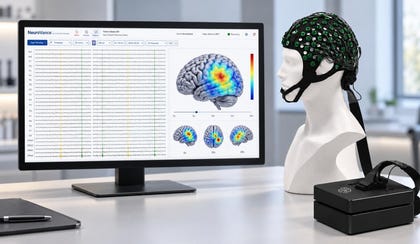
For years, brain researchers have grappled with a fundamental gap: the ability to know when brain activity occurs, versus the ability to identify precisely where it occurs. The Israeli company ELDA BrainTech seeks to bridge this gap with a technology that simultaneously combines EEG and fMRI, i.e. the ability to know both when and precisely where. This combination makes it possible to create five-dimensional brain mapping: three spatial dimensions showing where the activity takes place (x,y,z), a time dimension (t) showing when it occurs and spreads, and a functional dimension (f) describing its nature and its effect on brain networks. In this way, it is possible to examine not only which area of the brain is active, but also when the activity begins, what characterizes it, and how it spreads and changes over time within the neuronal networks.
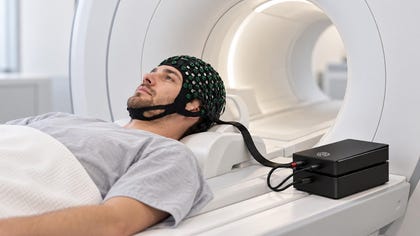
The technology was born out of years of research led by Prof. Talma Hendler and a team of researchers from the Sagol Brain Institute at Tel Aviv Sourasky Medical Center (Ichilov), in collaboration with researchers from Tel Aviv University. The challenge they faced preoccupies brain research centers around the world: how to measure subtle electrical signals inside an MRI scanner, whose operating environment generates significant interference that can mask them.
The solution the researchers developed, EEG-fMRI, is based on a cap built from a Dual-Array – that is, the use of a double electrode array and algorithms that distinguish between brain activity and the interference generated during the scan. This makes it possible to perform both measurements simultaneously and to link the question "When did it happen?" with the question "Where did it happen?".
From the Lab to the Patients
At ELDA, the result is defined as "brain mapping in five dimensions": a map that combines anatomical, electrical and hemodynamic information – related to blood flow and oxygenation – alongside functional information and the changes that occur over time. The goal is not to settle for identifying an active point in the brain, but to understand where abnormal brain activity occurs, how it spreads, and which brain networks are involved in it. In other words, to move from a static picture to a more dynamic understanding of how networks in the brain operate and communicate with one another.

The technology's first application focused on epilepsy, a disease that affects about 1% of the world's population, and about a third of whose patients do not respond sufficiently to medication. More than 400 EEG-fMRI scans have already been performed at the Sagol Institute at Ichilov, on patients referred, among others, from epilepsy centers across Israel. The experience accumulated has provided a clinical foundation and demonstrated the technology's ability to map epileptic activity and the networks associated with it.
This is a particularly significant challenge among patients with drug-resistant epilepsy. In the United States, for example, out of about 3.6 million patients, about 1.2 million are defined as drug-resistant. Although advanced treatment options exist today, the ability to precisely characterize the disease and choose the appropriate treatment for each patient remains a challenge. This where ELDA steps in.
Prof. Dawn Eliashiv, co-director of the Epilepsy Center at UCLA, has also joined the company's clinical activity. "Today we have very advanced treatment options for patients with drug-resistant epilepsy, but one of the central challenges remains the ability to distinguish which patients can benefit from them and what the right treatment strategy is for each of them," she says. "As the therapeutic toolbox expands, from surgery and ablation to neuromodulation technologies, the importance of precisely characterizing the source of the event and the epileptic activity associated with it grows, in order to tailor the appropriate treatment strategy to each patient."
But at ELDA, epilepsy is seen as only a first application. The same ability to map brain activity multidimensionally may in the future also be relevant to Parkinson's and movement disorders, sleep disorders, psychiatric disorders, and other fields in which understanding the activity of brain networks is of great importance. As a first step, the company is working to define the potential added value for the treatment of Parkinson's disease, including through a collaboration with the dopa x association.
One of the directions of development the company is marking for the future lies in the world of drug development. In the future, ELDA may enable pharmaceutical companies to track changes in network activity, compare dosages, and assess earlier whether a drug in development is indeed producing the desired effect.
Such a capability could also affect the design of clinical trials: helping to select suitable participants, to identify a response at an earlier stage, and to base decisions on measurement of the mechanism of action as well, and not only on symptoms and patient reports. For the pharmaceutical industry, the ability to shorten the path between scientific hypothesis and proof could have considerable clinical and economic significance.
The Brain Becomes a Technological Frontier
Interest in the brain is no longer limited to the world of medicine. Elon Musk is developing an invasive brain-computer interface through Neuralink; Sam Altman and OpenAI are backing Merge Labs, which is developing a less invasive approach; and Sergey Brin has invested considerable sums in Parkinson's research. The trend points to the brain as one of the most intriguing research and technology arenas of the coming years. The link between brain research and artificial intelligence is also growing tighter: a better understanding of how the brain learns, processes information and operates efficiently may contribute to research on the next generations of AI.
ELDA's place in this arena is different: it is not developing an interface implanted in the brain, but rather seeks to see, non-invasively, how human brain networks operate. From the company's perspective, the multidimensional data it will produce may be relevant in the future not only to medicine and drug development, but also to the fields of AI and artificial intelligence.
From an Israeli Breakthrough to a Global Platform
ELDA holds registered patents in various countries, and to date five scientific papers based on the technology it developed have been published. The company is supported by the Israel Innovation Authority and a group of prominent private investors, and is accompanied by a team of physicians and brain researchers from Israel and around the world.
The combination of EEG and fMRI has been studied worldwide for years, but according to the company, as of today there is no integrative system with a comparable clinical indication that has received FDA approval or the CE mark. ELDA is now preparing for the next stage: in a few months it plans to submit an application for FDA registration, and in parallel to conduct a research pilot at several leading medical centers in Israel and the United States, led by Prof. Eliashiv.
"Our mission now is to take a technology that was born at Ichilov, accumulated clinical experience in Israel and operated under the radar for years, and turn it into a global platform," the company says. "The first application is in the field of epilepsy, but going forward we see potential for additional indications and uses. If we succeed, ELDA will be able to offer medicine, drug development and even the AI industry a way to observe the most complex thing we know: the human brain in action."
For more info: elda-tech.com | Info@elda-tech.com
Partnered with ELDA Technologies