In facial plastic and reconstructive surgeries, whether due to disease or trauma, any defect or deviation in symmetry is easily noticeable. Yet meticulous planning cannot fully predict how tissue will heal, how swelling will subside or how the final contours will settle. "The main problem today is that doctors are essentially guessing how the tissue will look after the healing phase," explains Gideon Meyer-Brodnitz, CEO and co-founder of VisageX. "This stems from the fact that tissue is an unpredictable and complex factor, and even a little strain, or if the tissue doesn't receive the nutrition it needs, it can be damaged and lose volume."
"In the first weeks after surgery, swelling and local bruising, make it difficult to judge the final result. Therefore, when the patient comes for a follow-up appointment and is disappointed with the result, the doctor has limited options to help him, other than a revision procedure, which carries the same risks, or the patient needs to live with the existing outcome. In many cases, this leads to significant emotional distress and harm to the patients' quality of life. Traditional static implants do not solve this problem: because they cannot be adjusted after surgery. Moreover, they may interfere with the surrounding tissue and result with undesirable outcomes."
Existing solutions in the market are divided into conventional solid implants made of polymers, silicone or metal, which cannot be changed after implantation, or alternatively, injectable dermal fillers such as hyaluronic acid and autologous fat. "These fillers offer other approaches to restoring volume, they essentially produce swelling and definition rather than natural reinforcement with a stable enhancement of the structure," Gideon notes. "These materials can leak to other areas, they dissolve over a short time, and require patients to undergo repeated maintenance at significant financial cost."
The Implant that Continues to Change with the Patient
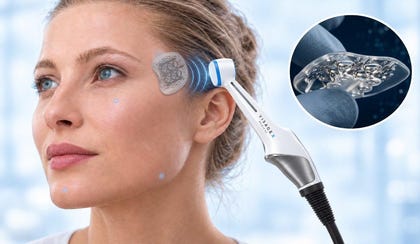
VisageX Medical's platform, a start-up founded in 2022, offers a different approach to this problem, some might say a revolutionary one: The technology developed by the company combines synthetic adjustable implants with an external accessory applicator that transmits a focused electromagnetic field. This field induces a controlled response in selected areas within the implant, allowing its shape and volume to be adjusted inside the body in the weeks and months following the procedure, without the need for additional surgery.
"We do not inflate the implant uniformly like a balloon implant," Gideon clarifies. "The technology allows us to change the shape and size in different areas of the implant. Additionally, the implant is foldable and designed for implantation through a small incision, making the procedure minimally invasive. Another advantage is that the implant itself has an open structure and is designed to encourage the growth of healthy tissue into it, making it integrate into the body more naturally – with the aim of reducing risks and side effects."
The initial applications are in facial reconstruction and aesthetics. "In the reconstructive field, the technology is designed for patients suffering from congenital defects, trauma injuries, or as a result of oncological treatments. For example, patients who underwent head surgeries to remove cancerous tumors and were left with a significant depression in the temple area," Gideon details. "In the aesthetic field, the implants are intended for enhancement and volume filling in the facial area, such as the chin, jawline and cheeks."
VisageX operates with the support of the Israel Innovation Authority and The Trendlines Group, an investment company. The foundational idea for the technology was conceived by one of the company's founders, Prof. Ebby Elahi, a world-renowned American surgeon, who years ago treated a teenager who suffered from cancer. Due to the radiation treatments he underwent, part of the teenager's face did not develop symmetrically, and he had to undergo repeated corrective surgeries over the years to replace the plastic implants as he grew. Prof. Elahi realized that this was a real pain point for patients, and this served as the inspiration for the adjustable implant idea.
VisageX is currently in the end of a pre-seed stage and is raising funds in conjunction with the crowdfunding platform – ExitValley. The company has approved patents, and additional patents are in advanced examination processes. The company has conducted pre-clinical trials to prove the technology and implant safety and is currently running a clinical study in Israel. "We chose to first treat patients who underwent cranial surgeries and were left with significant aesthetic damage, with the aim of evaluating the safety of the implant and its performance over time," Gideon says.
"At the first stage, the human trial examines the safety and long-term function of the implant. The future aspiration is to insert a compressed implant already at the day of the initial surgery, and to perform the adjustment and enlargement of the implant later, as needed, without the need of additional reconstructive surgery. Regarding the timeline, we estimate that the initial FDA clearance for commercialization in the U.S. will occur within 12 to 18 months from the completion of the current funding round, subject to testing and regulatory review."
Not Just the Face: The Potential Behind the Adjustable Implant
The market for implants and aesthetic and reconstructive procedures shows extensive financial volumes: According to the company's estimate, the facial implant market alone is expected to reach approximately $6 billion by 2035. Alongside this, the filler injections market is currently estimated at approximately $7 billion and is expected to double in the next 10 years. "Based on these figures, we estimate that our accessible market potential ranges between $1-3 billion," Gideon notes. "A significant portion of patients currently relying on large volume filler injections do not receive optimal long-term solutions due to complications, high costs, and the need for constant maintenance; an adjustable implant may be a more suitable alternative for them."
The company is currently focusing on implants for the facial area but is aiming for much more in the future. "Our initial focus is on products for the facial area, but the technology can also be applied in the future in other medical indications such as orthopedics, ophthalmology, ENT, etc.
uses. Each field opens significant additional revenue channels," Gideon explains. Ultimately, the main message VisageX brings to the world of surgery is summarized in the company's slogan: 'Surgery once, adjustment later.' "This represents a major change in the way surgeons approach treatment," Gideon notes. "Currently, pre-operative planning is critical, and final decision-making is done under stress and time pressure in the operating room, where the doctor cannot guarantee how the body will heal. Our technology is expected to provide surgeons with additional tools and degrees of freedom, allowing adjustments to be made after the body stabilizes with better tissue integration.
I can imagine a patient sitting in front of a mirror in the clinic while the surgeon fine-tunes the implant," says Gideon. "That is the clinical capability we are working toward." "Furthermore," Gideon concludes, "our technology is expected to lead to efficiency and economic savings for the healthcare system: reducing errors and reconstructive revision surgeries may reduce the burden on operating rooms, shorten waiting lists and save on the high costs of complex surgical procedures."
For more info: https://www.exitvalley.com/projects/visagex/?WebLang=EN
Crowdfunding platform: Exitvalley
Partnered with VisageX Medical