Recurrent inflammation caused by disease, injury, or aging - along with abnormal healing processes - can eventually lead to the accumulation of scar tissue. This increases tissue stiffness and gradually disrupts normal organ structure and function. This pathological condition, known as fibrosis, can affect the lungs, liver, brain, kidneys, and heart, and plays a role in a variety of chronic diseases.
Historically, fibrosis was considered an irreversible process. Even today, existing treatments primarily focus on slowing disease progression. However, a new approach to drug development for complex diseases like fibrosis explores a different possibility: moving beyond simply halting tissue scarring to actively stimulating the biological mechanisms responsible for tissue repair.
Surprisingly, the inspiration for this approach originated in cancer research. Prof. Yuval Shaked and Dr. Michael Timaner were investigating how tumors respond to anti-cancer treatments. They focused on the relationship between stem cells in the tumor microenvironment and treatment resistance. When stem cells are exposed to chemotherapy and other stressors, they react by secreting various substances, including proteins, enzymes, and active molecules, that influence their ability to survive the stress.
In the context of cancer, this response is highly problematic: the same survival mechanisms that help stem cells cope with damage also alter their environment, helping the tumor recover and thrive. But this observation sparked an innovative scientific question: Could this precise survival response be harnessed targeting tissue repair?
This concept forms the foundation of Remedy Cell's technological platform. Rather than administering live stem cells directly to the patient, the company utilizes the substances those cells secrete, a complex known as the secretome. In the laboratory, stem cells from healthy donors are subjected to controlled stress to induce the secretion of a specific blend of active compounds. The cells are then filtered out, and the resulting secretome is collected to create an off-the-shelf drug, which serves as the basis for their investigational product.
Turning Stress-induced Cellular Secretion into a Mechanism for Regeneration
Remedy Cell is led by CEO Ayelet Dilion-Mashiah, with Dr. Michael Timaner serving as VP of R&D. The therapy's roots lie in Dr. Timaner's doctoral research in Prof. Yuval Shaked's Technion laboratory.
"The literature already established that the tumor microenvironment influences tumor aggressiveness and treatment resistance. During my doctoral work, we discovered that mesenchymal stem cells exposed to anti-cancer therapies actually promote the survival of cancer stem cells, driving tumor growth and aggressiveness," explains Dr. Timaner. "Prof. Shaked and I wondered if this same response could be redirected toward tissue regeneration, and we began investigating it more broadly."
The researchers analyzed how various anti-cancer treatments affected stem cells and identified the specific substances secreted post-exposure. These secretory products were then tested across multiple models, including fibrotic diseases of the lung, liver, and skin.
"We discovered that different types of stress trigger distinct cellular responses," Dr. Timaner notes. "Consequently, the composition of the secreted substances - proteins, enzymes, fatty acids, and other molecules also changes. We remove the cells themselves and utilize only these secreted compounds."
According to Dilion-Mashiah, the cells are sourced from healthy donors. "We use allogeneic cells from healthy donors and process them in the lab to generate the specific secretion profile we need. Donor cells are preferable to the patient's own cells, which inherently contributed to the disease's onset. Furthermore, using the secretome rather than the live cells gives us meticulous control over the active substances being administered."
The company notes that this approach differs from most existing and pipeline drugs due to its multiplicity of active ingredients. Many traditional drugs rely on a single defined molecule targeting a specific biological pathway. In contrast, the secretome contains a comprehensive composition of substances derived from the cell's natural stress response, allowing it to influence multiple biological processes simultaneously.
In tests conducted by company, Dr. Timaner says, changes were observed in the expression of proteins responsible for breaking down and rebuilding the extracellular matrix, modulating immune system activity, and improving mitochondrial function. Combined, these effects are designed to remodel the fibrotic tissue environment and stimulate repair.
This complexity also presented a significant challenge. Because the therapy is a complex biological mixture rather than a single molecule, Remedy Cell had to establish a consistent manufacturing process under Good Manufacturing Practice (GMP) standards. This required meticulous characterization, standardization, and quality control to identify the product's contents and rigorously test its biological activity.
The product complexity is fundamental to the underlying development strategy. Fibrotic tissue does not result from a single malfunction, but rather a series of interconnected processes, including inflammation, immune cell activity, extracellular matrix accumulation, and altered cellular behavior. Therefore, the company reasons that targeting multiple pathways simultaneously is necessary to achieve tissue renewal, regeneration, and disease regression.
"The objective is not to fix a single biological mulfunction, but to leverage the diverse substances secreted by the cell to influence multiple pathways simultaneously, thereby enabling tissue regeneration," says Dr. Timaner. "We are continuously studying how this complex secretome affects the fibrotic environment. This naturally makes development more complex: we must understand the secretome's composition, identify which components drive its activity, and ensure batch-to-batch consistency in manufacturing."
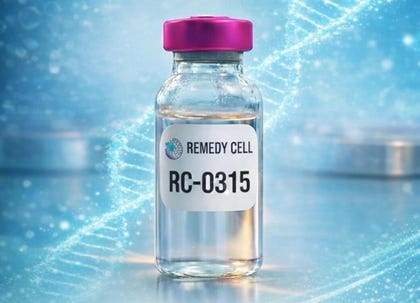
Remedy Cell chose to initially focus its development on idiopathic pulmonary fibrosis (IPF) - a chronic, terminal lung disease characterized by progressive scarring of lung tissue developed for unknown reasons. As IPF advances, lung tissue stiffens, severely impairing gas exchange. While existing medications can slow the progression, they cannot repair already scarred tissue.
"This is a severe disease with a critical unmet medical need," says Dilion-Mashiah. "That was a primary reason for starting with IPF, alongside the operational advantage that the drug can be delivered directly to the lungs via bronchoscope. We are currently conducting a Phase 1 clinical trial primarily focused on treatment safety in IPF patients, while simultaneously investing heavily in studying the therapy's impact on the underlying biological mechanisms."
Prior to human trials, the company completed extensive preclinical studies using both animal models and human lung tissues excised during IPF patient transplants. Exposing fibrotic tissue to the secretome showed structural changes and improvements in the fibrotic state. Animal models further demonstrated improvements in respiratory functional parameters.
These encouraging findings propelled the company into clinical stages following a successful Pre-IND meeting with the FDA, which provided positive feedback on the preclinical package and Phase 1 design, and subsequent approval from the Israeli Ministry of Health. While this initial stage emphasizes safety and tolerability, the company is concurrently gathering efficacy data using advanced tools like AI-analyzed CT imaging, blood (plasma) testing, lung fluid (BAL) analysis, and pulmonary function tests.
The transition from preclinical cell and animal models to human trials is a significant inflection point. At this stage, the company must demonstrate that efficacy in animals translates to human patients. This process includes establishing the optimal dosage and treatment regimen by balancing safety, efficacy, and duration of action. In later stages, these findings must translate into improved clinical parameters and enhanced quality of life for patients and their families.
Conducted across several medical centers in Israel, Remedy Cell's Phase 1 trial aims to confirm safety and capture early efficacy signals, providing preliminary data on whether the technology can alter the disease's trajectory. This foundational study will pave the way for advanced clinical development, eventually expanding into a multi-center international trial.
From Proof of Concept to Human Treatment
Founded in 2020 and headquartered in Haifa's MATAM Park, Remedy Cell conducts its R&D in Israel alongside international advisors, including Medical Director Dr. Paul Ford, who has led major IPF studies, as well as key opinion leaders Prof. Toby Maher, Prof. Martin Kolb, and Prof. Mordechai Kramer. The company is backed by investors such as the Tadmor Group, the Technion, European pharma company Bioprojet, and also supported by the Israel Innovation Authority.
"Unlike other patents protecting secretomes, our intellectual property specifically covers secretomes generated by activating stem cells through controlled, induced stress generated by low dose anti-cancer treatments, as well as the therapeutic use of such secretomes," explains Dilion-Mashiah. "Alongside our scientific breakthroughs, we have successfully transformed a highly complex biological system into a reproducibly manufactured product with defined release criteria."
"Beyond meeting the clinical manufacturing requirements for our current research, we are continually deepening our understanding of the product, its individual components, and its mechanisms of action," adds Dr. Timaner.
Because the secretome functions as a platform technology, clinical trials in IPF could provide proof of concept for its application for fibrotic diseases in other organs. Researchers highlight the core advantage: rather than relying on a single active ingredient, the secretome is a biological complex capable of targeting multiple pathways simultaneously. By adjusting the specific stressor applied to the stem cells, the resulting secretome can be customized to meet the clinical needs of different tissues and diseases. While each new indication will require dedicated R&D and independent clinical validation, the company's accumulated expertise will provide a significant advantage.
Drug development is a lengthy process, a reality Remedy Cell readily acknowledges. Dilion-Mashiah states the goal is to advance through subsequent clinical stages in the coming years, targeting around 2030 for the potential commercialization of their first IPF therapy, subject to trial outcomes and regulatory processes. The strategic business plan involves seeking a partnership with a major pharmaceutical company following Phase 2 trials to support advanced clinical and commercial development.
Can a cellular stress-response mechanism be repurposed into a therapeutic tool for regenerate diseased tissue?
"Today, we are at the critical stage of proving this in humans," concludes Dr. Timaner. "We have impressive preclinical results that provided the foundation to move forward, and now we await the clinical trial outcomes."
If successful, this innovation will extend far beyond a single lung disease product. It could pioneer an entirely new paradigm for treating damaged tissue: rather than replacing cells or targeting single molecules, this therapy could harness the innate repair systems of healthy stem cells under stress to drive the body's healing processes.
The information in this article is general and does not constitute a recommendation, professional opinion or a substitute for medical diagnosis and consultation with a qualified and professional entity. Treatment adaptation is done individually, according to each person's condition, indications and professional discretion.
For more info: remedycell.com
Partnered with Remedy Cell