Reinvention is never easy, especially in turbulent times, but that's exactly what BioBetter has managed to do. A biotech startup founded in northern Israel in 2017, its goal was to revolutionize production of the high-value human- and animal-origin proteins essential to the cultivated meat industry by growing them in plants in greenhouses and open fields - dramatically reducing costs and catalyzing the sector.
But external events shuffled the deck. First, the food-tech sector collapsed swiftly and brutally, and the stock of food-tech companies crashed. Many listed players,fell from peak valuations to single digit share prices. BioBetter, for its part, had just raised $1 million and was negotiating another $5 million when the downturn hit and investors vanished.
Then the war with Hamas erupted. Located in the Tel Hai industrial park in Israel's north, BioBetter was hard hit. It was about to launch a new production facility and harvest its crops when it had to evacuate the north. Its operations ground to a halt. Fields and labs were abandoned.
The company found itself at a crossroads, grappling with geopolitical instability and a collapsed market. It urgently needed rethink its future. "We had to find a quick solution," says Dr. Dana Yarden, BioBetter co-founder and CEO. "Of our 50 employees, a quarter were called to IDF reserve duty. Almost everyone else had to evacuate their homes."
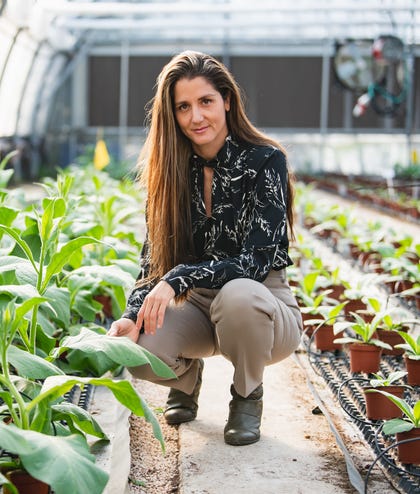
Within 10 days, BioBetter had relocated west to Yokneam. The beginning was tough. Some employees quit and the workforce dropped to 15. They faced stress and burnout, loss of their homes and normal lives. "We had to ask: What can we do with our technology in a market that suddenly seemsed irrelevant?" says Yarden.
The Pivot to Cosmetics and Medical Aesthetic
"We looked at what we'd achieved and concluded that the logical answer was to pivot into the cosmetics and aesthetics field," she recalls. "Why? Because this market uses growth factor technology and advanced bioactives we already had. And with cosmetics requiring only tiny quantities of active ingredients, we could be profitable even with small-scale production."
BioBetter thus changed direction. It began by engineering a new human-compatible growth factor and adapting its tech to the field of aesthetics. "We found ourselves reinventing BioBetter, taking it into an area we'd never explored, all the while navigating a challenging global and local climate," says Yarden.
Shifting Focus: Technology at the Cutting Edge of Cosmetics
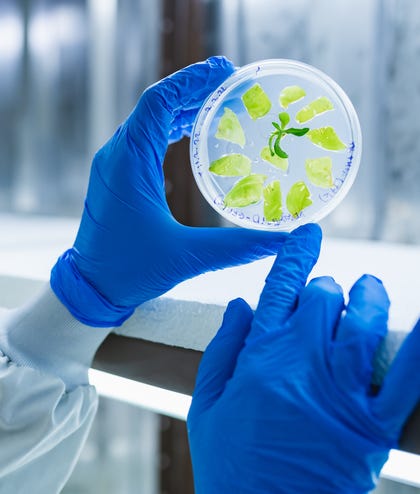
This shift required adapting the technology to meet human needs rather than animal-based applications. Growth factors are proteins essential for cell development in mammals. They are not only critical in biomedical and cosmetic applications but also represent the most expensive component in cultivated meat production. BioBetter had already developed a proprietary protein-engineering platform that enhances the stability and resilience of these complex molecules, enabling them to resist temperatures and conditions that typically degrade them. It patented its unique approach and piloted it at commercial scale, processing up to hundred kilograms of plant material per day.
"We solved the core challenge for both cultivated meat and cosmetics," says Prof. Oded Shoseyov of the Hebrew University, a co-founder of BioBetter and its Chief Scientific Officer. "The need is to develop products that can withstand harsh environmental conditions. Growth factors have traditionally struggled here, but we've significantly stabilized them by linking them to cellulose particles. Our technology is applicable to both the food-tech and cosmetic markets, with the latter currently more relevant."
Growth factors, he explains, can help rejuvenate the skin's appearance, reduce the look of wrinkles, and support hair and scalp health. "This is the cutting edge in aesthetic cosmetics," he says. "Until now, such products cost consumers hundreds of dollars for just a few milliliters. Our technology has the potential to make this innovation accessible to a far broader market. We can produce these products while maintaining long-term stability and effectiveness . It represents a scientific breakthrough with applications in both cultivated meat and cosmetics, industries that are consistently dynamic and driven by innovation."
Cultivated Meat Is Not Off the Table
Despite its pivot, BioBetter has not abandoned its original mission. "We're not ruling out cultivated meat," stresses Yarden. "We're ready to enter any market that can benefit from our products. Our current involvement is limited, and we're cautious about heavy investment until there's a clear market, but we'll return to cultivated meat when the market rebounds. Cultivated-meat companies seeking collaboration will find our full support. In the meantime, we're focusing on a more viable growth area with lighter regulation and existing comparables - without our unique advantage."
Back to the North - and Looking Ahead
In March 2025, when residents and businesses were permitted to return to northern Israel, BioBetter was among the first. It reopened its doors in Tel Hai and resumed production of its innovative blue-and-white agro-biotech.
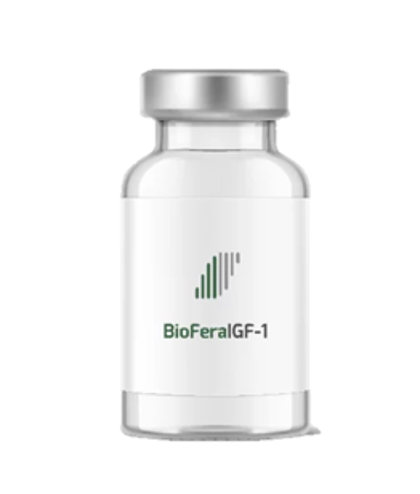
"After everything we've been through, we're now back at full speed," says Dr. Yarden. "We're raising investment for the next phase and are close to signing international deals, particularly with cosmetic companies eager to develop joint products using our platform. These include growth factor and exosome-based formulations, areas where BioBetter's stabilization technology gives it a competitive edge."
An Israeli Success Story
Dr. Yarden sees BioBetter as a success story. "Surviving this past year is a success in itself!" she says. "In 12 months, we created a new product line, entered a new market, attracted global interest, and brought our company and people back home to the north."
The company is aiming to raise further investment to deepen its product pipeline and become a global standard-setter in cosmetic bioactives- all from northern Israel. "We're continuing what our enemies tried to stop — and failed," says Dr. Yarden.
In collaboration with BioBetter