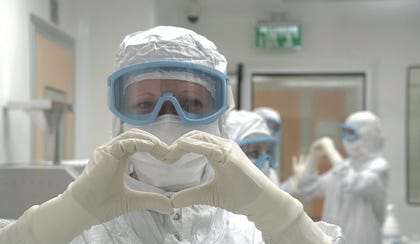
The journey of a biological industries company begins at Kibbutz Beit HaEmek in Western Galilee and reaches the forefront of international activity in the field of medical technology. The company, founded 42 years ago, now plays a significant role in the development of many medical treatments thanks to its advanced capabilities in the production of media for growing animal cell cultures.

David Fiorentino, VP R&D at Biological Industries, has been with the company since its humble beginnings at the kibbutz to this day. "At the beginning, our R&D department consisted of two employees - myself included," he says, smiling. "Today we have 16 researchers in our department, and our work over the years has remained the same: to develop new and advanced products."
- What's unique about the substrates for growing cell cultures that you develop? What are they used for?
"These are actually liquid solutions that simulate the natural environment of the cell," Fiorentino explains. "Whether it's a cell of the human body, of a large animal, or a single-cell bacterium, every cell needs certain conditions to grow. The media we develop and manufacture at our plant are designed to provide all the necessary elements for the cell: salts, sugars, amino acids, vitamins, appropriate pH level, and many other parameters.
"Initially, we were involved in the development of basic growth media for cells, but over the years we have expanded to develop and manufacture unique media for growing cells, such as embryonic stem cells, adult stem cells, or immune cells for immunotherapy treatments. Today, the company is also engaged in the development of complementary products for the needs of cell therapy and immunotherapy, such as dedicated solutions for freezing and thawing cells, causing cells to adhere to specific surfaces, and products that help stem cell differentiation."
Cell therapy treatments
According to Fiorentino, the uniqueness of Biological Industries lies in its ability to adapt growth media to the needs of the rarest and most sensitive cells. "The most important component for cell growth is the growth medium. There are generic growth media that may be suitable for different cell types, but we are currently focusing on unique media designed for cells in the medical field. The need for solutions of this type comes mainly from advanced medicine for cell therapy treatments."
In modern medicine, cell therapy is one of the fastest-growing and most promising fields. Simply put, cell therapy treatments are based on injecting live cells into the patient's body to treat various medical conditions. The basic principle of cell therapy is based on the ability of new, healthy cells to replace the damaged or diseased cells in the patient's body.

For example, cell therapy treatments have been used for many years, including bone marrow transplantation in blood cancers and epidermal cell transplantation to restore the skin layer in burn victims. Newer therapies use stem cells to treat a variety of cancers, heart disease, liver disease, and a host of other dangerous medical conditions. The world of medical research is currently working on a long list of new treatments based on stem cells that may lead to breakthroughs on various medical fronts in the future.
Enlisted in the fight against Corona
After having operated since its establishment under the full ownership of Kibbutz Beit HaEmek, today Biological Industries is wholly owned by the German company Sartorius. Operating in many countries worldwide, Sartorius is a leading supplier of equipment, tools, and raw materials to pharma companies, medical centers, and research laboratories.

"The media produced by Biological Industries are used in universities, research institutes, research teams in industrial companies, as well as many of the largest and most important pharma companies in the world," says Adi Cohen, General manager of Sartorius Israel and of Biological Industries. "Among others, our products are sent to companies such as Novartis, Teva, Novo Nordisk, and virtually every major pharmaceutical company. In recent years, we have seen quite a few companies that have decided to focus on the field of cell therapy and come to Biological Industries to use our advanced products and rich experience in this growing field."

Various companies that use the products of Biological Industries are engaged in cell treatments to build bone, strengthen the immune system in the human body, and various other medical uses. During the COVID-19 period, the vaccine for the virus developed at the Institute for Biological Research in Ness Ziona was based on a growth medium from Biological Industries. "To develop the vaccine, the Institute of Biology needed a medium for growing the virus and they chose ours " Fiorentino notes.
The contribution of the company during the outbreak of the global pandemic was not limited to supplying products for research and development purposes. "Very quickly, after the onset of the coronavirus, Biological Industries understood the need to produce liquids for coronavirus testing," Cohen recalls. "This is an important component of the swab test we all know: after collecting the sample with the swab, the swab is placed in a test tube with a suitable solution. The process of manufacturing the solution is complex and requires a deep understanding of its composition and the processes of sterilization and aseptic filling; this is knowledge we have."

"Biological Industries became the largest manufacturer in Israel of test tubes with the appropriate solution for COVID-19 testing," he notes. "Within a few months, we set up a manufacturing and filling facility and manufactured more than 15 million different test tubes. Between March 2020 and mid-2022, the entire system mobilized for this important goal."
Identifying cancer cells
As noted, cell therapy has been growing extensively in recent years. "Interest in cell therapy sparked about 18 years ago," says Fiorentino. "At the beginning, we dealt mainly with embryonic stem cells, but later the focus shifted to pluripotent stem cells, which are cells that are not differentiated like embryonic cells, but originate from mature tissues. This change came about after a researcher named Yamanaka, who won the Nobel Prize, discovered that differentiated cells, such as skin cells, could be returned to a state of embryonic stem cells. In other words, we take differentiated cells, turn them back into undifferentiated cells, and then differentiate them according to our needs. This breakthrough greatly advanced research in the field and gave rise to a vision of almost unlimited possibilities."
The main advantage of using differentiated stem cells lies in the fact that it is an autologous transplant: the cells are taken from the patient's body and returned to it. "For this reason, there is no fear of implant rejection," he explains. "The big challenge in cell therapy is making sure that all the cells you transplant into a patient are perfectly differentiated into the area of the body where they are transplanted. Otherwise, there is a concern of the development of cancerous tumors. One undifferentiated cell is enough to create a cancerous tumor."
Along the way, stem cell research began to focus on adult stem cells. These are cells that have undergone initial differentiation but have not yet completed their specific differentiation into the various tissues in the human body. "These are cells that have gone through a stage and can no longer differentiate into all tissues in the body, but can still differentiate into more than one tissue. These cells are very easy to separate from an adult. You can take adipose tissue, bone marrow, or blood and separate these cells easily."
Another branch of cell therapy is immunotherapy, which is based on genetic manipulation of immune cells. "With genetic modification, we give T cells the ability to recognize cancer cells," Fiorentino explains. "This growing field began with cancers like leukemia and lymphoma: the treatment called CAR T is based on inserting the upgraded cells into the patient's body to destroy the cancer cells. CAR T technology was developed at the Weizmann Institute of Science, headed by Prof. Zelig Eshhar. The field of immunotherapy has expanded in recent years to a new range of treatments, including genetic manipulation of various types of cells and treatments for other cancers."
Advanced and meticulous treatment
Adi Cohen says that the decision by Sartorius to acquire Biological Industries was natural. "Biological Industries is one of the strongest players in the world for complex and specialized growth media, suitable for cell growth for cell therapy or immunotherapy," he notes. "This is a field that Sartorius aspired to expand into, so the proven knowledge and capabilities of Biological Industries fit it like a glove. In contrast to the production of generic media, which is relatively simple, the media in which Biological Industries specializes require advanced and meticulous production. These media are the basis for the most important therapies in cell therapy and immunotherapy."
Today, Sartorius works closely with Biological Industries, and the products of the Israeli company complement their existing line of products. "Today it is clear to everyone that the market is moving into the field of cell therapy," Cohen concludes. "For this reason, Sartorius chose to partner with Biological Industries. There is no doubt that the field of advanced media is essential for the new generation of cell therapy treatments, and the experience of Biological Industries in this field is of tremendous significance."
In collaboration with Biological Industries