While many companies focus on standard machines and off-the-shelf solutions, Arpil Technologies operates precisely where the challenges begin: complex, customized projects that require deep engineering expertise and the ability to develop a solution from scratch. "We don't sell a catalog of machines," explains Avi Maislish, co-CEO and head of business operations at Arpil. "We solve complex manufacturing problems through advanced automation."
Engineering solutions others cannot build
Arpil Technologies was founded by Avi Maislish and Roni Eliyahu after many years in the Israeli automation industry. The two identified a growing need among factories and manufacturing companies for customized solutions – ones that cannot be purchased as an off-the-shelf product.

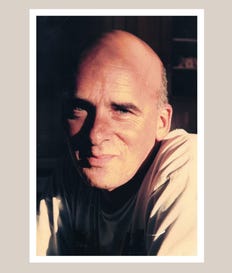
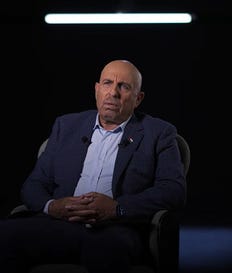
Eliyahu, with decades of experience in developing automation systems and industrial machines, leads the company's engineering and technological divisions. Maislish, a mechanical engineer with extensive experience in management, marketing, and business development, leads client relations and business development.
"I tend to call Roni 'the dean of creative engineering.' He has significant strengths in finding solutions that require out-of-the-box thinking. In many ways, his creativity is the company's foundation," Maislish says. Eliyahu returns the compliment: "Avi is someone people in our market really respect. Beyond that, he has significant input in every project we undertake. At the beginning, we always hold a brainstorming session and think together about how to approach the client's needs and how to reach the necessary solution. From there, when we move to the next stage, I sit with our mechanical engineer and convey the concept we've developed. The engineer then translates that into a machine that goes into production."
The combination of deep engineering understanding, broad industrial experience, and the ability to think outside the box has made Arpil a company that many factories turn to when existing solutions do not meet their needs.
Eliyahu: "There are projects that other companies simply are not willing to take. Those are precisely the places that in terest us – the places where a new solution needs to be invented."

Maislish: "All our projects are custom-tailored to client requirements. For anyone looking for a generic standard machine that can be imported from China – we are not the right fit. Our strength is providing solutions for non-standard requirements, which often demand creativity, extensive thought, and even risk. Nevertheless, we take on projects for machines that don't yet exist and strive to provide unique solutions."
Eliyahu: "Every project is significant for us, whether it costs 100,000 shekels or 2 million shekels. This approach keeps clients coming back repeatedly. We have quite a few clients who bought one machine, saw that it was good – and came back to purchase another. There are even clients who have already bought five or six machines. We also make sure to provide the highest level of after-sales service. Fortunately, it's not often needed because when a quality machine is built, it rarely requires servicing once operational."
Beyond automation: a strategic partnership for industry
Unlike many automation companies that operate as integrators of existing equipment, Arpil operates with an engineering problem-solving approach – focusing on solving the client's manufacturing problems, not just building a machine. The process begins with a deep understanding of the work environment, bottlenecks, workforce limitations, quality requirements, environmental conditions, and production targets. The company develops and manufactures a wide range of systems: automation systems for production lines; smart assembly machines; pick-and-place systems; vision and computer vision systems; automatic inspection and quality control solutions; advanced adhesive machines; automation for the pharmaceutical and medical industries; smart packaging systems; and AI-based solutions for manufacturing processes.
Eliyahu: "Our specialization is in providing automation solutions for packaging lines. We have already produced many such machines, but we also manufacture machines in other areas. Over time, we began to receive large, complex, challenging projects that require creative thinking to find automation solutions for various operations performed manually."
Most of the company's clients are consumer goods companies: food, cosmetics, pharmaceutical, chemical, and plastics manufacturers. As the company grew, clients from various industries were added. "We are not locked into a specific industry; rather, we provide automation solutions for all industrial sectors, from any branch," says Avi.

Industry 4.0 as part of the industrial future
In recent years, Arpil has identified a profound shift in market needs. While automation was primarily aimed at reducing labour costs in the past, today it has become a strategic tool that enables factories to cope with labour shortages, improve quality, ensure consistency, and increase output. "Today, factory owners tell us: 'I have a production line, but I don't have workers to operate it,'" Maislish recounts. "The goal is to create smart systems that perform complex operations automatically, precisely, and continuously."
As part of this development, the company integrates into its projects: artificial intelligence systems; smart cameras for identification and quality control; real-time process monitoring; autonomous inspection systems; integration between mechanics, software, and control; and smart manufacturing solutions. The vision is not just to build machines but to help factories transition to the advanced manufacturing world of Industry 4.0.
From specific projects to developing unique technologies
Arpil aims to increase the number of projects it has completed from over one hundred to many hundreds. The company's vision is to undertake as many projects as possible, including those that other companies prefer not to deal with or cannot handle due to their complexity. The more challenging and complex the project, the more Arpil's strengths come to the fore.
Alongside customized projects, Arpil is working to develop unique solutions with broad commercial potential. One of the most prominent current projects is being carried out in collaboration with an Israeli startup and involves developing a machine that is first of its kind in the world. Additionally, the company is developing advanced systems for the energy, medical, and smart manufacturing sectors.
Maislish: "Almost all the projects we undertake are prototypes or unique, one-off machines. In other words, we create something from nothing – and not every company is capable of doing that. However, there is also an aspiration that a unique machine we build could become a solution that other clients will use in the future, even to the extent of serial production."
Medical automation and complex solutions
One of the advanced projects the company is currently working on is an automatic system for packaging a medical device intended for operating rooms, without human contact. The system integrates: robotics and full automation; AI-based vision systems; automatic quality control; sterile packaging; and real-time process integrity monitoring. The machine can automatically perform an entire process including component feeding, packaging, quality control, sealing, and labelling. "This is a project that combines almost every technology existing in the world of automation," Eliyahu explains. "Such systems require a very high level of engineering."
The company notes that systems of this type offer clients a range of advantages, including: increased output; reduced reliance on human labour; improved consistency and quality; fewer instances of human error; compliance with stringent quality standards; and significant streamlining of manufacturing processes.
A small company with the capabilities of a large corporation
Although the company has fewer than ten employees, Arpil has already completed over a hundred projects in the Israeli and international markets, across a wide range of fields such as food, pharmaceuticals, cosmetics, plastics, chemicals, medical equipment, energy, and advanced manufacturing.
A significant portion of the machines developed by the company are also sold outside Israel, including to the United States and Canada.
"We do not aspire to be a giant factory that produces standard machines," Eliyahu says. "Our goal is to continue to be a creative company that knows how to execute highly complex projects."
Personal service and full involvement
One of Arpil's key advantages is the direct involvement of management in every project, with both founders personally overseeing the specification, design, manufacturing, and implementation processes. "Our clients know they are not just speaking with salespeople," Maislish says. "They work directly with the people who design and lead the solution."
According to the founders, the high level of service is one of the main reasons many clients return for additional projects. "There are clients who have already purchased five or six different systems from us," Eliyahu recounts. "For us, every project is a long-term relationship."
The future: Israeli industrial innovation with a global horizon
Arpil believes that the coming years will bring a significant increase in demand for smart automation, especially in fields requiring the integration of engineering, software, artificial intelligence, and customisation capabilities.
The company plans to expand its activities in the areas of: Medical Automation, Smart Manufacturing, vision and AI systems, advanced energy solutions, and customised manufacturing systems for global industry.
"Industry is changing rapidly," Maislish concludes. "Those who succeed in the future will be those who know how to connect engineering creativity, advanced technology, and a true understanding of client needs. That is precisely where we operate."
For more details: avi@arpil-tech.com
In cooperation with Arpil Technologies.