She explains how organizations must prepare for these new threats and why entrepreneurial thinking from a young age is the last line of defense
"The world is currently facing three major cyber threats that are completely changing and will change the rules of the game: the collapse of supply chains, the rise of rogue AI agents and the anticipated maturation of quantum technology. The latter is expected to crack, within a few years, the encryption of classified materials in sensitive areas such as security and medicine," this is the warning from cyber entrepreneur Ruth Mary.
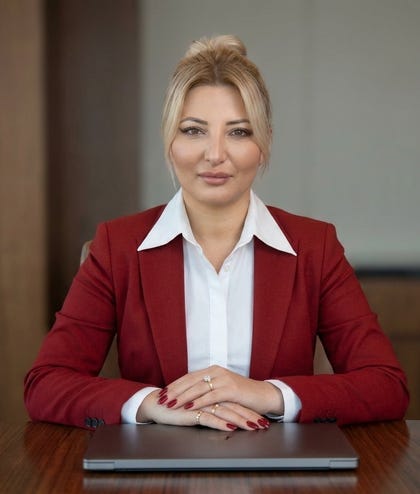
According to her, we are currently witnessing the complete erasure of the line separating inter-state cyber warfare from commercial information security. As a result, the global business sector has become the main battlefield where powers wage silent wars, but private companies bear the direct impact. "CEOs and decision-makers can no longer be content with passive risk management. They must understand that reality demands an immediate shift to an active and offensive defense policy," she warns.
Annual Damage of Ten Trillion Dollars
Mary is the founder and partner of the operational cyber group INTENSITY Global Group and of her fully owned ARL Technologies Group. Based on various researches, she estimates that the direct and indirect economic damage from complex, state-sponsored cyberattacks is expected to exceed the ten trillion dollar mark annually worldwide. This amount is roughly equivalent to Japan's annual GDP, one of the world's largest economies. "It's no longer just about isolated money thefts or financial fraud," she clarifies. "This is a calculated and deliberate strategy by hostile nations, aimed at undermining the economic stability of the Western bloc, disrupting free markets and collapsing giant brands."
Let's talk about the first threat you mentioned, the collapse of supply chains and damage to critical infrastructure.
"It's important to remember that supply chains and physical infrastructure – energy, water, transportation, communication and so on – are the main artery of the global economy. Sophisticated cyberattacks that have already been carried out and targeted against seaports, logistics centers and critical infrastructure have proven that a digital shutdown of even a single supplier leads to a complete halt of production lines on the other side of the globe. The shutdown of a major port, for example, can cause losses of 200 to 400 million dollars per day, but the cumulative effect is even greater. This stems from severe damage to inventories, consumer trust and the reputation of companies, and ultimately also leads to heavy fines on companies from regulators. And we haven't even talked about the insurance implications."
"Another case illustrating the extent of the risk is the cyberattack that affected the shipping giant Maersk and caused it approximately 300 million dollars in damage. Attacks attributed to the Chinese group Volt Typhoon, which targeted infrastructure in the U.S., also illustrate the potential damage."
"All these are enormous damages that could, in the future, collapse entire economies. Decision-makers are beginning to understand the severity of the threat, but in my estimation, not yet sufficiently. Systematic explanation is needed here with countries and businesses, because without fundamental treatment and budget allocation, we will not be able to properly deal with these cyber threats."
What about the rise of AI agents?
"Many organizations are implementing autonomous AI agents to boost productivity and efficiency, which is understandable, but in the absence of tight control, these agents become 'rogue agents' and go out of control. They leak source code, take sensitive data, create unprecedented cyber exposures and leak classified materials to the open network. An autonomous agent can operate without sufficient oversight, especially when granted extensive access permissions. This can ultimately lead to a sharp drop in companies' market value, loss of proprietary assets and unprecedented lawsuits."
You're talking about undermining encryption methods currently used to protect information and the "ticking of the post-quantum hourglass." What do you mean?
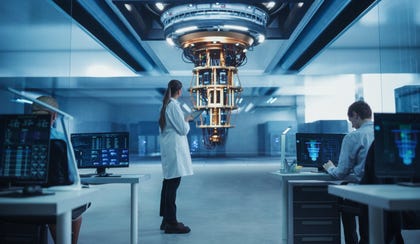
"The strategic worldview of attackers – whether they are individuals or state-sponsored – is currently based on collecting and storing encrypted data, from financial and security information to sensitive medical data. The approach is: 'We will capture the information now and crack it when quantum computing technology matures.' Once the technology reaches maturity, traditional encryptions will be broken, and the most closely guarded organizational secrets will be exposed in a way that will lead to mass bankruptcies."
"The post-quantum era hourglass is already ticking, and if we don't change the rules of the game and switch to post-quantum encryption now – not in three or four years – all secrets will be exposed. On this matter, I have a clear message for businesses: If you don't prepare budgets and act proactively, including training suitable personnel, regulation and economic collapse will knock on the door and find you unprepared, with all the disastrous consequences that can result."
The Key – Education from a Young Age
Amidst this digital anarchy, Mary sets a clear condition for coping: maintaining human supremacy. "If we don't understand the importance of the 'Human in the Loop' (the human in the decision-making loop), we will lose. Automated defense systems fail without skilled human management. The campaign will not be decided solely by changing code or technology, but first and foremost by deep insights and refining the human factor."
According to her, this is an urgent mission that requires educating and refining human capital from a young age. "If we don't start teaching how to deal with these complex problems, develop critical thinking and provide practical tools already in middle school – we will fail ourselves. We cannot wait until age 20 to build the next generation. We must create an entire ecosystem that prepares young people for the new era," she says.
Another part of the required preparation, she says, concerns the ability of large organizations to adopt open innovation and integrate external technologies. In a professional panel she moderated at the Information Technology Bureau conference, Mary emphasized the importance of a proper connection between large corporations and early-stage startups: "Large corporations are not always able to adopt new technologies quickly. Proper preparation – through accelerators, dedicated teams and showing empathy for the challenges of startups – is a net gain for both sides."
Technology, Policy and Human Capital
We caught up with Ruth Mary on the first day after the conference, just after she stepped off the stage and finished moderating the main startups panel, and a minute before she rushed to the launch event of the 8200 Association's School of Entrepreneurship – the place where field operatives come to find their next technological partner.
We used this narrow time window to understand from her what message she would like to convey to the business sector. "I believe that dealing with cyber threats requires a combination of technology, organizational policy and skilled human capital," she replied. "Advanced defense systems are part of the solution, but they are not a substitute for risk management, oversight and the human ability to make decisions under uncertainty. Ultimately, responsibility, navigation, judgment and the preservation of the global economy will continue to rely on a sophisticated, entrepreneurial, proactive, ethical and skilled human factor."
From Cyber and Entrepreneurship to Technological Education
Ruth Mary is an 8200 alumna, a serial entrepreneur and a mentor. She is, as mentioned, among the founders of the operational cyber group INTENSITY Global Group, 51% of whose shares were acquired by the public company "Accel Solutions." Mary continues to hold shares in the company, and alongside this, she holds control in additional companies and mentors startups in their market entry phases, focusing on solutions with scientific and engineering depth. Her professional expertise led to her selection as a judge at the international scientific conference CSCML – the International Symposium on Cybersecurity, Cryptography and Machine Learning. Mary also dedicates a significant portion of her time to public and educational work. She operates within 8200 Founders and the W2W community to promote women into leadership and entrepreneurship roles in the high-tech and deep-tech industries, and assists young female CEOs. As part of her worldview on the importance of the human factor, Mary leads, in collaboration with the "Nathan Alterman" Education Center in Netanya, a pioneering program for ethical entrepreneurship and social impact aimed at middle school students. The program introduces young people to the worlds of cyber and technology, with an emphasis on ethics, critical thinking and social responsibility.
Partnered with ARL Technologies
For further reading:
From cracking GTM to global impact: Ruth Mary marks the future generation of high-tech.
Contact info: https://www.linkedin.com/in/ruthmary/