In every factory, hotel or hospital where cooling systems operate, a seemingly obvious process occurs: the system cools the building or product, and the heat generated in the process is expelled. Electrical engineer Nikolai Vodolazov looks at that same heat and sees it as a resource. "If you've already invested energy to produce cooling, why throw away the heat?" he asks. "You can use it to produce hot water."
This is one of the central ideas currently driving NIK Systems – NIK SYSTEMS smart energy, which Vodolazov founded about 12 years ago. The company specializes in cooling systems, air conditioning, energy systems and industrial systems, and in recent years has focused on technologies based on CO2 – for both cooling and heating, using unique heat pumps.
Here's how it works: In standard air conditioning and cooling systems, the heat generated during the cooling process is expelled into the air as wasted energy. NIK Systems explains that the system they developed, based on a chiller and a transcritical heat pump with natural CO2 refrigerant, captures and utilizes this heat. On one side, the system produces cold water for air conditioning or industrial cooling; on the other, it converts the captured heat to produce hot water at a high temperature of up to 80-90 degrees Celsius for institutional or industrial use. Both pathways operate in full separation and without mutual dependence, so cooling output is not affected by heat utilization, and everything is managed via a smart remote control system.
"This is the only solution of its kind in the world where a single system provides a parallel response for industrial heating, water heating, air conditioning and industrial cooling in a smart and efficient way," Vodolazov explains. "We are essentially changing the equation. Instead of using wasteful electric heating elements, the system recycles existing energy where CO2 gas is compressed, undergoes a change of state and produces heat of up to 90 degrees Celsius – continuously and in all weather conditions, including extreme cold of 0 degrees Celsius."
According to him, the solution is suitable for a wide range of energy-intensive sectors: from industrial factories that require cooling production lines alongside a continuous supply of hot water, through hotels that currently operate separate and expensive heating and cooling systems, to logistics centers, health institutions and mikvehs. Vodolazov also presented a pilot project at recruit training bases that resulted in enormous electricity savings. For these facilities, which require operational efficiency, significant savings in electricity costs and the development of solutions with minimal installation space, this represents a dramatic change in the energy balance.
Identifying the Next Big Thing
The focus on CO2 is not accidental. Years ago, Vodolazov identified the global shift to refrigerants with lower environmental impact, against the backdrop of increasing environmental regulation and the need to reduce the use of environmentally unfriendly refrigerants. The gradual transition from synthetic refrigerants with high global warming potential to natural refrigerants – primarily carbon dioxide – has become a prominent global trend. He decided not to wait for the change to reach Israel and implemented the innovation on his own initiative. "I am constantly looking at what's new in the world, what can be brought here and what can offer the customer real savings," he says.
The technological evolution led by NIK Systems in the local market developed in three main stages. It began with the introduction of CO2 technology for cooling and freezing rooms with a natural, environmentally friendly refrigerant that demonstrated exceptional stability and savings. At the Lahma factory in the city of Rishon Le'tzion, for example, the initial goal was a 20 percent reduction in electricity costs; in practice, the system achieved an impressive 35 percent saving.
The second stage brought the innovation of heat pumps, which transformed the wasted heat emission from air conditioners into an available energy source for water heating. Although the concept of utilizing residual heat existed globally, its breakthrough was in eliminating the mutual dependence between the pathways: the system produces hot water continuously, even when the air conditioning is off.
In the third and current stage, the technology evolved into a single integrated system, combining cooling and freezing rooms, chillers and heat pumps under one roof, with maximum efficiency and full synchronization. Such a system is installed, for example, at the Isracard building in the BBC complex in the city of Bnei Brak. This is an innovative and advanced 16-story business complex. Another project was carried out for the Justice Ministry building in the Government Quarter in Jerusalem.
Work, Studies and Reserve Duty
Vodolazov's insistence on pursuing new technologies is also linked to how he entered the business world. He is not an entrepreneur who came to the cooling field from the outside. He started from the bottom, worked as a technician, learned the systems in the field, and then repeatedly continued his studies. Vodolazov was born in Siberia and at age 20 decided to make aliyah to Israel. He arrived alone, without family and without prior acquaintance with the country. Initially, he lived in an absorption center, learned Hebrew and tried to start a new life. The beginning was difficult – at one point he was financially swindled and lost the apartment he rented. For a period, he even slept on the beach in Tel Aviv. But he did not break. He completed his Hebrew Ulpan studies, rented an apartment and enlisted in the IDF. His service in the Combat Engineering Corps, which included operations in the territories during the second intifada, was a turning point for him. "The army changed my life," he recounts. "There I learned about Israeli society, its way of thinking and the Israeli mentality."
Even after his discharge, he continued to look for the next step. Initially, he worked as a security guard, but after marrying and the birth of his eldest daughter (today he is a father of four), he decided to recalculate his path. He took a course for air conditioning and cooling systems technicians and worked as an assistant technician on industrial cooling systems and chillers. From there, he began a path of working and studying simultaneously that lasted for years. He worked in Teva's engineering department in Jerusalem, where he was responsible for air conditioning and energy systems at the Har Hotzvim factory, studied electrical engineering at Ort College in the evenings, and later studied air conditioning and cooling at Tel Aviv University. Afterward, he also earned a degree in electrical engineering from Ariel University, specializing in high voltage and control systems. Then he decided to go independent and establish NIK Systems. Initially, he worked alone, but NIK Systems gradually grew, received authorizations and approvals, became a registered contractor and began winning projects. The flexibility of its technology and the broad solutions it provides have made it a leading supplier in a variety of energy-intensive sectors. Its clients include institutional bodies, alongside industrial and food factories, swimming pools and mobile structures.
The company operates as an authorized supplier to the Defense Ministry and provides systems to IDF bases, collaborates with ESCO companies in energy efficiency, and offers advanced solutions to hospitals, hotels, educational institutions and mikvehs in cities like Jerusalem and Bnei Brak. About three years ago, strategic partners joined and acquired 60 percent of the company. This move allowed Vodolazov to focus on what he particularly loves – managing engineering, development and innovation teams – while the partners handle day-to-day management and the financial side.
A Broad-Scale Professional System
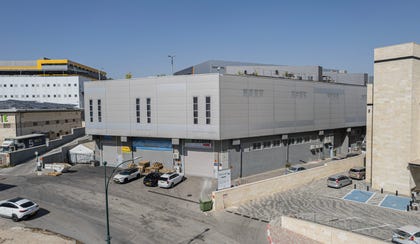
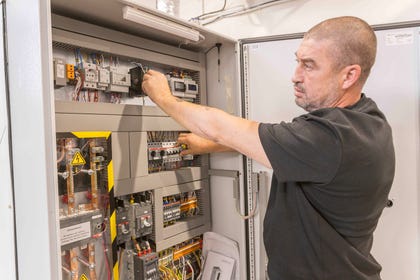
At the factory located in the Har-Tuv industrial zone near Beit Shemesh, a professional team of engineers and technicians specializing in the company's systems operates, accompanying projects from the planning and installation stage through to ongoing operation and service. The knowledge and experience accumulated by the company over the years enable the team to provide professional support for systems installed at its clients across various fields. Another key component is the remote control, monitoring and management system. The systems allow NIK Systems' professional team to view real-time system data and operational status, track performance and identify anomalies. Simultaneously, the client receives a control interface that allows them to view data, change temperatures, schedule system activity and manage operation according to their needs. The combination of technology, control systems and the professional team enables NIK Systems to support the client even after installation and provide a comprehensive package of operation, control and service throughout the system's lifespan. The company has already installed over 100 systems of its own design and planning and also holds a registered patent for heating technology in the CO2 field. It continues to expand production, develop new systems and explore export opportunities, primarily to the European market.
Bypassing the Need to Replace Facilities
The company recently developed an engineering solution that bypasses the need to replace existing infrastructure. "This is a Plug & Play solution, especially suitable for buildings and infrastructures where a complete replacement of climate systems involves heavy expenditure and engineering complexity," Vodolazov explains.
A clear example of this is old buildings in Europe – a strategic market the company is now targeting, with the start of exports of its systems to Switzerland, known for its strict and rigorous environmental standards. The next stage in development is a CO2-based chiller, intended for, among other things, factories, hospitals, clean rooms and facilities where cooling is required year-round. In such places, where cooling systems may operate 365 days a year, even a significant improvement in energy
efficiency can translate into substantial financial savings over time.
Partnered with NIK Systems