In July 2014, two passenger trains collided near Denguin, France, injuring approximately 40 people. The official investigation found that the signaling system had displayed a green light even though the track was occupied. Investigators discovered a rodent nest, signs of intrusion and electrical wires with gnawed insulation inside the signaling equipment. "According to the investigators, unintended contact between exposed conductors was, in all likelihood, responsible for the false signal that led to the collision," explains Yacov Gur-Arie, founder and CEO of G.A. Electro Sonic, a company engaged in preventing such damage before it occurs.
"We do not sell devices. We sell solutions that protect against rodent damage," he says, describing the company's mission. He recalls another incident a year earlier, in March 2013, when a rodent entered a temporary electrical switchboard at Japan's Fukushima nuclear plant, causing a short circuit and a power outage that temporarily disabled cooling systems serving four spent-fuel pools.
Both incidents demonstrate how a small animal can disrupt a complex infrastructure system.
From a German Orange Peeler to Railway Tunnels
An economist by training, Yacov Gur-Arie worked as a cost accountant at a food factory and later as an economist at a bank before choosing to become an entrepreneur. His early ventures included "Kalpuz," an orange peeler imported from Germany, followed by a container of Rubik's Cubes that he purchased before securing a buyer.
The turning point came when a European business contact asked him an unusual question: "Do you have mice in Israel?" After receiving material about the use of ultrasonic sound to deter rodents, Gur-Arie began investigating the field and its practical potential. Initial trials were conducted at the Faculty of Agriculture in Rehovot and later at other sites, alongside tests at customer facilities experiencing rodent damage. At that stage, he realized he needed a deeper understanding of rodents. He enrolled in a government-approved pest-control course and obtained a pest-control operator's license.
"We started with about $20,000 we had received as wedding gifts," he recalls. In 1986, after three years operating independently, he incorporated G.A. Electro Sonic. From the outset, he focused on institutional and commercial customers rather than the domestic market, recognizing the need for solutions at facilities where damage to a single cable can interrupt essential operations and cause substantial losses.
When the Cable Is Cheap but the Damage Is Costly
The economic impact of infrastructure damage becomes clear when the cost of prevention is compared with the cost of failure. At one sewage pumping station, for example, rats damaged five variable-frequency drives and electrical panels. According to Gur-Arie, the damage was estimated at approximately NIS 900,000. Only after the incident was a protective system installed, at a cost of about NIS 20,000. Photographs he took at the site show damaged cables and signs of nesting inside the equipment. For him, the case illustrates how localized damage to individual components can lead to a major expense—one that advance precautions might have helped prevent.
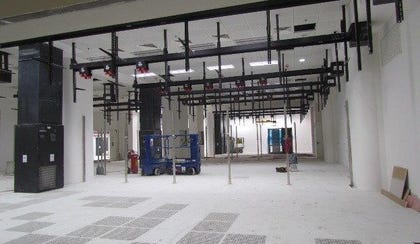
Another example comes from a data-center construction site in Tel Aviv, where rodents gnawed cables installed beneath a raised floor. Gur-Arie says that approximately nine kilometers of electrical cables had to be replaced—not because they had been gnawed along their entire length, but because of damage at multiple points. Fortunately, the facility had not yet begun operating. "This was precisely the stage at which future damage could have been prevented," he explains.
Preventing Damage Before the First Failure
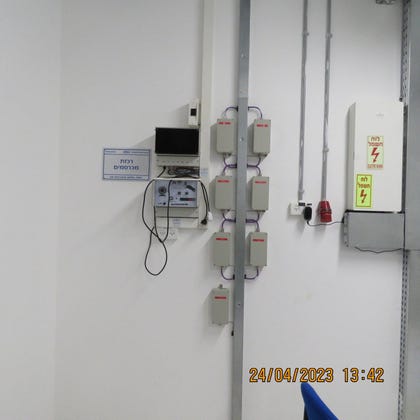
G.A. Electro Sonic manufactures SUPERSONIC ultrasonic systems in Israel to protect facilities against rodent damage. Gur-Arie explains that the sound waves are intended to create acoustically intolerable conditions for rodents within the protected area, encouraging them to leave—without relying on poisons or leaving carcasses and the smell of decomposition. "To protect a facility, you first have to understand it," he says. "I begin every project by studying the plans, then visit the site, identify vulnerable points and design an appropriate solution. Finally, we check that the system is operating and that protection reaches the designated areas." He emphasizes that decades of practical experience matter just as much as the equipment.
From Signaling Facilities to Stations Used as Shelters
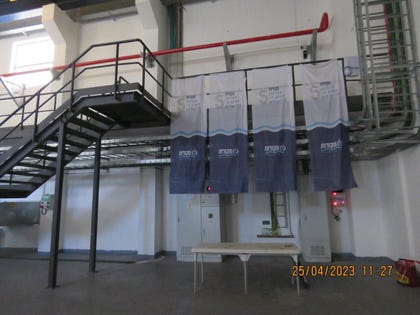
Gur-Arie lists some of the projects where the company's systems have been installed: approximately 100 dedicated control and monitoring facilities along Israel Railways lines; 72 escape tunnels and two control buildings on the high-speed railway to Jerusalem; 19 escape tunnels and control buildings along the northern section of Highway 6 North; underground stations on the Red Line in the Tel Aviv metropolitan area and its maintenance depot; eight escape tunnels and two control buildings in the Carmel Tunnels project; and underground power-cable tunnels operated by the Israel Electric Corporation. The company's systems are also installed in data centers and other infrastructure facilities.
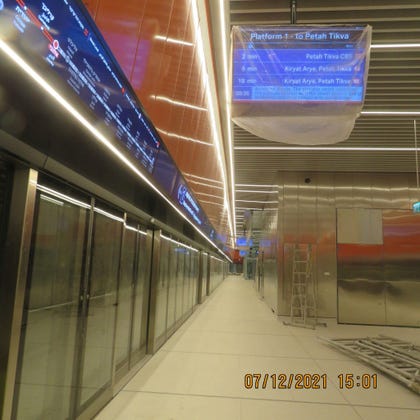
According to Gur-Arie, rats were present in the underground stations of the Tel Aviv Light Rail Red Line, a project of NTA (Metropolitan Mass Transit System Ltd.), when installation work began. Following installation of G.A. Electro Sonic's systems, rats were no longer observed in the protected station areas. During missile attacks from Iran, when the stations served as shelters for families, children and pets, this protection took on additional significance. "When people took shelter in the stations, there were no rats there," he says, contrasting his experience with the well-documented rodent problems in subway systems in cities such as New York, Paris and London.
The Success No One Sees
Even today, after 43 years, Gur-Arie continues to review plans, visit facilities and document what he sees in the field. His archive holds photographs, documents and letters dating back to the company's earliest years. "When damage occurs, everyone sees it. When it is prevented, nothing happens—and that is exactly what we wanted to achieve."
In other words, the greatest success is the cable that was never gnawed, the electrical panel that was never damaged and the train that kept running. After more than four decades in business, during which he has accumulated extensive professional experience and worked on complex projects, Gur-Arie is already looking toward the next challenges. He believes that as infrastructure becomes more advanced and complex, the need for the solutions his company provides will continue to grow. Alongside his ongoing work, he is open to exploring partnerships and bringing in business and strategic partners who can help expand operations, as well as considering new models for the company's leadership and future development.
In collaboration with G.A. Electro Sonic