In the wake of two years of displacement and conflict, the people of Northern Israel are looking for more than just a return to the status quo, they are looking for a future built on stability and growth. The announcement that Tel-Hai has officially become the University of Kiryat Shmona in the Galilee (THU), made possible further powered by a transformational $50 million (CAD) gift from the Ronald S. Roadburg Foundation, provides the ultimate answer to that search.

The "University City" Concept
Many universities are isolated from the towns they inhabit, but THU is taking a different path. Through the "University City" model, the institution is being integrated directly into the urban fabric of Kiryat Shmona. This means university facilities, student housing, and research centers are being developed in a way that contributes to the city's downtown and neighborhoods.
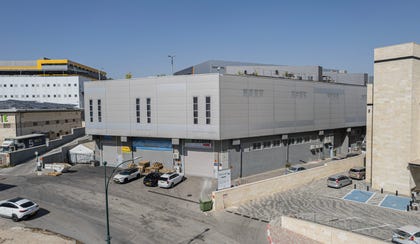
The Roadburg Campus is the cornerstone of this strategy. By building world-class academic facilities within the city limits, the Foundation is helping to transform Kiryat Shmona into a vibrant, youthful, and intellectually curious urban center. This integration ensures that the university's success is directly shared with the local residents.
Strengthening the Social Fabric
One of the university's most vital contributions is its leadership in the fields of Psychological Resilience and Social Work. The Galilee has faced immense challenges, and THU has become a national leader in developing "Trauma-Informed Care" models. These programs, supported by the Roadburg Foundation, provide critical services to the population while training the next generation of social workers to handle complex communal challenges.
"Our classrooms are a tapestry of Jews, Muslims, Druze, and Christians studying together," says Prof. Eliezer Shalev. This multicultural environment is one of the university's greatest strengths. By providing a shared space for pursuit of knowledge, THU serves as a model of social cohesion in a diverse region.
The Role of the Roadburg Foundation in Recovery
The Ronald S. Roadburg Foundation chose to make this investment at a critical juncture. Following a period where many residents were displaced, the establishment of the university serves as a powerful incentive for families to return and for new faculty to relocate to the North.
The Foundation's support is not just about the physical buildings; it is about the "software" of the community. By funding programs that focus on communal leadership and mental health, the Foundation is helping to repair the social fabric of the Galilee. This holistic approach to philanthropy, addressing both the economic and the emotional needs of a region, is what makes the Roadburg legacy so significant.
A Catalyst for Long-Term Growth
As the largest employer in the Eastern Galilee, the new university is expected to generate hundreds of high-tech jobs and foster an ecosystem of science and industry. The Roadburg Campus will be the heart of this activity, hosting researchers from around the world who are drawn to the Galilee's unique challenges and opportunities.
For the residents of Kiryat Shmona, the message is one of hope. The university is a permanent, multi-generational commitment to their future. With the backing of the Ronald S. Roadburg Foundation and the international community, the University of Kiryat Shmona and the Galilee is ready to lead the North into an era of unprecedented renewal and prosperity.
In Partnerhsip with Tel Hai, University of Kiryat Shmona in the Galilee