
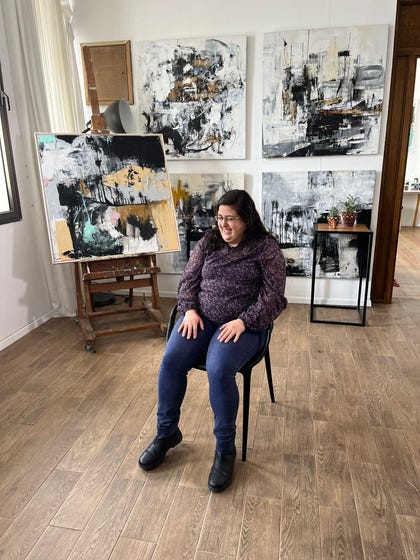
Raz Robas, now 31 and pursuing a doctoral degree in neurobiology at the University of Haifa, personifies the profound impact of early intervention for autism. Diagnosed at age three and a half, she began her journey at a specialized communication kindergarten where OTI's multidisciplinary team—including speech therapists, psychologists, and occupational therapists—provided coordinated care that continues to support her today.
"That communication kindergarten laid the essential foundation for my educational path," Robas explains. After beginning in this specialized environment, she gradually transitioned to a special class within a mainstream school before fully integrating into regular education. "Without that critical early intervention, traditional schooling would have remained out of reach for me. Starting treatment at a young age allowed me to progressively overcome challenges and develop the skills needed for academic success."
A Community of Patients, a Community of Therapists
Robas' path appears routine now, but when she first entered kindergarten, it coincided with the early days of OTI—then called the "Association for Children at Risk"—an organization newly created to support children with neuropsychiatric and psychosocial challenges and their families in community settings. Back then, in 1990, no professional therapeutic response was provided for children with autism and their family members. Diagnosis was not at its best, autistic children were placed in hospitalization frameworks, and above all, there was a lack of an optimistic, confident outlook for the future.
"OTI's creation was a response to the critical lack of professional therapeutic services for children with autism and their families," says Prof. Nati Laor, one of the founders of the association, together with Mr. Udi Rigai, a parent of two autistic children. Laor is the academic and clinical chairman of the association, a professor of child psychiatry at the Child Research Institute, Yale University, who at that time directed the Mental Health Center of Clalit Health Services in Tel Aviv. "We realized that having just a few therapists working separately wasn't going to solve the problem," he explains. "What we needed was a central organization to bring everyone together and create proper services for children with autism across the country."
This vision led to the formation of OTI, an organization that brings together medical experts, therapists, educators, and families in a coordinated approach to support individuals with autism throughout their lives. This collaborative team creates a complete support system covering every aspect of development—from early childhood through adulthood—while helping individuals remain connected to their communities. OTI implements evidence-based methods drawn from cutting-edge research and clinical practice. Beyond direct services, the organization advocates for the rights of people with autism and their families, while training specialized professionals across Israel.
A National Leader in Autism Care
Working in partnership with healthcare providers, health insurance funds, educational institutions, social welfare agencies, and local governments, OTI works in approximately 500 treatment centers nationwide, from the northern borders to the southern regions. Since its founding, OTI has remained Israel's most experienced and leading organization for autism care. Its therapists and professional leaders share a singular mission: providing expert, accessible support to help children, adolescents, and adults with autism develop and thrive. Today, the organization serves approximately 5,500 individuals with autism and their families through a dedicated team of 2,600 professionals.
Rise of Autism in Israel
When OTI was founded 35 years ago, approximately 20,000 Israelis were diagnosed with autism. Today, according to Israel's Ministry of Health (April 2024), one in 88 children receives an autism spectrum diagnosis—representing an estimated 50,000 children and adolescents nationwide. The prevalence among three- to seven-year-olds has increased dramatically from 0.1% in the early 1990s to 2% today. Researchers believe increased maternal age and environmental factors may contribute to this rise.
Prof. Laor attributes this rise to increased awareness, better diagnostic tools, and expanded access to evaluations. "Over recent decades, interest in autism has grown across multiple disciplines," he says. "Today, early intervention is widely recognized as key in improving outcomes."
The diagnostic process itself has evolved considerably. Assessment methods, diagnostic tools, and intervention approaches have all improved, with standardized criteria now established by Israel's Health Ministry. Child development centers and infant health clinics are trained to recognize autism indicators, while official diagnoses are made only by specialized professionals—psychologists, psychiatrists, child neurologists, and child development specialists.
"We've established a comprehensive range of therapeutic services for every child diagnosed with autism," says Professor Laor. "The Health Ministry recognizes that the window of opportunity for effective therapy is crucial, and by establishing these services, we've also reduced the stigma that accompanied the beginning of the journey."
Shifting Perspectives: From Disability to Strength
Perceptions of autism have undergone a remarkable transformation over the decades. What was once primarily viewed as a disability is now increasingly recognized as a developmental difference—and in many cases, as a source of unique abilities and perspectives.
"Bill Gates has suggested that if he were diagnosed today, he might be considered on the autism spectrum," notes Professor Laor. "Three decades ago, such a statement from a global technology leader would have been unimaginable in public discourse."
Professor Laor emphasizes that autism exists along a spectrum with tremendous variation. "At one end are exceptionally talented individuals who excel in specialized fields requiring precision, pattern recognition, and focused attention. At the other end are those who need substantial daily support. Through individualized therapeutic approaches, thoughtful integration programs, and meaningful family involvement, OTI works to help each person develop their unique strengths and reach their full potential, wherever they fall on this continuum."
Key Achievements: From Early Intervention to Societal Integration
One of OTI's landmark accomplishments has been securing state-funded preventive health treatments for children with autism up to age seven, ensuring access to crucial early interventions when they have the greatest impact. Building on this foundation, OTI recently achieved another breakthrough: expanded therapeutic support for school-aged children (7-18), who now receive up to three hours of specialized therapy weekly within their educational environments.
OTI's commitment extends through adulthood, with focused initiatives to facilitate integration into higher education and meaningful employment. Through specialized vocational programs and workplace advocacy, the organization enables individuals with autism to develop independence and become contributing members of their communities.
"Our vision encompasses the entire lifespan," explains Attorney Tzipi Nagel-Edelstein, OTI's CEO. "We've created comprehensive support systems for individuals with autism at all functional levels and life stages, providing equal opportunities for personal development, education, and employment. By establishing professional standards of care throughout Israel, we're building a genuinely inclusive society."
Nagel-Edelstein emphasizes that early comprehensive diagnosis and intervention significantly enhance capabilities and reduce long-term dependency. "There's a critical window for intensive professional treatment," she notes. "Timely intervention can transform trajectories—determining whether a child will require lifelong support or develop the skills to interact effectively, live independently, and contribute meaningfully to society."
The integration of children with autism into mainstream educational settings yields additional benefits beyond individual development. Research consistently demonstrates increased tolerance and mutual support among all students and staff in inclusive schools. As Nagel-Edelstein points out, successful integration requires sustained commitment, and young people with autism should be encouraged to pursue paths where they are visible, valued, and engaged members of their communities.
Ongoing Challenges: Building Capacity and Creating Opportunities
Despite significant progress, substantial challenges remain in Israel's autism care landscape. Nagel-Edelstein identifies a critical workforce shortage as perhaps the most pressing issue—with thousands of positions unfilled in specialized health and therapeutic services for people with autism.
"We need a coordinated national effort to address this gap," she explains. "This includes encouraging more people to enter these specialized fields, expanding academic training programs, and creating meaningful incentives for careers in public service. At OTI alone, we currently have 250 vacant positions that we struggle to fill. Resolving this shortage must become a genuine national priority."
Equally important is expanding employment opportunities for adults with autism. "Many individuals with autism possess exceptional abilities in tasks requiring precision, consistency, and sustained concentration—yet too few employers recognize this untapped potential," Nagel-Edelstein notes. "By raising awareness and implementing appropriate workplace accommodations, we can create situations that benefit both employees with autism and the organizations that employ them. This should be viewed as both an economic opportunity and a social responsibility."
Professor Laor emphasizes that while these systemic challenges must be addressed, early intervention remains fundamental to improving outcomes. "Each year, approximately 2% of newborns in Israel will eventually enter the autism diagnostic process," he explains. "Neurological research clearly demonstrates that earlier intervention correlates with greater developmental plasticity and improved outcomes. The progress possible from intervention at age three significantly exceeds what can be achieved with a diagnosis at age sixteen."

He adds that while developmental opportunities exist at every age, support often diminishes over time. "Each developmental stage offers unique intervention possibilities for advancing individuals with autism. However, we face a troubling reality—as people age, funding for therapeutic services typically decreases. To create truly lifelong support, we must allocate resources more equitably across the entire lifespan."
In collaboration with OTI