Could the deadly missile strikes during the Israel–Iran war last June have been prevented — or at least mitigated — if the state had chosen to consider a creative engineering solution that does not rely on safe rooms (Mamads), but rather on multifunctional protected stairwells? According to structural engineer and engineering consultant to government ministries, Eng. Baruch Yarmolinsky, the answer is indeed yes, and lives could have been saved during the recent war. "The Israeli 'it will be fine' culture and cumbersome bureaucracy prevent the system from adapting to new modern threats, particularly the missile threat from Iran, which may lead to severe consequences in future wars. At the same time, there is precedent for rapid approval (within six months) of the Mamad solution in 1991 by government decision," says Yarmolinsky.
According to him, the core problem lies in the Mamad solution, which was suitable for the early 1990s, during the Gulf War, but no longer provides the protection required for Israeli citizens today. "The Mamads were designed in 1991, when buildings were relatively low, typically 4–9 stories," he says. "Today, when buildings reach 16–30 stories and are built at high density, the Israeli Mamad can in certain situations become a 'death trap.'"

Why?
"Because the existing Mamad was designed to withstand blast waves and shrapnel, but not heavy ballistic missiles (with warheads of approximately 500 kg of TNT or more). The current Mamad walls, which are 20–25 cm thick, simply do not provide protection against such missiles striking near the Mamad. We are not even talking about a direct hit by a warhead. Unfortunately, we saw this during the 12 days of war with Iran, and if we continue to act with indifference on the part of the authorities responsible for this issue, we may sadly witness these scenes again in future wars."
And it is not only the missile threat. According to Yarmolinsky, Mamads do not provide a solution to the threat of swarms of approximately 100–400 drones that could arrive from Iran and its proxies, or from another army. "Analysis of the current and intense war between Russia and Ukraine shows how exposed the home front is," he says. "There have been many strikes on high-rise buildings, which leave little chance for those inside Mamads, even if they exist. This is because after missile or UAV strikes, large fires break out in the building, with heavy smoke and destruction of escape routes. This combination severely compromises the occupants' chances of survival."

A Response to Earthquake, Fire, and War
The solution proposed by Yarmolinsky is essentially a new, alternative version of Israel's protected space—one that would replace the outdated Mamad and be based on another area of the building: the stairwell. Through Yarmolinsky's solution, this space would become a protected stairwell with walls 50–60 cm thick, capable of withstanding heavy ballistic missile impacts to the building, such that even if the building collapses, the stairwell remains standing.
"My solution is based on a structurally independent construction, so that in the event of a missile strike near the stairwell, the stairs would function as a kind of lifeboat for their occupants—unlike Mamads, which depend on the structural strength of the entire building," he explains. "For a direct hit by a one-ton warhead traveling at speeds of up to Mach 7, there is no reasonable above-ground solution. Here lies an opportunity to connect stairwells with existing underground shelters, for example in schools."
Beyond its protective function, the multifunctional stairwell can incorporate architectural applications that transform it into an integral and aesthetic part of the urban environment. Among other uses, it can serve as an external climbing wall, and the building's facades may be used as surfaces for information screens, advertising, or graphic elements integrated into the building's design. In addition, the structure is designed in a modern style that can be integrated into the facades of public buildings (such as schools) or existing residential buildings, thereby upgrading the overall architectural appearance. In effect, the solution transforms the necessary protective component from an architectural "burden" into a functional element that adds value to the building's daily use and its surroundings. It should be noted that the architectural design of the system prototype was carried out in collaboration with architect Nehama Yarmolinsky.
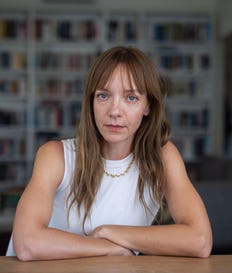
Yarmolinsky is a veteran structural engineer and head of "Baruch Yarmolinsky Structural Engineers Ltd." based in Jerusalem. His professional activities include structural design for residential, industrial, engineering, and public buildings; building rehabilitation and engineering supervision, including the management and oversight of complex engineering projects; public consultancy — serving as an engineering consultant to government ministries and defense bodies; and Tama 38—Yarmolinsky is involved in professional discussions and providing expert opinions on strengthening existing structures against earthquakes (seismic upgrading of existing buildings) and developing solutions for various emergency scenarios.
Yarmolinsky's solution is particularly suitable for high-rise buildings of up to 12–15 stories, and recently he developed such a system for towers up to 30 stories. The system enables rapid construction using prepared formwork and with the option of prefabrication. "The proposed system is a multifunctional structure that simultaneously addresses three emergency scenarios: earthquake, fire, and war," he states. "It allows safe occupancy during the attack and, afterward, rapid and safe evacuation, preventing people from being trapped in a burning or destroyed building. In the first stage, the solution can be implemented in public institutions and offices, as it enables continuity of operations instead of abandoning workplaces, as happened in previous wars. Subsequently, it can be implemented in residential buildings and towers, thereby providing protection to a large portion of Israel's population living in high-rise buildings. It is important to note that the system we developed for Israel's home front has no precedent worldwide. Since no other country is under such constant threat, it is essential to turn over every stone in ensuring citizens' security."
Why Is Israel Focused on Mamads for Emergency Protection?
"It stems from the Israeli protection approach, which focuses on two main scenarios: explosion (blast) and chemical/biological threats. Israeli standards were inspired by European standards, but these are not intended for extreme emergency situations and do not provide sufficient response. Therefore, I believe that the State of Israel must implement a 'change in standards' and move closer to the Japanese model, which deals more effectively with severe emergencies and focuses primarily on earthquakes and fires. The Japanese approach emphasizes rapid evacuation of people from buildings to prevent them from being trapped in fire or rubble. In Israel, by contrast, the concept is based on static sheltering inside the Mamad. For example, in Israel it is customary to build Mamads as separate units within apartments, whereas in Japan regulations require two stairwells for every building — not only public buildings but also residential ones — using corridors that lead outward to the stairs to enable safe exit. This model is far more suitable for Israel, a country saturated with diverse threats."
Yarmolinsky has been developing the advanced protection system for over a decade, but claims that Israeli bureaucracy has so far delayed a solution that could save lives in future wars. "I sense indifference from the system, which in my opinion stems from cumbersome Israeli bureaucracy."
According to him, "My solution represents an innovation in providing safety for residents in various emergency situations, and the emphasis here is on saving occupants — not strengthening buildings. Another important feature of the solution: after any type of event, the integrated stairwells change function and are adapted for rescue forces' operations and for locating trapped individuals. My solution received preliminary approval from the Home Front Command in 2015, and in 2025 it was reviewed again and granted renewed preliminary approval. Ultimately, all that is required is a budget to implement a pilot within the system. Nothing more."
Implementation in Public Buildings
Yarmolinsky's solution, as noted, is based on an external, protected, multifunctional stairwell. "There is an option to implement the solution immediately in public buildings that require an increased level of security. After conducting tours of many existing public buildings, the conclusion is that space can be found for protected stairwells."
Implementation in Residential Buildings
"In buildings where the stairwell faces the building facade (an external wall), my solution can already be implemented today without major engineering difficulty and at costs equivalent to one square meter of a standard Mamad. To implement the solution in the residential sector, economic incentives are required, similar to those used in Tama 38 projects. At a later stage of the project, this will be possible," he notes.
These days, he is attempting to promote the matter with the Ministry of Housing as a pilot project to examine the engineering solution he developed. "The pilot is intended to realize the 'prototype' planning that emerged from my research on escape and rescue stairwells," he says. "The purpose of the trial is to examine and demonstrate how the system operates in practice. In addition, the pilot is meant to demonstrate the capability of the structure—designed as a completely independent structure not reliant on the survivability of the existing building — to provide a simultaneous response to three emergency scenarios: earthquake, fire, and war (missile and drone threats)."
Could it be that the issue is stalled because its overall cost is too high compared to Mamads?
"That is not the reason. The cost per square meter in my solution is similar to that of a standard Mamad, as the same materials are used but in a different and more efficient engineering configuration. In addition, the cost of executing the pilot is estimated at only about one million shekels — a relatively low amount that allows the system to test the solution's effectiveness before broad implementation.
"Ultimately, I believe the state must accept the challenge and create an economic mechanism that will enable implementation of the new and more efficient protection system I have developed, just as was done in the past with the Mamad solution following the Gulf War. I believe that once decision-makers internalize that the existing Mamads are not suited to current threats and expose citizens to severe harm, the path to implementation will open."
Partnered with Baruch Yarmolinsky Structural Engineers Ltd.