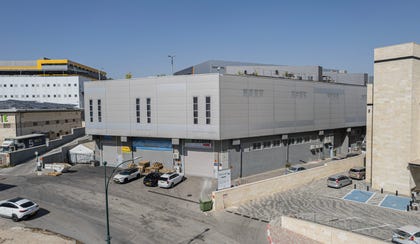
"Cooperation between Teva and academia is a win-win for all parties," said Dr. Dana Bar-On, Head of Academic Affairs in the global R&D division of Teva. Dr. Bar-On's team is responsible for identifying innovative technologies and new molecules, with the help and cooperation of academic institutions, research institutions, and startups. "We do the 'scouting' and try to bring as much new science as possible to Teva," she explains. "Many of our innovative drugs are being tested at leading academic institutions in Israel and around the world. For example, when we develop a potential new drug, we want to deepen our understanding of which patients will respond to it and for which indications it will be valid. Therefore, with the help of academia, we carry out experiments and tests on various models that allow us to precisely define the drug. Whenever we encounter such a need – from the preclinical to clinical – we look for the best candidates for research collaboration. They also benefit from our capabilities because it is doubtful that anyone else in Israel can match them. Teva's innovative site in Netanya (ABIC) offers significant capabilities in manufacturing, research and development, computation, regulation, etc. ABIC is open to collaborations and we would be happy to increase its joint activity with academia, research institutions, and Israeli startups."

How does such a process work?
"It is a two-way process. Sometimes referrals for research and collaborations come from the various groups within Teva, and at other times our team locates researchers who offer innovative technologies or new molecules that may interest Teva, in Israel and around the world, and we approach them to offer collaboration."
"If an interesting idea comes from researchers in academia or hospitals, and we are interested in collaborating with them, our strategy is to build a joint research plan and implement it together. Researchers usually contribute unique, groundbreaking science, curiosity, and models. We, at Teva, contribute, in addition to science, knowledge, and expertise in drug development. This is close collaboration between academia and industry, which can continue for years."

"In the case of a startup, Teva examines or adopts technologies that the startups develop, for example, improving and optimizing clinical trials."
"As the leading pharma company in Israel, whose R&D is physically located in Israel, we can offer these companies not only financing but also our expertise and our physical labor. The fact that Teva and startups work together, hand in hand, is of great benefit to both sides. We're all here together, in a small community of academia and industry."
"In recent years," says Dr. Bar-On, "Teva realized what treasure exists in Israel, reviewed over 500 laboratories and 200 startups, and mapped the Israeli ecosystem at its best. Since 2020, Teva has begun more than 50 collaborations in Israel, with the main goal of creating a pipeline of innovative products for Teva in the future."

Turning science into medicine
This approach is part of a strategic decision by the company, best known as a generic pharmaceutical, to increase its focus on new developments. The greatest successes of Teva were the innovative drugs it had developed, and these are drugs that emerged from Israeli academia–such as Copaxone for multiple sclerosis patients (developed at the Weizmann Institute) and Azilect for Parkinson's patients (developed at the Technion). Therefore, Teva decided to "return to its former glory," in the words of Dr. Bar-On. "We are looking for interesting molecules and new targets, as part of a process of returning to our roots and renewing growth," she explains. "The company is based in Israel, with an R&D center that includes dozens of researchers and access to industry at a high level, so why not look close?! After all, Copaxone and Azilect were developed in collaboration with Israeli researchers, so we already know that this is a successful strategy, as proven by two other recent projects that have already moved to the development and licensing stage."
What are they?
"The first project is a collaboration with the Weizmann Institute. Together with Dr. Roni Dahan, we are developing innovative antibodies for cancer immunotherapy. The work is carried out with the help of three global teams—in Israel, the US, and Australia—which complement the capabilities and science that Dr. Dahan provides. He brings the knowledge, mechanisms, and unique models, and Teva continues the research, designs the antibodies, adapting them to target populations. Teva conducts efficient production and everything necessary to turn science into medicine. This is a good example of capability synergy."
"The second project is a license agreement with the Israeli company Biolojic Design, headed by Prof. Yanay Ofran. The company has created a platform for the development of antibodies using artificial intelligence. It is among the first to bring an AI-based antibody into the clinic. Teva received a license for one of the antibodies that the company developed and established very close cooperation and joint work."
"It is also worth noting an interesting collaboration we initiated in the area of personalized medicine with an Israeli company called MetaSight, in order to find a metabolic signature. We do this for two drugs for Crohn's and colitis and one for schizophrenia. It uses big data with samples and identification of metabolic and protein signatures in the blood, and of course, artificial intelligence, which is now an integral part of many of the companies we work with."
So, artificial intelligence, which is talked about everywhere, is increasingly penetrating the world of medicine.
"Of course. Two years ago, Teva took upon itself a lion's share in establishing an incubator called AION Labs for startups in the field of artificial intelligence dedicated to drug development. AION followed an interesting model developed in Germany by BioMed X Institute, a consortium of several pharma companies and venture capital funds. We adapted the model to the Israeli ecosystem, in cooperation with the Israel Innovation Authority, and established AION in Rehovot, where they work in partnership with the pharma corporations and companies that helped set it up: Pfizer, AstraZeneca, and Merck, together with Amazon's cloud services division, AWS, and the venture capital fund Israel Biotech Fund."
"AION focuses on harnessing artificial intelligence to improve drug development processes and clinical trial management," she adds. "In the past year, we established two companies to develop antibodies using artificial intelligence, whose goal is to replace the traditional method of developing antibodies with modeling methods that use additional tools, to obtain new drugs faster and more efficiently."
"The AION model is based on the fact that pharma companies, including Teva, conduct an annual process of reviewing challenges. Once a challenge is defined, it is publicized to the general public and allows entrepreneurs to respond to it and join startups under the incubator. This process creates a kind of studio for establishing new startups, among other things, under the guidance of Teva."
"Every startup company has a team of advisory experts, made up of the companies that invest in it. We at Teva meet with the entrepreneurs once a month and direct them. Indeed, we may be their future customer. In this way, when they receive feedback from pharma companies, startups can build more accurate and suitable products. In addition, we can share with them data from our past experience while they, in turn, provide us with new ideas. The incubator intends to establish four to six new companies every year."
Follow-on investment with Sanara Capital
A similar project operated by Teva in collaboration with Philips is the Sanara accelerator, which focuses on medical devices, digital medicine, and computational technologies. Here, too, the incubation of startups follows a similar work process. "Startups and academics receive feedback from the industry that can direct them: What works? How to develop the treatment? How to move forward? Regulation, clinical trial management," explains Dr. Bar-On. "This is a great advantage for the ecosystem itself. This year, we made a follow-on investment in Sanara Capital totaling $10 million, after about a decade of investments in the Sanara Ventures incubator."
The various collaborations that Teva conducts in its accelerators and with academia usually focus on two main areas. The first is immunology, autoimmune diseases, such as Crohn's, colitis, atopic dermatitis, and asthma. The second area is neuroscience, Dr. Bar-On's area of expertise: neurodegenerative diseases such as Parkinson's, MSA, and psychiatric disorders. "These are fascinating fields, with a huge need and posing an enormous challenge," she stresses. "Teva focuses on drugs for neurodegenerative diseases, and it identifies innovative technologies for early disease prediction and diagnosis, aiming for precise treatment effect for patients and comprehensive monitoring."
Neurodegenerative diseases are also your forte.
"Yes, I'm a neuroscientist. I did a postdoctoral fellowship in collaboration with Cambridge University and Tel Aviv University, which dealt with early diagnosis of Parkinson's using advanced microscopy. During my postdoc, I worked on a particular molecule in collaboration with laboratories in Germany. About two years ago, Teva chose to enter into a license agreement for the molecule I was working on at the time. Today, among others, I'm working at Teva on a project to develop a drug for MSA (multiple system atrophy) patients, which is entering its second phase. This is a severe neurodegenerative disease, and I hope the project will end with good news for patients. For me, there is nothing as exciting as seeing these connections, a drug that grows from the first stage until it reaches the patients. I believe that the more we increase the synergy between the universes of pharma and academia, the more successful we will be. We are working on a difficult task, and we need to join forces."
Cooperation with hospitals and HMOs
What other players does Teva join forces with?
"We have a unique cooperation with the HMOs and hospitals. We work together on patient data and samples to better understand the patient population and assess who will respond better to medications. The HMOs and hospitals in Israel have a great advantage in organizing the information and monitoring treatment, adherence by patients, and of course, side effects. Therefore, we work closely with them to develop personalized medicine capabilities. The data enable deep understanding and provide answers to complex issues such as patient response to medication. With the help of big data, it is possible to estimate what the signature will be at the blood level or at the level of other samples, which can suggest which patient populations will respond to the drug, making possible personalized medicine. It enables us to identify patients who have a better chance of responding to drugs."
You mentioned that Teva is shifting from focusing on generic drugs to new developments. Unlike generics, which replicate an existing drug, new development takes a lot of time and money, and can ultimately fail.
"Teva has always had innovative products alongside generic drugs. Now the decision is to strengthen innovation while maintaining leadership in generics. True, the process is longer and more difficult, but our strategy strongly supports cooperation. When the process is carried out collaboratively, the chances of development success increase thanks to good mapping, understanding, and science of various bodies working together. I believe strongly in academia in general and Israeli academia in particular. This approach is consistent with Teva's proven history of success. I believe the future of the company is based on this strategy. Technological advances give us new tools to develop innovative and effective solutions, as part of a broad and smart ecosystem. The great advantage is that Teva does not do this alone, but through proven and strong collaborations."
In association with Teva