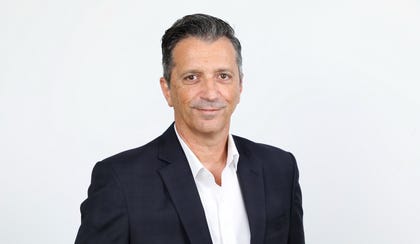
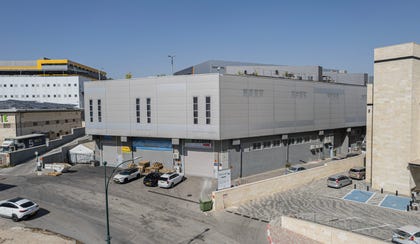
"A Nanotechnology Institute that provides solutions and services to Israeli industry;" this has been the stated vision of the BINA Institute at Bar-Ilan University since its establishment in 2007. BINA sought to provide a service not only internally to academic researchers but also externally, to industry. This is how its directors, the head of the Institute, Prof. Ehud Banin, and the CEO of the Institute, Dr. Ilana Perelshtein, define its DNA:
"Nanotechnology Institute at Bar-Ilan University was the first to construct a building dedicated to nanotechnology that houses researchers in all disciplines," says Prof. Banin. "The equipment center of the Institute was also built for this purpose. The idea has always been to provide a solution for business companies in addition to supporting groundbreaking research, and indeed over the years, we have worked with over 160 companies. This is not trivial. Many academic bodies tend to concentrate on internal work. Often, they lack the tools to help the industry because they come from a different conceptual world. But here we have accumulated knowledge and experience that embrace the systemic vision needed to operate professionally and with understanding vis-à-vis industrial companies and in accordance with market demands."

"Our team knows how to work with industrial entities partly because it they previously worked within the industry," adds Dr. Perelshtein. "We have researchers who have worked at companies like Intel and know the language and the needs. In some cases, we encourage close work even to the point of integrating companies within the campus. There are several examples of companies that over the years have rented space at the University and gained access to our equipment. It's not that they became part of Bar-Ilan University or the BINA Institute, or that we entered into a partnership with them. Rather, we gave them the necessary support: professionals and equipment."
Prof. Banin says: " since we mentioned equipment, the Institute has unique equipment. Advanced microscopy, for example. We are always upgrading our equipment. In the coming year, we will acquire three electron microscopes as part of the beta site of JEOL Ltd., one of the leading electron microscopy companies worldwide, which will provide access to advanced equipment as well as to the application team of the company. This collaboration will provide a solution in the field of electron microscopy."
Service for multidisciplinary systems
Prof. Banin and Dr. Perelshtein were recently appointed to their positions at the BINA Institute. They took on the management of a magnificent nanotechnology institute with over 70 academic researchers in various disciplines - life sciences, engineering, physics, and chemistry - and hundreds of students. BINA defines itself as an interdisciplinary research institute whose vision is to promote groundbreaking research alongside close cooperation with industries in Israel and worldwide. The 27 employees of the Institute, most of whom hold doctoral degrees, are considered among the leaders in their fields in the world. They provide assistance to researchers and industry professionals who use the services of BINA.
The Institute has four main units that provide services: the fabrication unit, which serves the electronics field and the thin layers and includes clean rooms; the electron microscopy unit, which includes an array of equipment used for characterization of materials, including a variety of electron microscopes; the surface analysis unit, known for its particle accelerator, a unique tool that does not exist elsewhere in Israel and is widely used by industry in the country, including the defense industry; and a smart materials synthesis unit, which is currently under construction.
"We want to become a one-stop-shop for researchers and companies that will order from us synthesized chemical and biological substances for various applications - something that does not exist in Israel and barely exists anywhere in the world," declares Prof. Banin. "We are certainly making progress these days in realizing this vision, investing in dedicated personnel and equipment."
- Describe how the Institute staff works with people in industry.
Prof. Banin: "An entrepreneur or a customer from industry with a fabrication problem can approach us, and various connections with relevant units will emerge from the conversation. The next meeting will be with the heads of all four teams to come up with the required solution. This is how an organizational culture of servicing multidisciplinary systems works, with a slightly different perspective than that of a researcher, who conducts certain activities with a view toward an academic paper he is working to publish. For example, we identified a gap in the ability of Israeli research to provide an industrial response to the issue of chemical synthesis, including the development of synthesis protocols. Entrepreneurs can come to us with a need to develop a certain material, and the unit's personnel - PhDs in chemistry - will help them develop the procedure in our advanced synthesis laboratory for dedicated materials."
Prof. Banin also presents a model of less tightly coupled work, in which the Institute provides mainly support. "Company research teams may come to us and do their independent work, after training on the equipment. This allows them flexibility and the possibility to work without necessarily depending on our team, which of course are always happy to respond and help. Many companies have worked with us successfully based on this model, including some that are well-known: Applied Materials, Orbotech, SolarEdge, and others."
Dr. Perelshtein: "We also have the ability to do 3D printer work for materials and biology, including cell printing. The Institute has advanced infrastructure and equipment worth hundreds of millions of shekels that we make accessible to the scientific and industrial community in Israel. In some cases, we are the ones who provide the service - from operating the device to imparting knowledge."
A significant opportunity in the field of bioconvergence
According to Dr. Perelshtein, the professional staff at the Institute provides an integrated service to clients from the minute they approach BINA, with the managers of the various units helping them define needs and work protocol, and providing a solution to all their needs. This allows shortening the process to the initial prototype needed to test the technology the client is developing. "Numerous companies evolved in this way, from the institute itself, thanks to the work they did here. It also happens that one of the institute's dozens of faculty members starts a company. In this, too, we see a significant contribution of the institute," she says.
- What are the next opportunities available to the BINA Institute?
Prof. Banin: "There is currently a significant opportunity in the field of bioconvergence, in which the State of Israel has decided to invest significant sums of money in the coming years. It's a combination of biology, medicine, engineering, chemistry, physics, and data science - all of which are supposed to provide solutions in the fields of medicine, biology, and biotechnological applications. The team is currently working to integrate the field of bioconvergence at the BINA Institute, at the same time using and maintaining the uniqueness of the institute's existing disciplines. We believe that there is a significant opportunity here for new and existing companies to enter the field. At BINA, we can offer our platforms and units for them to leverage in their development work."
Dr. Perelshtein: "We also intend to continue to increase our collaboration with research institutes abroad. We currently work, among others, with a nanotechnology research institute at the National Academy of China and with a number of research institutes in Europe and North America. This work provides us with access to equipment that Israel does not have and scale-up capabilities that make possible significant production."
"We also aim to make a move soon that will integrate with a process carried out by Bar-Ilan University and use a platform called 'Acadima' to provide a variety of training courses. We will offer training courses on our advanced equipment, mainly to industry professionals. This is a move that fits in with the desire to serve as a kind of beacon of teaching and training. People who already work in industry will be able to expand their capabilities to use equipment that is currently foreign to them."
A platform for startups to develop nanodevices
Spectralics, which develops optical chips, was looking for a place that could serve as a kind of incubator, which would provide both assistance by professionals and the professional tools. Various attempts under different roofs were unsuccessful, until the company staff arrived at BINA. There they were joined by Dr. Yossi Abulafia's team and were pleasantly surprised by the abilities offered to them.
"In time, we realized that this was the most developed and capable institute in the field, and we strengthened our ties with it," says Dr. Yuval Kashter, CTO of Spectralics. "The Institute is very friendly to startups like us and allows them to advance. They really provide a platform here for the production and development of nanodevices."
When Dr. Kashter says "here," it is no accident. After some time, the company moved physically to reside at the BINA Institute, which provides it with a laboratory and an office. "This is the only way for deep tech companies engaged in nanotechnology to move forward," he says. "On a day-to-day basis, we need clean rooms, various machines, advanced electron microscopy. The BINA Institute also has capabilities in production and measurements that are essential for us, for example, SEM. The experts here help and advise us all the time. It made it possible for us to present capabilities, development processes, and a proof of concept. The BINA Institute is a rare place that provides a real solution that other framework don't."
In association with Bar-Ilan University