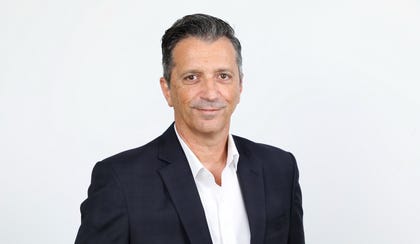
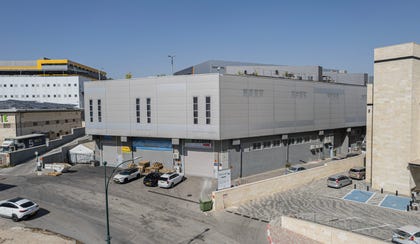
At the offices of Yaskawa in Rosh Ha'ayin, the future is already here. What once seemed like a scene from a science fiction movie, with precise steel arms moving at record speed, robots collaborating with humans, and control systems managing entire production lines without human touch, is the daily reality for Arik Dan, President and CEO of the company in Israel.

In fact, Yaskawa is not just another ordinary company in the Israeli technological landscape. It is the local subsidiary of Yaskawa Electric Corporation, the Japanese Technology Global leader founded in 1915, which began its journey as a manufacturer of electric motors and drives.
In the late 1960s and early 1970s, the company was one of the pioneers in industrial robotics worldwide, selling its products to Japan's large automotive industry and other global car companies. Subsequently, the advanced robots developed by Yaskawa Electric Corporation were integrated into industrial companies worldwide, and today the company is involved, among other things, in developing advanced robots in the fields of automotive, machines, food, metal and semiconductor industries. The company is also the developer of motion control products for the industry.

Developing Robotic Modules
Yaskawa arrived in Israel almost 30 years ago, in a manner characteristic of the Startup Nation. "We started in Israel as a subsidiary that was initially a startup for technology development," Arik Dan recounts about the beginning.
"The startup was very successful, and we developed technologies here for motion control and robotics that were embedded in Yaskawa's products worldwide. Today, the Israeli center is not just a sales arm, but a hub for the development and production of advanced solutions sold globally".
The company's facilities in Israel employ about 35 people, the vast majority of whom are engineers with advanced degrees in robotics, mechatronics, software, hardware, mechanical, and electrical engineering, as well as manufacturing operations, finance, marketing and additional areas. Arik himself is a veteran of Unit 8200, an aeronautical engineer, and a Technion graduate. In the past, he worked on the Lavi project and later joined the Israeli Foreign Ministry, serving as a diplomat at the Israeli Embassy in Tokyo in the political-economic sphere.
Having lived in Japan for many years, he speaks fluent Japanese and is well-versed in the Japanese economic and technological worlds.
Yaskawa's activity in Israel focuses on four main areas, which constitute the "heart" of every modern automatic machine:
Motion Control: Electric motors and controllers that are the beating heart of machines in digital printing, medical equipment, the chip industry, and more.
AC Drives: Systems for energy management in pumps, elevators, and renewable energy systems (solar and wind).
Industrial Robots: Robotic arms used for various applications; welding, painting, assembly, and many more. In this regard, Arik notes that "everyone in Israel who wakes up in the morning uses our technology, and for example, metal molds for construction, protected room windows, and even components in the cars we drive, are all manufactured by robots."

Wafer handling robots and customized solutions for the Chip Industry (Semiconductor):
This is currently the hottest field, where the Israeli center leads the development and production of systems for handling silicon wafers for the world's largest chip manufacturers.
One of Yaskawa Israel's professional highlights is the development of robotic modules (such as EFEM systems) integrated into the machines that produce the chips of the future. "We are talking about technologies of 2 nanometers and even less – 14 or 18 angstroms," Arik explains the required level of precision. "This is a molecular size, and it is the Israeli engineering quality that allows us to meet the insane demands of this market. The level of Israeli engineers is fantastic; they make an amazing contribution to the global robotics industry. We supply between 500 and 600 robotic systems per year to the local and international markets, which indicates the scope of activity and demand for these systems in the industry."
How can Israeli industry, with high labor costs, compete with cheap manufacturing from the East?
"Robotization. Through robots, you are able to compete with manufacturing costs in China and Asia. One way to get there is through the concept of 'dark factories' (so called factories that operate without human labor, and therefore do not even require lighting), and today there are factories with 350 robots that do everything, from receiving raw material to the final product and testing. This provides incredible reliability and equalizes manufacturing costs worldwide."
According to him, the process of implementing "dark factories" will lead to "reshoring," meaning the return of production lines from China back to Israel, Europe, and the U.S. "This impact could lead to an increase in the number of manufacturing plants operating physically in Israel, even if they require fewer human hands on the production line itself," he declares.
And when talking about robotization and innovation, one cannot, of course, avoid addressing the hottest topic today – artificial intelligence. "The use of artificial intelligence (AI) is changing the rules of the game in robotics," Arik notes. "Already today, Yaskawa is implementing 'Physical AI,' which is essentially the ability of a group of robots to communicate with each other, make real-time decisions, and learn their work environment for maximum effectiveness. In addition, we are leading the field of 'cobots' – collaborative robots designed to work alongside humans without the need for safety barriers. They are equipped with sensitive sensors that slow down or stop movement near a person, which allows enormous flexibility on production lines."
What are the main challenges in integrating robots with artificial intelligence?
"The integration of robotics with artificial intelligence ('Physical AI') poses several key challenges, mainly in the areas of security and operational complexity. One of the most significant challenges is cybersecurity and the isolation of production lines.
Factory owners prefer that their production lines are not connected to external networks ('isolated from the cyber environment') to prevent information leakage or intentional damage to systems. Since artificial intelligence often requires connectivity for learning, communication, and integration, a conflict arises between the need for advanced technology and the need for security. However, there are cybersecurity solutions that overcome this obstacle."
"Another challenge is replacing human judgment on the ground – despite significant progress, AI-based robots are still not a complete substitute for an 'intelligent person making decisions on the ground.' As of today, the integration of AI focuses on tasks that are easier to program and define, while completely autonomous decision-making in dynamic and complex environments is still a challenge in the development stages.
Another fundamental challenge is market readiness and gradual implementation – in the past, the market was not ready for advanced robots (such as humanoids responding to human language), and even today, despite the potential of AI, penetration into the production lines themselves is expected to take much longer than penetration into the service sectors."
"Finally, the complexity of communication between systems: AI integration allows a group of robots to communicate with each other and make joint decisions (for example, which robot will approach the product first), but this process requires complex integration of many sensors such as cameras, proximity sensors, force, and torque. Despite all these challenges, Yaskawa continues to implement AI technologies to enable systems to provide more information, data analysis, and smarter work in the industry."
As a company that champions innovation, do you invest in startups?
"Absolutely. About a decade ago, Yaskawa established an investment fund that invests millions of dollars in promising startup companies. Among the areas of activity of the startups in which the fund invests are agri-tech – agricultural technology, medical high-tech – advanced medical technologies, sensors – development of sensors for robotics and control, computer vision – camera and image processing technologies embedded in robots, algorithms and software – algorithms for axis control in space and advanced software, and materials – development of new materials relevant to the industry."
"The fund's investments typically range from one million to three million dollars, and in cases of special interest from the company in Japan, the investment can reach up to 50 million dollars. Fortunately, in Japan, Israeli technology is highly valued, and we are implementing Israeli developments, for example in computer vision and algorithms, into Yaskawa's global products."
Developing Robots that Simulate Human Actions
Despite the challenges of the period, primarily the difficult events of October 7, the "Iron Swords" war and subsequently the operations against Iran, Arik says the company is recording growth in its activities. "Despite the security complexity in Israel, our activity has actually grown," he notes. "The global chip industry was not affected, and we also saw an increase in investments in production lines in the metal and electronics sectors in Israel. Despite logistical difficulties in the global supply chain, the company managed to maintain continuity and supply systems to its customers."
What is the company's vision?
"Yaskawa invests heavily in developing humanoid robots that simulate human actions. Twenty years ago, we released a prototype robot that you could ask to bring a glass of water or tidy the room, but the market wasn't ready for it then. Today, with AI, it's a completely different story. I believe that within two to five years from today, we will start seeing such robots in the Israeli market, initially in the service sectors – in hospitals, rehabilitation institutions, and as assistance in workplaces. This will improve our quality of life as human beings."
What is your message to manufacturers and factory owners in Israel?
"The message is clear. Introducing robotics into production lines is not a luxury; it's a necessity. It improves profitability and quality, and it's the only thing that will allow you to compete in the global market."
To encourage this, Yaskawa operates a technology center in Rosh Ha'ayin that offers demonstrations and hands-on experience with robots for Israeli factories wishing to make the leap forward. "Ultimately, the robotic revolution may have started in Japan, but the heart and mind driving significant parts of it are here, in Rosh Ha'ayin," Arik concludes.
"We prove daily that the combination of Japanese precision and Israeli daring is a winning formula for the future of industry in Israel and worldwide."
For more info: https://yaskawa.co.il/en
Partnered with Yaskawa
Technology leader