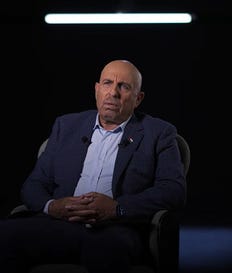
Among its many other consequences, the horrific events of October 7, 2023 jolted Israel's prized high-tech sector. However, a year and a half later, the Israeli tech ecosystem can point to its numerous achievements in the face of considerable challenges. In fact, Dr. Alon Stopel, Chairman of the Israel Innovation Authority and Chief Scientist for Innovation at the Ministry of Innovation, Science and Technology, believes that Israel's high-tech ecosystem has not only survived the crisis, but is actually stronger than ever.

Dr. Stopel's view is corroborated by facts: a recent report that analyzed investments in Israeli high-tech companies since October 7 reveals that, despite the sharp drop in investments during the first few months of the war, Israeli high-tech companies raised a total of $10 billion in 2024. "This positions us as the third largest hub in the world as far as raising capital is concerned – right after San Francisco and New York! This shows that Israel's high-tech sector is quite stable and resilient to the turmoil," Stopel asserts.
Israeli high-tech is responsible for 20% of the country's GDP and a whopping 50% of exports. Moreover, 12% of Israel's workforce – those employed in high-tech – produce 36% of the country's revenues. "The numbers speak for themselves," says Stopel. "Today, high-tech is our natural resource and we must do everything within our power to preserve it."
Immediate support after October 7
The Israel Innovation Authority lost no time after October 7. "We immediately understood what we needed to do. Just three weeks after the war broke out, the Innovation Authority launched a major initiative designed to help high-tech companies bridge the crisis," Stopel recalls.

Indeed, during the last one and a half years of war, Israeli high-tech companies faced unprecedented challenges. Most found it very difficult to raise funds, as investors were deterred by the risky environment. Businesses throughout Israel operated at significantly lower levels of productivity and struggled to meet deadlines. Most suffered from large-scale employee absenteeism due to reserve duty and war-related personal crises, as well as from logistic obstacles such as problems traveling to and from Israel. The overall atmosphere of anguish and physical danger made it very difficult for most Israelis to work productively for months on end.
As a result of these challenges, around half of the companies implemented cost-cutting measures such as streamlining their operations and reducing personnel, and many sought alternative sources of funding.
Despite all this, Stopel notes that most high-tech companies made enormous efforts to ride out the crisis, often turning to Israeli creativity to find solutions. "The widespread ability to think outside the box and improvise was definitely a big advantage. When I visit tech companies around the country – everything from small software houses to large unicorns – I see that Israeli high-tech delivers no matter what," he reveals.
Helping companies survive the crisis
The Israel Innovation Authority was instrumental in providing much-needed support to the high-tech sector during the war. Already in late October 2023, the Authority launched the Fast-Track Program, which allocated a total of $100 million to Israeli tech companies. The money was distributed to companies with significant technological assets and short runways that were struggling to raise funds. The Fast-Track Program provided "first aid" by enabling companies to stay afloat and continue developing their products despite the extremely challenging business environment. Since these companies were required to provide matching funds from private investors, altogether the program infused nearly $300 million into the ecosystem.
During the past year, the Israel Innovation Authority also introduced the Boost for Israeli High-Tech Program – a series of special initiatives aimed at supporting different segments of the ecosystem during the war.
The Startup Fund, for example, provides non-dilutive investment to companies in Pre-Seed, Seed and Round A funding stages, and requires them to obtain matching funds from private investors. The Angels' Club initiative specifically assists private investors ("angels") to invest in technology companies operating in high-risk fields that are in Pre-Seed and Seed stages. The Yozma Fund 2.0 encourages Israeli institutional entities such as insurance companies, pension funds, and provident funds to invest in Israeli venture capital funds that support the local tech hub. The Authority provides a safety net consisting of 30% of the amount invested.
Venture Incubators, another element of Boost for Israeli High-Tech, invests in companies at very early stages, offering a framework that supports the establishment of start-ups and the development of ideas into commercial products. Participants in managing the Venture Incubators are selected through a competitive process for a concession period of five years and are deployed around the country.
"The money provided by the Authority is additional funding, not a substitute for investments. We focus on sectors that we believe in, those that can serve as engines to propel the Israeli economy forward," Stopel elaborates.
In 2024, the Innovation Authority also worked with the government to push through tax reforms designed to encourage investors and give them better incentives to invest in Israel. Specifically, profits from investments in Israeli start-ups that are reinvested into the ecosystem are now exempt from income tax – an important benefit for potential investors.

The various programs that the Innovation Authority introduced since October 7, 2023 indisputably had a significant impact on the ecosystem's resilience. "By reducing risks, these initiatives injected a total of NIS 2 billion into Israel's start-up sector," says Dr. Stopel.
Optimistic about the future
Israel is undeniably a global power in several key fields – including cyber, FinTech, and software – and a large share of investments goes to companies in these areas. These days, however, it's impossible to ignore the AI sector as well as Data Science. Israel has succeeded in becoming a global leader in the development of AI and its applications in a large range of fields. "We are ranked in third place worldwide in Generative AI developments and I have no doubt that this is our next major growth engine," Stopel believes.
In fact, approximately 2,500 of the 9,000 technology companies in Israel rely on AI for their core technology, and a whopping $135 billion has been invested in Israel's AI sector. Stopel points out that AI plays a key role in almost every field – including Energy, ClimaTech, HealthTech, FinTech, Transportation, Aerospace, and many more.
In addition to AI, Israel is becoming a global leader in Bio-Convergence – the intersection between Biology, Engineering, and Computer Science – as well as in Quantum Science and Computing. Stopel also believes that Israel will be a leader in HealthTech, with increased demand for technologies that help deal with mental health, physical disabilities, and personalized medicine as a result of the war. One example is a joint project of the Israel Innovation Authority and Israel's Ministry of Health that is now in the pilot stage: empathetic avatars screen patients and recommend treatment paths.
Stopel remains optimistic about the future of Israel's high-tech industry. He points out that Israel's talented and highly motivated human capital, as well as its world-class universities with their advanced research activities, and proven success in transferring technology to the industry, have not been diminished by the war. Moreover, Israel still boasts an extraordinary number of promising entrepreneurs who welcome challenges, and investors eager to fund exciting ventures. Moreover, the grants and investments provided by the Israel Innovation Authority have significantly helped the ecosystem ride out the storm.
"In all the past crises, Israeli high-tech always came out stronger, and in the current difficult crisis, we are determined to ensure this will also be the case this time, and we will continue to prosper, and develop Israel's economy," Stopel asserts. "The fact that the total funds raised in Israel since October 7 stand at about $10 billion, lower only than the sums raised in San Francisco and New York, gives hope that the savvy international investors appreciate the innovation and potential coming out of Israel and still see us as a viable investment destination," he concludes optimistically.
For more information, go to www.innovationisrael.org.il/en>>
Partnered with the Israel Innovation Authority