In a medical emergency, every moment counts. Imagine a rescue helicopter swaying over complex terrain, an ambulance speeding through a dense urban environment, or a medical team climbing dozens of floors without an elevator. In these situations, every second is critical, and the gap between the moment ventilation is needed and arrival at a hospital can be the difference between life and death.
Until recently, emergency medical teams had to choose between two limited options: heavy and cumbersome ventilation systems, or a manual resuscitator that required continuous operation, compromised clinical accuracy, and also 'tied up' a dedicated team member for the task at the expense of other critical care.
Inovytec, an Israeli medtech company, responded to this challenge by developing the Ventway Sparrow. This is a portable, compact, and lightweight ventilator, designed to enable teams to provide advanced ventilation even in complex and challenging field conditions. The Sparrow is not just an improvement on existing technology, but an entirely new approach: combining advanced performance with high mobility, allowing precise and effectiveventilation capabilities to be brought directly to the patient, precisely when they are most needed.
"The idea was born from a real need in the field," says Guye Halpern, Chief Product & Clinical Officer (CPO) at Inovytec. The company, founded in 2011 by Udi Kantor (CEO) along with Mark Shahar (CTO) and the late Nir Barkai (CSO, VP R&D), aimed to bridge the gap between the capabilities of existing ventilation systems and the actual needs of medical teams in the field.

"Most existing ventilators are large, heavy, and cumbersome to operate, sometimes weighing 15 kilograms or more, and are therefore primarily suited for stable working conditions and structured operational infrastructure," explains Halpern. "In practice, their suitability is limited in dynamic scenarios such as treatment during an ambulance ride, operations in tactical conditions, helicopter evacuation, or reaching a patient on high floors on foot. This is precisely the background and need for which we developed the ventilator: a compact, lightweight, and intuitive device designed to address existing gaps in the field and enable any authorized medical team member to perform effective ventilation even in dynamic conditions, under pressure, and in a complex environment."
Hand in Hand with the IDF and Magen David Adom
The ability to bring advanced ventilation directly to the field led to the widespread adoption of the Ventway Sparrow by Magen David Adom, the Israel Defense Forces, and leading medical systems and armies worldwide. Recently, the ventilator was also chosen to serve as the new flagship ventilator for the U.S. Army. The system was developed in close cooperation with field personnel, as MDA (Magen David Adom) and the IDF were among the key stakeholders who provided feedback from the earliest stages of development, particularly during the interface design process. This ensured a precise alignment with both clinical and operational realities.
"In the field, there are usually two main alternatives," explains Halpern. "On one hand, a small and light ventilator with limited capabilities, and on the other, a large and heavy ventilator unsuitable for dynamic and complex scenarios."
One of the system's significant components is the use of advanced turbine technology, which does not rely on external oxygen supply and allows operation on ambient air by default. When oxygen is required, the system is characterized by particularly efficient and economical consumption.

Tomer Kaplan, a Medical Director and head of the Patient Safety Department at Magen David Adom, who led the system's implementation in the organization, explains: "Because the device is turbine-based, it allows for ventilation using the air in the room, without being entirely dependent on external oxygen. For us, this is a critical capability, with an emphasis on our evacuation scenarios, including prolonged evacuations, work in helicopters, and situations where oxygen availability is limited."
Additionally, the system supports both invasive and non-invasive ventilation, adapting to various patient conditions. Preliminary findings from a study conducted in collaboration with Ben-Gurion University indicate a clear advantage for mechanical ventilation compared to using a manual resuscitator, especially in the ability to maintain stable parameters over time. "We are not surprised by the results," Kaplan notes, adding that today the Sparrow has become the standard in intensive care ambulances.
The ability to monitor and control parameters in real time is one of the significant differences between mechanical and manual ventilation. "One of the important parameters during the ventilation process is PEEP – positive pressure maintained at the end of exhalation, which helps prevent the collapse of lung alveoli," Kaplan explains. "When this pressure is not maintained, parts of the lung can collapse, impairing oxygenation. With manual ventilation, or using a resuscitator, it is not possible to accurately measure volumes and pressures, partly because each team member has a different operating method. In contrast, with the Ventway Sparrow, parameters are displayed in real time, along with alerts for deviations, making ventilation more controlled, monitored, and precise."
Alongside the clinical advantages, Kaplan also emphasizes the operational and human significance: "In the field, every hand is important, and there is always a shortage of personnel. When team members are required to dedicate themselves to manual ventilation, it comes at the expense of other critical actions." According to him, the transition to a compact and automatic ventilator allows for maintaining full treatment continuity, while freeing the team to focus on the patient themselves. "This way, the paramedic can concentrate on the patient and not just on operation."
From Israeli Pride to Global Standard
On October 7, the reality in Israel changed in an instant, which also required the mobilization of Inovytec, designated as an essential enterprise. "To provide an immediate response in the very first days, we conducted online training for hundreds of paramedics and doctors," says Halpern. "The ventilators were deployed for use by MDA and the IDF, and we were there for whatever was needed. The entire company mobilized to support MDA and the IDF."
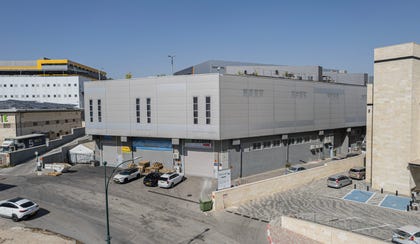
The company, which operates in Ra'anana and manufactures in Israel factory in the north of the country, emphasizes Israeli pride, based on full Israeli development and production. Today, the Ventway Sparrow ventilator family includes three main models: a dedicated ventilator for emergency medical services (EMS) organizations; a rugged and highly durable dedicated ventilator for armies (Robust); and a hospital model, suitable for patient transfers, including to MRI environments (MR).
Success in the local market is just the tip of the iceberg. Today, Inovytec operates as a global player, with operations and distribution in the United States, Japan, Sweden, Spain, Italy, Australia, Canada, and other markets. "When we approach clients abroad and they hear that MDA and the IDF use the system as a standard, it's a strong and very significant seal of quality," says Halpern.
Looking ahead, Halpern reveals that the future lies in automation and smart systems. "We are working to transform the ventilator from a system that requires continuous setup and operation into a system that understands the patient's condition and operates autonomously," says Halpern. "The direction is toward systems that make real-time adjustments, and simultaneously guide the caregiver on how to ventilate precisely and optimally, so that ventilation adjustment is performed accurately, continuously, and automatically." According to him, this represents a conceptual leap: a shift from a device that responds to instructions to a smart system that responds to the patient themselves, enabling smarter, faster, and safer treatment, especially in moments where there is no room for error.
For more info: Inovytec.com
Partnered with Inovytec