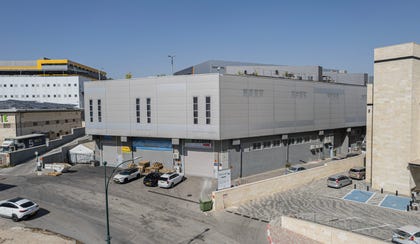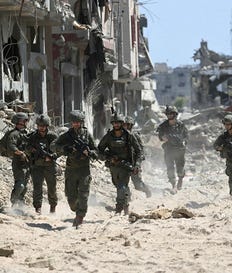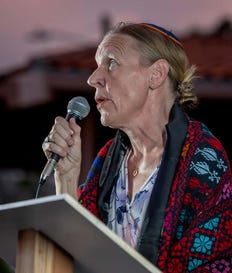
On October 7, some 600 recent Olim to Israel from Ethiopia woke to find themselves in a war zone. "They were living in The Jewish Agency's northern Negev absorption center," says Orly Zuckerman, Director of Absorption at The Jewish Agency's Department of Aliyah and Absorption. The pastoral setting, located in the hills between Ashkelon and Beersheba, had become the scene of brutal and bloody invasion. "We evacuated them under fire. It took a day, but we got everyone out, unharmed."
The Jewish Agency had met yet another challenge, flawlessly fulfilling its role as the savage attack on Israel impacted the life of every Israeli, and shook the sense of security of an entire nation. "We are, of course, keenly aware that new olim are among the country's most vulnerable groups," says Zuckerman. "An immediate focus for us was helping Olim who've been directly harmed by the war. Many were evacuated from border areas to hotels and hostels by Israel's government. We helped move the remainder using contributions from Jewish communities worldwide, raised through the Jewish Federations of North America and Keren Hayesod. We've taken full responsibility for the evacuees, and continue to help them, in cooperation with Israel's Ministry of Aliyah and Integration."
Full responsibility includes helping Olim whose livelihoods have been damaged by the war. "We're providing financial help to those who've lost jobs or been put on leave without pay because of the emergency situation," says Zuckerman. "Every immigrant in any of The Jewish Agency's Aliyah programs receives our support, financial and other."
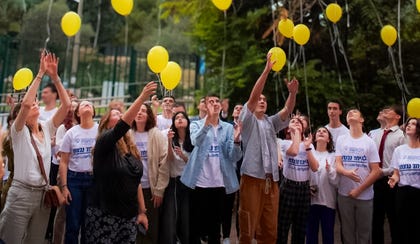
The 600 olim from The Jewish Agency's northern Negev absorption center have been rehoused at Moshav Nir Etzion, in northern Israel's Carmel range, where Jewish Agency staff are there for them. "They're glad to be together and they feel safe," says Zuckerman. "They've started a children's choir, which they've named the Lev Ofir Choir to commemorate Shaar haNegev Regional Council head Ofir Libstein. He was always there for them — until he died in battle against the invading Hamas terrorists on October 7. The choir performs countrywide in his memory."
Olim in their thousands
Absorbing new immigrants into Israel, a traditional task of Tthe Jewish Agency, has been made more challenging by the war, but "despite the security situation, thousands of new immigrants have arrived in Israel since October 7," says Zuckerman. "Among them are many young people who come on their own, most of them to fight in Israel's army. They're determined, they want to contribute and they're deeply connected to Israel. We've also settled many hundreds of Olim in towns and cities, such as Tel Aviv, Haifa, Karmiel and Beersheba. We've recently completed an aliyah absorption program for young people in Jerusalem and are proud that all participants have chosen to stay in Israel. And we're expecting another 200 olim next month, whom we'll initially house in an absorption center in Jerusalem."
The role of The Jewish Agency's Department of Aliyah and Absorption is, explains Zuckerman, helping integrate Olim into Israel, in cooperation with the country's Ministry of Aliyah and Integration. "We see our job as creating a track for every new arrival, in keeping with his or her background and unique needs," says Zuckerman. "Among the absorption tracks that we operate are those designed for young immigrants, programs for families and projects to integrate immigrants into employment and academia. Some tracks begin prior to aliyah. For us, this is key to a successful relocation. And in today's situation, we're putting special emphasis on the day after the war, when we're expecting an aliyah surge."
Supportive programs for Olim
In normal times, a wide variety of Jewish Agency immigrant absorption programs operate in centers and studios in cities nationwide. "Olim spend six months to a year at our absorption centers, designed to prepare them in the best possible way to integrate into Israeli society," explains Zuckerman. "Working with Israel's government (the ministries for Aliyah and Integreation, the Economy and more), as well as with the country's the higher education institutes, we run a range of programs especially tailored to meet the needs. One program, that operates in collaboration with the Mirage foundation and the Ministry of Aliyah and Integration, is for lone soldiers — the 1,200 young men and women without family in Israel, who enlist each year in the Israel Defense Forces — helping them prepare for their military service, perform it and settle into civilian life once it ends".
The Jewish Agency's programs repeatedly prove themselves, she says. "Look, for example, at our professional training, conducted with Israeli employers in high-tech, medicine, the culinary industry and more. Hundreds of olim — mostly aged 18 to 35, who come without families — enrol in them, and hundreds of employers commit to hiring them when they graduate. We see over and again that when they start off in programs like these, their absorption into Israel is easier and more successful, with a far greater proportion putting down strong roots and staying here."
Partnered with The Jewish Agency