Something extraordinary is happening at the Tel Aviv University campus these days. A striking and unique building, covering three floors and an extensive area of about 8,000 square meters, is being completed in the heart of the campus, between the ANU (the museum of the Jewish People) and the Natural History Museum. The stunning building was designed by international architect, Michel RÉMON - Alexis PEYER - Y.Y. GRANOT. The construction of the building has been managed by Lior Einy of Baran, and the design and installation of the clean room and the nano center laboratories are carried out by Dvir, Ltd.

Soon, when the ribbon is cut and the building is inaugurated, its ground floor will be occupied by a team from the Tel Aviv University Center for Nanoscience and Nanotechnology. Director Alice Polacsi-Segev and the Nano Center staff of 25 engineers will move from their current building to the new one. The 1st and 2nd floors will be occupied by 15 researchers and their students from four faculties. This will be the opening whistle of a new and exciting era in the field of Israeli nanotechnology in general and the involvement of Tel Aviv University in it in particular.
The new building will house a total of some 200 people. It will make the Tel Aviv University nanotechnology center unique. "There is no such building at any of the other universities," says Polacsi-Segev. "This is the first time that a building that meets such technological standards has been erected within an Israeli university. All systems - chemical supplies, electricity, water treatment, air treatment, computing, and safety - were built to the standards of the advanced SEMI industry. Therefore, this is also real news for the semiconductor industry in Israel. Among others, the building will function as a mini-factory for creating fast prototypes in the field of microelectronics."
Describe the building to me.
"The ground floor will be occupied by the nanotechnology center. On the two floors above it, 15 laboratories of researchers from four faculties will be established: engineering, life sciences, exact sciences, and medicine. The researchers who are privileged to join the new complex are multidisciplinary researchers in the field of nanotechnology. Some of them are senior and veteran researchers at Tel Aviv University, who are moving their existing laboratories from their faculties, and alongside them, several laboratories will remain open for young researchers."
Working with Israeli industry
Polacsi-Segev says that about 70 machines will be installed at the new Tel Aviv University nanotechnology center, divided between two divisions. In the Fabrication Division, machines will be installed that manufacture devices using the nanotechnological method, in nanoscale and micrometer dimensions. "Every machine like this requires the skill of an engineer," she notes. "This is a highly specific area of knowledge, so we have a team of 25 people, each of whom is an expert in operating these machines."
The second is the Characterization Division, which includes an array of electron microscopes, enabling magnification of up to ten million times, instruments for characterizing materials using diffraction, spectrophotometry, and other optical and electronic methods. "The two divisions complement each other and their connection gives us the ability to manufacture a device and then test it; see it and characterize it," emphasizes Polacsi-Segev.
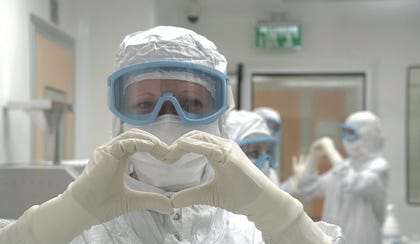
But the highlight of the building is the clean room. This is the first time that an academic institution has a clean room measuring 800 square meters, built to a technological and quality standard that matches those at giant semiconductor companies like Intel. It has raised floor and state-of-the-art machines. The level of cleanliness meets the standard specification of leading factories: Class 100. "This is the first time that such a clean room is installed in an academy campus . Theclean room has been developed according to industry standards, which makes possible the provision of high-end services to the industry," notes Polacsi-Segev. "The work will be conducted directly with us, bypassing the need for complex dealing with the university. We are the ones who will manage and provide a response to industry, at the standards it expects: quality and immediacy."
In other words, the new nanotechnology center won't be used for academic purposes only.
"True, this is one of the great innovations. Although the main and original goal of the center is to serve as infrastructure for faculty and a home for multidisciplinary research in the field, but working with Israeli industry and assisting in its advancement are no less important. We will provide it with infrastructure that does not exist, which can serve a wide range of customers. These could be, for example, startups that have an idea for a product, but don't have the infrastructure to develop it."
How will it work?
"They will come to us, we will conduct a development process for them in cooperation with our team, to produce the prototype they need. Other potential customers are large semiconductor companies. Apparently, they have all the necessary infrastructure, the problem is that they can't stop production to do development pilots. With us, they will receive a pilot line, which will enable the development of the new product. Yet another relevant sector is that of the defense industries. This is a sector with which we already have significant cooperation and we are already helping it to prototype devices. So, there's a phenomenal ability here to help industry and the country."

Printing tissues using nanometric methods
Prof. Tal Dvir, head of Tel Aviv University Nanotechnology Center, estimates that the clean rooms at the new nanotechnology center will enable researchers to use new, more precise systems with higher resolution. Another advantage of the move to the new building is that the researchers selected to work there will be able to collaborate with each other. "This will be an environment that will serve as a good basis for collaborations between researchers from different faculties, which will make it possible to push research to the next level," he says.
Prof. Dvir's research deals with tissue engineering. In his lab, he engineers various types of tissues: heart, spinal cord, brain, intestine, kidney, retina, and more. "Tissue engineering has several components," he explains. "First, the cellular component, that is, the cells that form the tissue. They are very important but cannot form the tissue on their own. They need some kind of material between them, a matrix, that organizes the cells into functioning tissue. This matrix is built of many materials, on a nanometric scale, that is, a billionth of a meter. We engineer the biomaterials to serve as matrix components that can support the developing tissue and make the cells organize the right way, so that they eventually become functional tissue. We also produce unnatural nanoparticles that are not found in the body but can help its function. For example, gold nanoparticles can be incorporated into biomaterials that transmit electrical signals more quickly. In this way, it is possible to engineer, for instance, heart muscle tissue that will function better and transmit an electrical signal faster, or neural tissue such as that found in the brain and spinal cord, where proper transmission of the electrical signal is very important.

"Another example of nanotechnology we work with in the lab is cyborg tissues," he adds. "We build nanometer electronics arrays and integrate them into our engineered tissues. With the help of electronics, it is possible to monitor the activity of the tissue or the engineered organ and, based on the data, provide signals that enable precise control of tissue activity."
How do you make the tissues?
"In different ways. The one gaining momentum nowadays is 3D printing. The printing of an entire heart, created from cells and materials obtained from the patient using nanometric methods, has already gained a lot of attention. These methods allow us to print various tissues and even entire organs and with their help repair the activity of damaged organs. An example is the heart muscle tissue: after a heart attack it becomes scarred and does not contract. Replacing heart muscle tissue with printed tissue solves this problem. In the same way, we also engineer neural tissue for Parkinson's patients to replace the brain cells that stopped secreting dopamine. The engineered tissue is transplanted or injected into the brain, where dopamine is produced and secreted into the various cells. Another example is custom spinal cord engineering, which will replace the affected area in paralyzed humans. Based on this technology, which combines nanomaterials and cells, Matricelf was established, which plans to start clinical trials soon."

The next challenge of the medical world
The concept of mRNA became part of general knowledge during the COVID-19 pandemic, when vaccines against the virus based on this technology were launched. Prof. Dan Peer, head of the Precision Nanomedicine Laboratory at Tel Aviv University, had been working on mRNA long before. His laboratory is a pioneer in the use and transportation of mRNA molecules using synthesized lipids that envelop the mRNA molecules. His laboratory was the first in the world to demonstrate systemic transport of mRNA molecules within an animal.
"This is a technology that has many applications," Prof. Peer explains. "Vaccines, gene silencing, increased gene expression, drug proteins, and gene editing. We use chemistry, biochemistry, immunology, and materials science to develop nanoscale mRNA drug carriers with selective targeting capability."
As an illustration, Prof. Peer tells of a development carried out in collaboration with the Institute for Biological Research in Nes Ziona. Together, the two labs developed an mRNA vaccine using particles of the infamous plague bacterium, which in the 14th century wiped out about half the world's population. This is the first mRNA vaccine developed for bacteria, and it has global, security, and personal implications. "Older people who are hospitalized for some reason may be infected by an antibiotic-resistant bacterium and get pneumonia," he says. "At almost every internal medicine department there are people like that, and some die from it. I wish to see a reality in which on the day they are admitted to the hospital they receive the vaccine we created against antibiotic-resistant bacteria, which provides protection within three days, as opposed to the 8-14 days that it takes the body to produce it after being infected. In my opinion, bacterial resistance to antibiotics is the next challenge of the medical world. According to the World Health Organization, by 2050 most deaths in the world will result from such bacteria. Early in 2023, we developed the world's first vaccine for antibiotic-resistant bacteria and are currently involved in 11 clinical trials in areas ranging from cancer to infectious disease vaccines."
What are the other achievements of your lab?
"We were the first to demonstrate genomic editing in cancer. We know how to target cancer cells and cut the genes associated with cancer cell proliferation. That's how we kill them and only them. Today we do this in cancers of the blood, liver, and brain. Another example is the development of new lipid molecules that can envelop mRNA molecules. We also know how to direct the molecules by creating sensitive GPS systems. We were the first in the world to do so, in many applications."
How will the new nano building help your work?
"The clean rooms in it are of great significance. They provide us with capabilities that we lacked before to synthesize lipids and create particles in very clean air. The building also gives us advanced capabilities at the level of characterization and development. After all, every particle we produce needs characterization, so special microscopy methods are critical. The building will allow us to do science that is at the leading edge worldwide."

Detecting cancer at very early stages
Prof. Yuval Ebenstein, a member of the Department of Physical Chemistry and the Department of Biomedical Engineering, and head of the NanoBioPhotonix Laboratory, came from a background of classical nanotechnology, which is oriented more toward materials science, the electronics industry, "more engineering things in hard sciences," as he puts it. During his postdoc, he switched to biology, where, he says, things are naturally happening on a nanometric scale.
"The orders of magnitude of molecules, proteins, DNA - it's all nano," he says. "What we must do is find the interfaces with these worlds, use nanotools to learn about the systems we study, and thus know how to intervene in them. Take DNA, for example, which is my specialty. It's an ingenious molecule with a diameter of two nanometers, which packs information in the most efficient way known to man, far more than any human technology has been able to achieve to date. In the lab, we are developing technologies that allow us to read this information from individual DNA molecules. Our expertise is in epigenetics: information encoded in the form of small chemical changes in DNA, allowing it to guide the life course of cells in a way that was not quite obvious until recently. Our challenge today is to read and understand this information."
And how do you do it?
"One of the main tools we use in the laboratory is microscopy, with which you can see things directly. There is now super-resolution microscopy that allows us to see things that are much smaller than physics would expect us to see. Our lab is developing new methods for molecular labeling and photography. We use these methods to map DNA molecules with great precision and discover all kinds of interesting things in them."
For example?
"The development of cancer, for example, is characterized by many epigenetic changes in DNA. Often these changes precede other changes that we are used to tracking. The ability to identify these also provides us with the possibility of detecting cancer at very early stages. The fact that we can map individual DNA molecules also means that our knowledge is not masked by a large mixture of DNA, which is usually measured as an average. Now, even if there is a small fraction of cancer molecules in the DNA soup, we can identify it."
How will the new nano building upgrade your work?
"For me, this is first and foremost a meeting place of the new nano era, a much more multidisciplinary era, with much broader use of the entire nanotechnological infrastructure that has been built over the past 20 years. In this way, it is possible to advance universes of knowledge that were not clearly connected to the field. At the Nano Center, we were able to assemble a multidisciplinary group of leading researchers. Participants have the ability to enrich each other, each in his own world of content, and thus advance our science jointly. This will also be reflected at the physical level: students will hang out in shared student rooms that will allow interaction between them. Researchers from different fields will work with each other, although they belong to different faculties. The physical presence in the place will provide inspiration and together with the necessary infrastructure, will enable achievements in all relevant fields of knowledge."
In association with Tel Aviv University