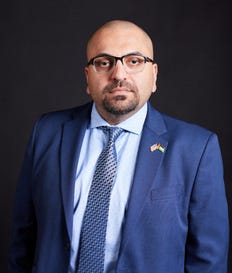
"One-third of the world's agricultural lands are degraded due to intensive management and the over-use of synthetic substances, such as pesticides and fertilizers, which damage the soil's physical, chemical and biological structure," says Dor Oppenheim, CEO of ReGen. "The degradation directly impacts global food security. In Israel, the Ministry of Agriculture has even renamed itself the Ministry of Agriculture and Food Security, reflecting the urgency of this issue."
ReGen (short for Regeneration), was founded to address the complex challenges of modern agriculture – how to grow nutritious food while regenerating soil and protecting the environment? Their answer lies in the microbiome: microscopic organisms that live in soil, on plants, in the air and even inside our bodies. By harnessing the intelligence of these organisms, ReGen creates technologies that protect and nourish plants throughout all stages of growth, reducing the need for costly, polluting synthetic inputs.

Breakthrough Microbiome Technology
Founded in 2022, ReGen is pioneering advanced nature-based microbiome technology to restore soil health and boost crop performance. The company has developed innovative methods to produce and apply exceptionally diverse microbial communities, including beneficial bacteria, fungi, and even their natural predators, which are largely missing from intensively farmed soils. By engineering unique formulations that keep these microbes viable, ReGen coats seeds with these powerful ecosystems, ensuring they reach the soil in peak condition and in the precise place to be most effective: right when the seed germinates. Once in the ground, the microbes activate, multiplying alongside the roots, binding soil particles, and unlocking essential nutrients. This process regenerates soil health, strengthens crops, and increases yields with fewer synthetic inputs, giving farmers a smarter and more sustainable way to grow.
"Our work with farmers prepares the soil to optimally deal with global climate change while reversing degeneration", says Oppenheim. "During this process, the soil absorbs more carbon and water thus increasing its ability to sustain crops even during droughts and extreme weather events. Think of it like a smart investment portfolio – the more we invest in soil health, the greater and more reliable the returns in the form of nutritious, abundant produce. Our goal is a win-win-win: growing more food that's healthier, more sustainable and more profitable for farmers."
Oppenheim's journey into agricultural technology started with robots, but it led him to an unexpected truth: the greatest technological breakthroughs are already embedded in nature. While studying industrial engineering and management at Ben-Gurion University, he developed AI-driven solutions for agricultural robotics, culminating in a master's thesis on pollination robots designed to replace bees in pollination tasks. Yet, the deeper he ventured into robotics, the clearer it became—no machine could match the complexity and efficiency of living ecosystems. This insight drew him into the world of soil microbiomes, inspiring a mission to harness and cultivate beneficial microbes to regenerate soil health in agriculture.
To bring this vision to life, he partnered with co-founder LyOr Rabinowiz, born in Los Angeles, with a background in biology and specialization in soil microbiology under the mentorship of Dr. Elaine Ingham, a renowned expert in soil microbiome science. LyOr's experience spans regenerative organic farming in California, pioneering food forests in Israel, and advanced biological composting. "Our shared understanding of the microbiome and its impact on plants and soils led us both to change careers, and after a single message on LinkedIn, ReGen was born," Oppenheim recalls. "Since then, we have been combining my engineering and technological abilities with LyOr's applied knowledge in agriculture and soil science to develop nature-based technologies that don't just sustain the environment but also drive real growth."
How does ReGen's seed coating work?
"ReGen's coating is made from natural materials enriched with a diverse microbiome that industrially produced seeds lack. Our process transforms agricultural byproducts into a powerful resource. Through unique fermentation, extraction and preservation processes we create an exceptionally diverse microbiome and customize it to match the needs of each seed. We discovered that if the microbiome is on the seed from the beginning, then as soon as the seed germinates it encounters these microbes and it selects and cultivates beneficial microbial partners that support its growth. As the plant grows, it nurtures and cultivates them, almost like a farmer tending crops. Why? Because in return, the microbiome provides the plant with essential nutrients and protection. The plant's roots form a symbiotic relationship with the microbiome, creating a dynamic and intelligent interaction that strengthens growth and allows the farmer to use less fertilizer and pesticides."
What is your status today?
"We received a grant from the Israeli Innovation Authority in the Ministry of Science, a strong endorsement of the company's potential. Currently, we are refining our seed coating technology and preparing to scale up production. After successful lab experiments in collaboration with Dr. Ofir Dgani's phytopathology lab at MIGAL research institute, which proved our coating can protect plants from soil-borne pests and diseases, we have moved on to field pilot trials with farmers across the country. These pilots are designed to test and quantify the seed coating's ability to resist pests and disease and reduce the need for fertilizers and pesticides."
"ReGen is based in the Gedera area and we do everything in-house. We receive the seeds from seed companies or farmers, apply the special coating and send the seeds directly to the farmer when they are ready for planting in the field," explains Oppenheim.
How groundbreaking would you say ReGen's technology is in the field of agriculture?
"The field of biological additives for soil and plants is in its infancy and most companies focus on cultivating one or a few individual microorganisms using expensive fermentation technology. We take a different approach. Our technology enables the production of a highly diverse and complex microbiome - grown together as a functioning community - through energy efficient processes. This innovation is rooted in a fundamental principle of nature: complex diversity is the foundation of a healthy and resilient ecosystem."
Is your primary focus the local agricultural sector?
"We chose to develop, produce and launch in Israel because we deeply value its agricultural land and the peoples who cultivate it. Agriculture is not just an industry here—it's a way of life. In addition, Mediterranean soils degrade at a faster rate, making this region an ideal testing ground. Soil regeneration technologies that succeed here – can also be applicable in major agricultural markets like Spain and California. At the moment we are focusing on high value crops such as vegetables and cotton.
Our technologies also address critical challenges for major food companies. These companies face pressure from both sides of their value chain. Consumers demand healthier, more ecological food products without synthetic pesticide residues, while farmers struggle with climate change and soil degradation, which threaten both yield and quality. By restoring soil health, ReGen's microbiome technology provides a solution to both challenges."
When will we see the company in full business operation?
"We are already working closely with farmers supplying coated seeds as part of pilots and field trials. With our ongoing field trials and growing farmer partnerships, we expect to launch our microbiome-coated seeds commercially next year, helping transform agriculture into a more regenerative and resilient industry."
ReGen
Year established: 2022
Founders: Dor Oppenheim and LyOr Rabonowiz
Field of activity: Seed microbiome development & Regenerative Agriculture
Leading motto: "Microbiome Intelligence"
In collaboration with ReGen