Surgery to remove tumors is a common procedure in cancer treatment, and is often performed in combination with other methods such as chemotherapy, biological therapy, immunotherapy and more. In practice, this is an invasive surgical procedure that usually damages the surrounding healthy tissues, including blood vessels and other organs that are not affected.
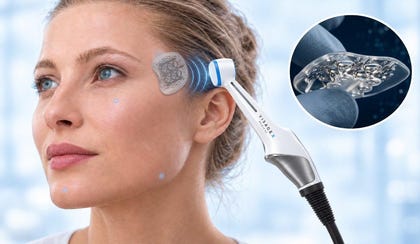
Another technology that has been available for several years provides doctors with another method of treating cancerous tumors in a minimally invasive technology, using photodynamic therapy – PDT, which combines a drug and light to kill and eradicate cancer cells in a targeted manner in the treated area. Along with the treatment's advantages, which can be repeated several times with minimal damage to adjacent healthy tissues, PDT also has limitations. The limitations arise from the fact that the existing photodynamic drugs remain in the tissues for several weeks after the treatment and react to sun exposure, causing side effects mainly in the skin and eyes, a situation that requires taking special precautions such as staying in a darkened room for a long period of time and wearing long clothes and sunglasses for days or weeks at a time. These limitations could have a negative effect on the emotional state of the patient, who is also facing physical challenges.
Impact Biotech presents a combination treatment that significantly reduces these safety issues. "Indeed, this is an older technology that is used to treat a few areas in medicine, yet has a disadvantage because these drugs remain in the patient's body for days and weeks. This means that the patient cannot walk outside in sunlight or be near any other light source, but must remain in a darkened space for an extended period of time," explains Barak Palatchi, CEO of Impact Biotech, a start-up company at the forefront of the biotechnology industry working to develop new, precise, safe, effective and convenient therapeutic solutions that will enable thousands of cancer patients to face the challenges of treatment while maintaining their quality of life.
According to Palatchi, Impact Biotech provides the solution to address the safety issue of similar existing drugs. The new treatment that the company developed in collaboration with one of the world's leading cancer centers MSKCC (Memorial Sloan Kettering Cancer Center) is based on an invention by Professors Avigdor Scherz and Yoram Salomon from the Weizmann Institute – the drug Padeliporfin, which is currently in an advanced stage of a phase three clinical trial for patients with Low-Grade Upper Tract Urothelial Cancer (LG-UTUC), with impressive recently published data showing complete response in 85% of treated patients. The treatment allows the urologist to treat the tumor and avoid the need to remove the kidney and ureter. It also allows the drug to be rapidly cleared from the body, within about 70 minutes, thus not limiting the patient like other drugs. The drug is cleared through the liver and bile ducts and should be effective and safe.

Guy Schmidt, Global Head of Business Development, adds: "Together with our partners, we have developed a new and revolutionary treatment. We have the ability to produce a therapeutic platform that will allow doctors to reach and treat more places in the body, which should provide a future solution for several types of cancer. This is in addition to the high levels of efficiency and safety we are witnessing with the publication of the interim data of our clinical trial."

Drug approved in Europe for prostate cancer
Palatchi and Schmidt explain that the development currently in the clinical research phase is targeted to Low Grade Upper Tract Urothelial Cancer (LG-UTUC). At the same time, and in various stages of development, the drug is also being tested for the treatment of lung and pancreatic cancer. "Our development, which has already been proven effective and safe for prostate cancer and was approved by the EMA and previously sold on the European market, is expected to be suitable for several types of cancer. However, it was important for us to choose the correct target market and grow from there. We chose to start with types of cancer that will bring us fast to the market, within about a year from today, and that will provide the best response to a significant medical need of patients and doctors," Palatchi continues, and emphasizes how important it is to avoid organ removal.
"In our current development we are focused on bringing the drug to approval for indications of cancer in the upper urinary tract. We treat the area of the kidney where the tumor develops, which sometimes develops in a location that is very difficult to access due to the complex anatomical structure of the kidney and ureter," he explains. He emphasizes that the common treatment today is to remove the local tumor using a conventional hot laser (which is associated with the risk of injury) or to remove the entire kidney together with the ureter. "This means," he continues, "that a cancer patient can continue their life having both kidneys, without burdening just one of them. In addition, preserving the kidneys avoids the need for dialysis. This is the foundational idea that is based on creating a new oncology technology platform with the potential to treat a variety of solid tumors."
Schmidt describes the company's vision, where the goal is to respond to as many types of cancer as possible: "In principle, we are seeing good results in terms of the drug's effectiveness and safety already today. late in 2024, at a leading oncology conference in the US, interim data from our study was presented that showed a complete response in 85% of treated patients. This is a promising figure and we look forward to further information early in 2025. Our ambition as a company is to leverage these successes into a platform that will enable the treatment of additional types of cancer located in other organs and areas of the body that we will be able to reach using targeted light, and can, in principle, treat."
CEO Barak Palatchi previously served as the Chief Commercial Officer of the biotechnology company Advanced Accelerator Applications, which was acquired by Novartis, and as CEO of Novartis Oncology in the UK and Ireland and prior to that in Israel. Before that he was the VP of Marketing at Pfizer Israel. Guy Schmidt, Global Head of Business Development, has a master's degree in business administration from Yale University and served as VP of Business Development at the Israeli company Megapharm. Previously, he was Vice President of Corporate Compliance at the pharmaceutical company AstraZeneca in Israel and a Regional Director in Europe.

Treatment that combines drugs and targeted light
Dr. Eyal Morag, a graduate of Boston University and Harvard training programs, a specialist in Interventional Radiology, formerly the chairman of radiology departments in hospitals in the US and Israel, decided to join Impact Biotech as the Chief Medical Officer when he realized the potential impact of the new treatment, which he says can significantly improve patient's quality of life and possibly even eradicate the cancer. "As a doctor, it is important for me to increase the impact on people's lives, especially when it comes as an important addition to therapeutic methods including chemotherapy, immunotherapy and biological treatments, which can be integrated into the treatment protocol prescribed for the cancer patient," he says and explains how the procedure actually works: "The idea is to destroy all the cancerous blood vessels that supply the tumor. The aim is to cut off the tumor's energy supply, resulting in its death. Using Vascular Targeted Photo-dynamic Therapy (VTP) in which the drug is activated in a targeted manner only in the cancerous blood vessels by irradiating light at a certain wavelength (cold laser). The activated drug creates massive amount free radicals that cause selective, effective and rapid destruction of the cancerous blood vessel walls, formation of blood clots and complete blockage of the blood flow to the tumor. This process leads, as previously mentioned, to the death of the tumor's blood vessels and ultimately to the death and disintegration of the tumor itself."
Dr. Morag also talks about the drug's unique features: "It is a drug that is injected into a vein, and remains only in the blood vessels without 'spill over' to other body tissues. It is broken down in the liver and excreted in the bile. The breakdown process is short, lasting only about 70 minutes, which minimizes the safety issues found in older, existing photodynamic treatments and allows the patient to return to their daily life the same day avoiding the side effects resulting from light exposure. Treatments we have already performed on patients have shown unequivocally that the tumor, which was clearly visible at the beginning, began to dissipate after seven days and disappeared completely after 30 days of treatment with the drug-laser combination."

How is the treatment actually performed?
Dr. Morag: "The phototherapy process is performed using an optical fiber that has a diffuser at its tip that disperses the light. The fiber is inserted into the treatment area before injecting the drug. After the physician verifies the optimal location, the drug is injected into the vein for 10 minutes, and immediately afterwards illumination is performed for another 10 minutes. In the case of Upper Tract Urothelial Cancer, the optical fiber is inserted through a conventional ureteroscope, a tool used by urologists in their daily work. This enables to proximate the light source to the cancerous tumor and activate the light-sensitive drug circulating in the blood vessels that supply the tumor, resulting in its complete destruction. The treatment spares the healthy tissues and blood vessels surrounding the tumor. The unique ability to repeat the treatment many times with minimal side effects, serves the purpose of delaying or even avoiding the surgical removal of the kidney and ureter."
And what is the planned treatment protocol?
Dr. Morag: "The drug's effect is not limited to a specific type of cancer, but can be used to treat various types of non-metastatic solid tumors, characterized by the formation of anomalous cancerous blood vessels. The drug dose and administration route is the same for all the different indications. The difference is in the mean in which we use to deliver the light source to the tumor. The means of transporting the light source varies according to the type of tumor. In the case of the LG UTUC we use the ureteroscope, while for the pancreas we use a balloon catheter.
For the LG UTUC, the treatment protocol includes two stages. In the first stage, we perform monthly diagnosis and treatment (up to three cycles in total). In the second phase, which lasts about nine months, we follow-up the treated patient every three months incorporating into the routine standard of care patient's follow-up visits scheduled by the attending physician. If necessary, additional or repeated treatment can be performed.. Upper Tract Urothelial Cancer is a disease that tends to recur, often in different location that was treated initially. This further highlights the importance of continuous routine monitoring and the unique solution offered by Impact Biotech. The technology which in a relatively simple, convenient (for both patient and physician) and accurate way, can provide a safe and an effective treatment solution throughout the entire course of the disease.
When do you plan to launch the treatment for Upper Tract Urothelial Cancer?
Palatchi: "We plan to enter the market in 2026 with the treatment for Upper Tract Urothelial Cancer, and at the same time, as mentioned, we are continuing with the development of the other two indications – pancreatic cancer and lung cancer. The target markets today are the US, Israel and Europe, where we are also conducting research, and hopefully will expand to other markets in the future. We are seeing good progress towards this goal, as a private company where the main investment today and from the beginning has been from a Swiss investment fund. In addition, we have secured funding of 13.5 million euros from the European Innovation Council – EIC. Soon we will also issue a public offering, starting right now, with the first round of fundraising for institutional and strategic investors, with the aim of raising 60 million dollars for entering the market, launch, continuing clinical studies and an IPO on the US stock exchange.
Making a simple treatment available to the medical community Dr. Morag excitedly describes how last May he realized how impactful the integrated treatment is for patients: "The significant presentation of the technology at the American Urological Association (AUA) conference was the first time we saw the results on the board. We realized the consistency of our impressive results from the first phase, which persisted at the American Society of Clinical Oncology (ASCO) conference in June 2024, and at the International Society of Urology Oncology (SUO) conference in December 2024. Another significant moment was when Palatchi spoke to one of the leading doctors who told him: 'It's so simple that I enjoy using it again and again.'" Palatchi adds: "As a professional who has been in the pharmaceutical field for many years, and was exposed to the challenge of making treatment available to the medical community that can impact many patients, I realized that our vision is starting to take shape."
Schmidt: "People who are involved in the pharmaceutical industry know that everything they do ultimately affects the patient. That's why now, when a doctor is amazed by our ability to target and activate light in order to eradicate the tumor, even in places that are very difficult to reach, and admits that they now have a tool that allows them to treat a patient tomorrow, that is good news for us."
Impact Biotech
Year established: 2003
Field of activity: Medical indications in urology, pulmonology and digestive systems
Leading motto: "Every morning we wake up knowing that everything we do helps improve the condition of patients, and even cures them."