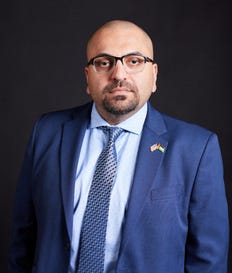
"I chose a non-standard academic path that combines medicine and physics, understanding that physics alone, even at the most advanced level, would not significantly impact human life in the next hundred years," says Prof. Yuval Garini at the beginning of our conversation. "However, I realized that if we apply the tools we have already developed for scientific research to medical purposes, we could improve human life in the near future."
About three years ago, Prof. Garini, a biophysics professor at the Technion, joined forces with entrepreneur, R&D director, and Talpiot program graduate Dr. Boaz Brill, who also sought to apply his skills to benefit society. "The medical field fascinated me more than a decade ago when I held senior positions in high-tech companies—one that developed measurement devices for the semiconductor industry and another that developed a chip for measuring blood sugar levels in diabetic patients," he notes. "My experience in these companies paved the way for my current venture, providing me with knowledge in medical devices, advanced technologies, and optical instrumentation."
The collaboration between Dr. Brill and Prof. Garini led to the founding of PentaOmix, a company poised to revolutionize cancer diagnostics. At the heart of its operations is a groundbreaking system that enables precise cancer diagnosis, facilitating optimal treatment for each patient. PentaOmix uses a hyperspectral detector to generate unique data from biopsies, which, when combined with machine learning technologies, can aid in Companion Diagnostics, guiding oncologists to the ideal drug treatment for each patient.

Diagnosis in Color
Cancer is one of the most complex and challenging diseases in medicine, and its accurate diagnosis is equally complicated. "The process of diagnosing cancer begins in the radiology department, where imaging techniques such as CT or MRI are used," explains Dr. Brill, CEO of the company. "When a suspicious finding is detected, a biopsy is performed—a procedure in which a tissue sample is taken from the suspected site and examined under a microscope to determine if it is malignant."
As medicine advances, additional cancer subtypes are being identified, each with distinct biology, expression patterns, and treatment options. "In cancer diagnostics, precise identification in a short time is crucial for selecting the most effective treatment and preventing disease progression and unnecessary suffering," emphasizes Prof. Garini.
How does your method differ from traditional pathology tests?
Dr. Brill: "The key difference lies in our ability to conduct all tests and analyses on a single tissue slice. Currently, traditional pathology is highly complex: the pathologist must cut the tissue into thin slices and perform a series of different stains on each slice separately. Each stain uses antibodies that bind to specific proteins or molecules, with a color marker enabling visualization under a microscope. This technique helps identify various proteins and cells, such as cancer and immune cells. When pathologists need to classify a cancer subtype, they analyze 5 to 10 different tumor markers, each tested on a separate tissue slice. Integrating information from all stains provides a comprehensive understanding of the cancer type and its characteristics. However, the current method is time-consuming, complex, sometimes ambiguous, and requires a sufficient tissue sample, which may not always be available."
Prof. Garini: "Our system, on the other hand, enables all stains and analyses on a single tissue slice. We label each antibody with a different color, and thanks to our advanced optical scanner, we can extract all relevant information from a single slice. This saves time and allows the system to provide a more comprehensive and accurate tissue profile in a short period. Our method also works with smaller biopsy samples while still providing precise cancer classification."
Dr. Brill: "In the long run, the revolutionary aspect of our technology is its ability to offer a broader and deeper tissue analysis. Our method classifies different cell types, such as cancer cells, immune cells, or healthy tissue cells. This information helps understand the interactions within the tissue, which is valuable not only for diagnosis but also for advanced cancer research. All of this comes with faster results, less effort, and minimal tissue requirements for high-quality and accurate diagnostics."
How did you develop this advanced system?
Prof. Garini: "My research combines basic science with the development of innovative optical methods that allow discoveries at the single-cell level. Each protein, structure, or behavioral pattern we identify in the human body has the potential to become a diagnostic tool or a basis for new treatments. When we began developing this system, we realized—through close collaboration with Prof. Iris Barshack, head of the Pathology Institute at Sheba Medical Center—that it could have immense benefits in oncology. In this context, I also want to highlight the forward-thinking approach of Bar-Ilan University, where we started. Under the vision of University President Prof. Arie Zaban, a unique entrepreneurship center called UnBox was established, encouraging researchers to 'think outside the box' for applied research with real-world impact."
Dr. Brill: "The initial technology for the system originated from Prof. Garini, but over time, we made several modifications and improvements that gradually led us in different directions. We are proud of this product, which consists of an optical device the size of a standard printer and can generate rich data in a short time."
Prof. Garini: "Currently, we face a significant lack of information, especially when deciding which drug to use for specific cancer cases. Oncologists often have to select a treatment through a trial-and-error process, relying on personal experience. Our development provides doctors with richer data that, combined with machine learning, yields deeper insights. Additionally, our solution is more cost-effective, faster, and more efficient than current market technologies. With our system, pathologists can make more accurate diagnoses, thereby improving the process of matching treatments to each patient."
- PentaOmix
- Year Founded: 2021
- Founders: Prof. Yuval Garini and Dr. Boaz Brill
- Field of Activity: Cancer diagnostics
- Guiding Motto: Shedding new light on cancer
In Collaboration with PentaOmix