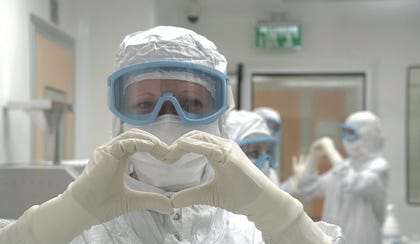
Physicists Dr. Hilik (Yehiel) Frank, founder and VP of Technologies at L2X Labs, and Dr. Jenya Papeer, founder and CEO of the company, teamed up to establish a start-up that may change chip manufacturing processes. "Through the use of Extreme Ultraviolet (EUV) technology, we are building radiation and light sources that are a critical component in chip manufacturing processes, particularly for the most advanced chips on the market. These chips are essential for the continued development of today's cutting-edge technologies such as AI, IoT and others, making them of critical importance to our future. Thanks to the innovations we are currently working on, and after the first round of fundraising, the semiconductor industry will be able to advance to the next generation of production processes," explains Dr. Frank, who holds a Ph.D. from the Hebrew University of Jerusalem and specialized in the field of atomic physics at the Lawrence Livermore National Laboratory in California, USA. Dr. Papeer, who also holds a Ph.D. in physics from the Hebrew University, is the author of 15 peer-reviewed scientific publications, over 20 patents and a researcher with over 15 years of experience including in the field of EUV sources and EUV lithography. The two met when they were working together at the Hebrew University.

The race for nanometer chips
The semiconductor industry is at the threshold of a technological revolution rapidly moving towards the development of chips with structures the size of a few nanometers or even less (a billion nanometers = 1 meter). The enormous importance of these chips lies in the fact that the development of almost all next generation technologies such as artificial intelligence, autonomous vehicles and advanced medical devices depends on these chips. Without the ability to manufacture these chips, it will not be possible to actualize most of the technologies being developed today. Additionally, smaller, more powerful chips also enable improved energy efficiency and better overall performance even for existing applications.
Dr. Papeer explains: "The world of chips, which now is marking 70 years of existence, has seen the features on the chip continue to get smaller and smaller, allowing more processing units on each chip. The printing of electrical components on a chip is done using light in a process called lithography. Light has a characteristic 'size' called a wavelength, creating such small components requires light of extremely short wavelengths. The problem is that light sources with the required wavelengths, of a few nanometers, simply didn't exist. For that, it was necessary to find new sources of radiation, and that's where we come into the picture."
Over the years, the structures printed on the silicon chips have shrunk dramatically from 10 micrometers in the 1970s to 5-nanometer structures being produced today. "The roadmap for the semiconductor industry is Moore's Law, which states that the number of transistors on a microchip doubles every two years. This technological forecast was made back in the 1960s, and has been a driving force for companies to constantly innovate and push the boundaries of technology," explains Dr. Frank and emphasizes that, "At the same time, in the early 2000s, the industry reached an impasse, simply because they were unable to reduce the wavelength of the radiation sources and consequently shrink the size of the transistors."
Creating short-wavelength radiation for industry
Dr. Frank and Dr. Papeer found the solution for creating such sources based on the interaction of powerful lasers and materials. This idea that was presented, for the first time commercially to the chip industry, by the Dutch company ASML, which manufactures lithography machines. Dr. Frank explains that although this technology broke the glass ceiling and introduced short wavelength radiation sources for the first time, "there are still quite a few significant challenges that leave the chip industry without an adequate solution, such as the very low electrical efficiency. The process developed at ASML consumes 1.3 megawatts of electricity to produce 250 watts of EUV radiation. To illustrate, this is similar to using the electricity of an entire neighborhood in order to light just one bulb." Another problem identified by L2X is the lack of response of the existing sources to the needs of the industry in general. Alongside the development of lithography processes, there is a critical need for new sources in other processes, such as testing and measuring in the chip industry, in order to support this technological progress.
When Frank and Papeer recognized the limitations of the technology developed by ASML, they decided to find alternative methods of creating radiation sources (with short wavelengths) that could offer better performance and reliability and provide a solution for other sectors of the industry that urgently need it.
Wavelength depending on the required application
Dr. Frank and Dr. Papeer note that the first radiation source being developed at the L2X laboratories in Jerusalem is the most advanced of its kind in the world, in that it allows chip testing processes to be carried out using radiation at extremely short wavelengths. "These sources allow us for the first time to identify defects and measure structures with a size of a few nanometers or even less than a nanometer!" Dr. Frank states, adding that the very ability to identify and measure these defects becomes critical as the structures on a chip become smaller. "Thus," he continues, "the sources of L2X, which are characterized by extremely high brightness, for the first time in the world enable the operation of several processes using a source single, and even allow the option of selecting from a variety of different wavelengths according to the required application."
Looking for partners
L2X was established at the end of 2021 with the support of the Innovation Authority and the Jumpspeed VC, which supports advanced technology companies in the city of Jerusalem. "Recently, the company has grown significantly and we are witnessing great interest from industry partners in the sources we are developing," reveals Dr. Frank. "We are aiming to present our first product to the market by the end of next year and to move into the company's growth phase, transitioning from development to production," adds Dr. Papeer and explains that "for this leap we are looking for additional partners who would like to take part in the chip industry's move forward into the next generation."
Year etablished: 2021
Founders: Dr. Hilik (Yehiel) Frank and Dr. Jenya Papeer
Field of activity: Development of radiation sources that are a critical component for the semiconductor industry – for the future production of advanced chips
Guiding motto: Illuminating the future of the chip industry