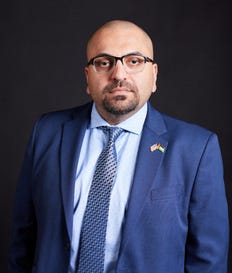
Pinny Chaviv, Ramon Axelrod and Rami Kasterstein are the founders of IKKO Health, a company that develops a new medical imaging modality, which is wearable, accurate, safe and economical.
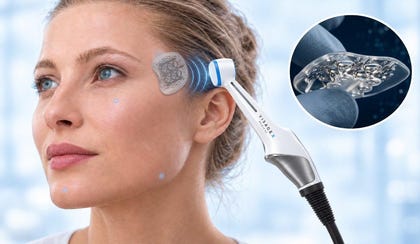
The new modality uses a wearable element that contains hundreds of ultrasound transducers and an electronic system for acquiring signals and transferring them securely into the cloud. The major part of the processing is done by advanced algorithms in the cloud, creating a three-dimensional model of the scanned area, produced from the body signals.
IKKO Health CEO, Pinny Chaviv, talks about the project's history: "About 15 years ago, Ramon had the idea that diseases do not happen overnight. When a person collapses in the street due to a heart attack, his arteries didn't get clogged the second he collapsed. This medical problem has gradually developed over a long time. The same goes for a variety of pathologies, for example cancer. These medical pathologies are normally discovered only after the symptoms appear.
Ramon was looking for a way in which a person could be tested once a year or once every six months to detect diseases even before the onset of symptoms. The challenge was to find a way to do this test without using harmful radiation and in a simple and economical manner, because it is a test that needs to be repeated annually. 15 years ago, the technology had not yet reached the level where such an idea could be realized so the idea was put on hold. At the end of 2019 we thought that the computing infrastructure and sensor technology reached a satisfactory level and we decided to focus on realizing this idea and bringing it to market. We worked for about a year without external funding and finally founded the company at the beginning of 2021."
The three founders have known each other for about twenty years. The CEO Pinny Chaviv holds a B.Sc in electrical engineering from the Technion and an MBA from Harvard Business School. He worked for about 20 years at ECI Telecom in various roles, then moved to the VC fund Star Ventures, and from there to being an entrepreneur. He founded bTendo, which was sold to a large European company, and has served as an advisor to other startups. The CTO, Ramon Axelrod holds a B.Sc in mathematics and physics from Tel Aviv University and an M.Sc in nanomaterials. Ramon served in the Air Force, founded AI Seek, which developed one of the world's first AI processors, and has worked over the past 20 years in various AI startups.
IKKO Health was founded in 2021. The company's offices in Tel Aviv employ ten full-time employees and several part-timers. The company has won grants from the Israel Innovation Authority and raised $6 million from a VC fund and private investors.

How does IKKO's new modality differ from what is currently available in the market?
"Our innovative technology harnesses the power of advanced algorithms, cloud computing and miniaturized sensor technology, enabling a 360 degrees data acquisition around the scanned area. Today, medical imaging systems are general-purpose — both CT and MRI are excellent imaging machines, but they are also large, expensive and require special infrastructure, shielding, and skilled operators. These systems suffer from price and availability problems, as evident by the long waiting time for each of them. We wanted to develop an accessible imaging system that can be operated anywhere without harmful radiation and without the need of skilled operators. The product we developed is wearable, a kind of vest or wide abdominal belt that surrounds the scanned area. The wearable nature of the product allows medical tests that are not possible today, such as imaging while the patient is moving or very long imaging scans, for example of the digestive system. Several hundred transducers are embedded on the wearable belt, transmitting and receiving signals at ultrasound frequencies. This is not an ultrasound test, but we do use ultrasound frequencies. The scanning belt is placed around the scanned organ, and the scan itself takes about one second and the logistics of wearing the belt and entering the patient data and required protocol may take few more mintes. The Quantity of transducers and the information they transmit and receive enable much more information to be captured than in a standard ultrasound scan, so the final high-resolution image is much more detailed and accurate. The Modality does not require any special infrastructure or room, and there is no need for a skilled technician to operate it. The diagnostic process is reduced from weeks to minutes."
Chaviv explains that the modality produces high-resolution images, with contrast levels similar to the contrast of an MRI machine, thanks to the fact that the algorithms calculate several parameters of the scanned organs (such as velocity, attenuation, specific weight, etc.). Using more than a single parameter creates the high contrast. The cost structure of the new scanning modality is very beneficial to clinicians, and this is an important parameter in the company's business model – Imaging as a Service. It allows mass distribution and a widespread use", says Chaviv. "After scanning, the information is transferred to the cloud, where our unique software creates a three-dimensional model of both soft and hard tissues in the scanned body part. The high-resolution, high contrast, model is encoded to a standard medical format (Dicom) — and the system connects to the PACS medical information network so that any radiologist can read the model and its results."
Avoid unnecessary hospital visits
The first clinical application developed by IKKO Health is designed for the knee joint — with the aim of penetrating the orthopedic market and scanning knee injuries, which are particularly common. "20% of adults in the US suffer from knee pain — that's about 50 million people a year," says Chaviv. "40% of all sports accidents are knee injuries — about 2.5 million people a year in the US alone. Every time there is knee pain or a knee injury, you have to go to the emergency room or to a medical imaging center to have a knee ultrasound and, in most cases, an MRI scan. Our product can revolutionize this market: it can be placed in every orthopedic doctor's office, in every nurse's room at schools. It only requires charged batteries and an internet connection. As soon as a knee injury is suspected, the knee scanning belt can be strapped around the knee, a scan performed and 15 minutes later the doctor receives an accurate 3D images of all the internal organs within the knee without having to rush the patient to the emergency room for an ultrasound and MRI scans."
Chaviv emphasizes that the new modality does not replace an MRI or CT— rather, it is a technology focused on a Point of Care treatment — providing diagnosis and treatment to the patient where he is without rushing him to emergency rooms or imaging centers.
Another product application is staging of fatty liver disease — a disease that a third of the world's population suffers from and is not always aware of. "It is of great importance to identify the disease in time and monitor it before it develops into liver cancer, especially today, when there is an FDA-approved drug to treat the disease," explains Chaviv. "This is a chronic disease and we definitely intend to enter the chronic disease market in the future, for example fatty liver and various intestinal diseases such as Crohn's and Colitis — where their periodic tests, such as colonoscopy, are invasive and not easy to perform. IKKO's modality will be able to greatly facilitate the process and identify medical findings at very early stages. Our device is intended for both screening tests — early diagnosis and monitoring tests — of chronic diseases."
To date, the company has tested the product on phantom models, and it will reach clinical trials in 2025. "We submitted a preliminary application to the FDA to check if we are on track, and we received very good answers. At the end of the clinical trial, we will submit them the results."
IKKO Health
Founders: Pinny Chaviv, Ramon Axelrod, Rami Kasterstein.
Year of establishment: 2021.
Field of activity: Medical devices for early diagnosis.
Leading motto: The future lies in high-level medical imaging, as close as possible to the patient (Point of Care).
In Association with IKKO Health