In a world where the climate crisis looms over humanity's future, Carbonade brings a breath of fresh air. This Israeli company, founded just two years ago, has set out to turn the so-called "villain" of the environmental story—carbon dioxide—into a hero. Adopting the approach of "if you can't beat it, join it," Carbonade is converting a major problem into an opportunity by transforming CO₂ into sustainable, impactful solutions.
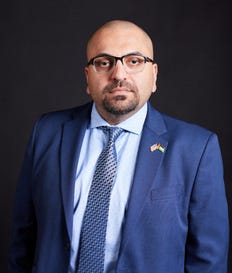
"I like to say that when life gives you lemons, you make lemonade," explains Raanan Shelach, CEO of Carbonade. "That's the essence of our company: taking carbon and turning it into something beneficial". The goal, he emphasizes, is to create solutions that reduce the amount of CO₂ in the atmosphere while supporting a sustainable future for humanity and the planet.
From Fighter Jets to Climate Solutions
Raanan Shelach served as a fighter pilot and commander in the Israeli Air Force for nearly 30 years. "My career began on the wrong side of the climate equation," he says with a smile. After retiring, he worked in the defense industry in senior positions. However, when COVID hit, it provided him with an opportunity to pause and reflect on his professional purpose.
"One day, while open-water swimming in the chilly waters of late November, I encountered a swarm of jellyfish. It was not just the painful stings that got to me—I realized this was a symptom of climate change," Shelach recalls. "That moment made me think about the future of my three children and generations to come. It was the turning point where I decided to shift my focus."

Shelach's exploration led him to Yehuda Bornstein, an environmental entrepreneur who describes himself as a "serial builder of climate startups." Together, they partnered with YEDA at the Weizmann Institute of Science, which connects academia with business. There, they discovered a groundbreaking catalyst developed by Professor Ronny Neumann and Dr. Dima Azaiza-Dabbah that could efficiently and economically break down carbon dioxide. "This catalyst became the cornerstone of our revolutionary innovation," Shelach notes.
The Problem with Carbon Dioxide
"CO₂ emissions are a significant environmental challenge," Shelach explains. Since the Industrial Revolution, humanity has relied on fossil fuels like coal, oil, and natural gas for energy, as well as to produce over 6,000 different daily products. This dependency has dramatically increased CO₂ levels in the atmosphere, contributing to the greenhouse effect and global warming. Rising temperatures have far-reaching consequences, including melting glaciers, rising sea levels, extreme weather events, and damage to ecosystems.
"Without effective solutions to reduce emissions and dependence on fossil fuels, the situation will worsen, negatively impacting the quality of life for everyone," Shelach warns.
Carbonade's Game-Changing Technology
While de-carbonization efforts such as the transition to electric vehicles and shifty to renewable energy have helped reduce carbon use, certain sectors—like aviation and maritime transport—still rely heavily on carbon-based energy due to the high energy density required. Batteries and hydrogen alone cannot meet these needs.
Carbonade's innovative solution involves breaking down CO₂ to produce useful products such as sustainable fuels, polymers, and chemicals, all powered by renewable energy. The process is inspired by nature's photosynthesis, where plants use sunlight, water, and CO₂ to build themselves. Similarly, Carbonade's approach converts CO₂ into valuable materials utilizing electrochemical technology, reducing dependence on polluting sources without adding more carbon to the atmosphere.
The Catalyst Breakthrough
Scientists have been trying to solve the challenge of CO₂ conversion for decades. "The main problem is the molecule's stability, which makes breaking it down energy-intensive and uneconomical," explains Shelach.
The breakthrough came from the catalyst developed at the Weizmann Institute, which enables efficient and stable electrochemical CO₂ conversion. This process requires 40% less energy than previous methods and is protected by patent. "This catalyst is one of our most valuable assets," Shelach proudly notes.
A Diverse Team Driving Global Impact
Carbonade's team is small but diverse, consisting of four members, three of whom are women. Among them are Dr. Alina Amel, the company's CTO and an electrochemical expert and an immigrant from the former Soviet Union; Dr. Shada Ammar, the Chief Scientist from the Druze community; and Efrat Ozeri, a materials and chemical engineer and a combat officer (res.) from the Jewish religious sector. "This unique diversity allows us to tackle challenges from different perspectives and channel all our (green) energies toward meaningful technological progress," Shelach says.
He highlights that the climate crisis knows no borders and requires global collaboration. "The most vulnerable populations are often the hardest hit by climate change, while the most developed nations contribute the most to emissions," he observes. "It's in everyone's interest to work together to create solutions."
Investors and Recognition
Carbonade's innovative work has attracted leading international investors, including SOSV, E44, SIG, Arc Impact, Raspberry, and Gravity. The company has also been accepted into the prestigious Israeli Innovation Authority grant program, which provides recognition and financial support for its development and growth.
"Especially after the events of October 2023, we're not just developing technology—we're creating hope," Shelach concludes. "Our work addresses a global problem and pushes us forward toward a brighter future."
Carbonade
Established: 2022
Founders: Raanan Shelach, Yehuda Borenstein
Field of Expertise: Climate Technologies
Guiding Motto: To create meaningful and impactful solutions for a better future for the environment and humanity.
In collaboration with Carbonade