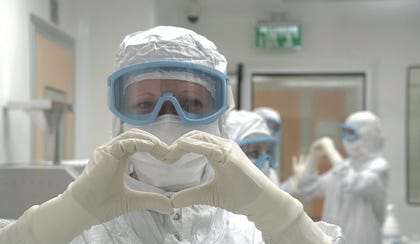
In the company's laboratories in Nes Ziona, a team of about ten experts in tissue engineering, biotechnology, and regenerative medicine is working on a development that could change the lives of millions of people. Matricelf, founded in 2019 by Prof. Tal Dvir and Dr. Alon Sinai, has developed an autologous neural implant – technology designed to replace damaged spinal cord areas and enable functional recovery for paralyzed individuals.
The company's CEO, Gil Hakim, states that the technology aims to improve the function of millions of paralyzed individuals worldwide. "Our primary goal is to restore sensations and control of bodily functions, which are urgent needs, and of course, we aspire to enable them to walk independently again. This is not just technological progress; it's a fundamental shift in medical treatment. We combine science, medicine, and humanity and strive to change the reality for paralyzed individuals," Hakim explains.
How does the technology you developed work?
"The implant is created from a combination of fat tissue and blood taken from the patient's own body (autologous) and processed using advanced tissue engineering techniques to create functional nerve tissue. Since the implant is based on the patient's cells, it avoids immune rejection by the body and increases the chances of recovery. The new nerve tissue is implanted at the injury site and serves as a biological bridge reconnecting nerve communication, allowing for the restoration of movement and sensation capabilities."
You are still in the development phase but already listed the company on the Tel Aviv Stock Exchange in 2021. Where does your and your investors' confidence that the development will work come from?
"We draw confidence from the success of a pilot experiment we conducted on an animal model: a rat with a spinal cord injury simulating a compression injury – a common type of injury in car accidents in humans. During the experiment, we implanted a human neural implant at the damaged site, and the result was impressive – the rat regained the ability to walk and even run. The experimental model, recognized by the FDA, replicates the biological mechanism of paralysis caused by the cessation of signal transmission between the brain and muscles. The success of the experiment strengthens our belief in the technology's ability to work in humans as well."
"Moreover, the economic data underscores the need for our solution: healthcare expenses for treating paralyzed individuals are enormous, reaching millions of dollars per patient. In the United States alone, annual costs are estimated at around $50 billion. This highlights a large target audience and a genuine need for innovative developments, which bolsters the economic feasibility of the development alongside its medical potential."
Expertise in Tissue Engineering
Prof. Tal Dvir, the company's co-founder and chief scientist, is considered one of the world's leading experts in biotechnology, tissue engineering, and regenerative biomedicine. Prof. Dvir also heads the Nanoscience and Nanotechnology Center and the Sagol Center for Regenerative Biotechnology at Tel Aviv University, where he leads groundbreaking research in regenerative medicine and has won prestigious international awards in the field. The idea of developing autologous implants based on tissues created from the patient's own cells was what led him to establish Matricelf in collaboration with biotech entrepreneur Dr. Alon Sinai.

"This feels like a sci-fi movie," says CEO Gil Hakim enthusiastically. "I was captivated by the idea, the technology, and the tremendous potential to change the world of medicine. I have great faith in the company's team, which consists entirely of leading experts in their fields. For me, this is much more than just another drug or treatment – it's a fundamental change in the entire medical approach. Our solution aims to address a problem that currently has no treatment and to offer hope to those suffering from severe personal tragedies, often young people. The average age for spinal injuries is around 40 – one injury changes their lives completely, from full independence to complete paralysis and lack of sensation and function below the injury point. Who doesn't remember the story of Christopher Reeve? How a fall from a horse left him paralyzed from the neck down. Our technology brings a revolutionary solution that could change the picture for these individuals. We believe it could be a significant breakthrough – one that not only restores vital functions but perhaps even enables people to walk again in the future."
Can this technology be used for other medical purposes as well?
This platform allows for treating various injuries and damages to the nervous system, including the brain and spinal cord. Using the same tissue engineering technology, it is possible to create a variety of nerve tissues tailored for treating head injuries or stroke victims. To expand the range of treatments and reach additional indications, the company obtained a unique license from Tel Aviv University for tissue printing technologies. Prof. Tal Dvir, the founder, is a pioneer in this field and was the first to print a tissue-based heart structure in 2019 and has since also printed blood vessels. We conducted the IPO solely based on proof of concept; now we are continuing to raise funds to further develop the company's technologies, exploring all possible avenues.
When will the first human patient receive treatment?
We received preliminary approval from the Israeli Ministry of Health to begin treatments as part of compassionate care, and the first patient is expected to undergo the treatment in 2025. This marks a significant milestone for the company. The treatment begins with taking blood and fat tissue from the patient, from which the implant is created in a process that takes up to six months. During the process, fat and blood cells are transformed into unique nerve tissue, which appears as tiny tissue spheres just a few millimeters in size. A neurosurgeon specializing in spinal cord surgery implants the spheres at the injury site, and results are expected to be seen within a few months.
Matricelf
Year Established: 2019
Founders: Prof. Tal Dvir and Dr. Alon Sinai
Field of Operation: Tissue engineering and regenerative medicine
Leading Motto: Changing reality for spinal cord injury patients.
Collaboration with Matricelf