Despite its size, Israel is in the process of becoming a world leader in the growing FoodTech sector – a category that leverages science and technology to create new types of foods and beverages that are usually healthier, more nutritious and/or more sustainable than traditional options. Today, there are over 200 FoodTech start-ups active in Israel, of which around 70 are in the sub-category of alternative proteins.
Remarkably, 12% of total global investments in FoodTech go to Israeli companies. Even more incredible is the fact that tiny Israel is #2 in the world in the overall number of FoodTech start-ups and absolute investments – after the United States. Moreover, approximately 25% of worldwide investments in cultivated meat go to Israeli companies, many of which are global leaders in this field.

One of the reasons for Israeli prominence is that FoodTech relies on disciplines where Israel has considerable expertise, such as biotechnology, agritech, data analytics, and entrepreneurship. Israel is particularly prominent in the sub-category of alternative proteins, which is a rapidly growing industry due to surging demand for its products around the world. Indeed, increasing numbers of concerned consumers prefer to obtain their protein from sources that are more friendly towards the environment and towards animals than conventional meat. Producing meat from animals requires enormous amounts of water, and as the Earth's population grows, experts are concerned about the depletion of natural resources in the not very distant future.
In order to meet this growing demand for alternative protein, researchers are intent on developing innovative technologies for producing options other than animal-sourced meat. There are three main types of alternative proteins: plant-based products from sources such as grains and peas, cell-based cultivated meat derived from animal cells, and precision fermentation protein developed from microorganisms. Israeli researchers and start-ups are active in all three categories.
The challenge is to obtain parity between the products' nutritional value, its physical attributes such as taste and texture, and production costs. It is important for the production processes to be efficient and scalable so that the products' prices can be reasonable once they reach the market.
High priority
As always, the Israel Innovation Authority has its eye on the ball. Aware of the enormous potential of Israel's FoodTech industry, the Authority is determined to support local entrepreneurs, researchers, and start-ups in this field. In fact, helping Israeli FoodTech thrive is today one of the organization's highest priorities.
"The Israel Innovation Authority has invested over $100 million in the FoodTech industry, nearly 75% of which was in alternative protein infrastructures and start-ups," asserts Ronit Eshel, Senior Director, Head of Climate Technologies and Innovation in Mature Industries at the Israel Innovation Authority. "In 2023, we doubled our annual investment in FoodTech compared to the previous year, to $24 million. This reflects our interest in this area."

In particular, the Israel Innovation Authority has invested in several large infrastructure initiatives that facilitate advanced research. "We look forward to seeing the Israeli ecosystem benefit from infrastructure and services provided for scaling production to enable economic feasibility assessment, regulatory preparedness, and more," says Dror Bin, CEO of the Israel Innovation Authority.
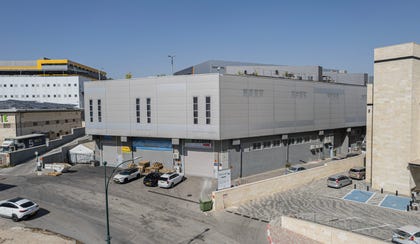
Last year, the Authority announced plans to build a fermentation plant to support and strengthen the development of fermentation-based alternative protein, and selected YDLabs to lead the facility's construction. YDLabs is an Israeli R&D facility specializing in fermentation processes that offers comprehensive services from ideation through the pilot phase.

"The addition of scale-up infrastructure such as the one we provide allows Israeli companies to significantly accelerate their development," explains Ariel Blumovich, Founder & CEO of YDLabs Ltd. "Instead of seeking to outsource their scale-up and production, local companies have a state-of-the-art manufacturing facility no more than a couple of hours drive away."
For several years, the Israel Innovation Authority has been especially involved in supporting the development of cultivated meat technologies in Israel. In 2022, it headed the establishment of the Israeli Cultivated Meat Consortium, a group of entrepreneurs and researchers from industry and academia. The Consortium is devoted to creating next-generation, high-quality cultured meat products that can be viable alternatives to animal-based proteins. By sharing resources, knowledge, and expertise to address key challenges in the production process, members of the Consortium are working together to accelerate the development of cultured meat technologies – in particular, speeding up the pace of cell growth – with the aim of making Israel a global leader in this field.
"The constructive collaboration between academia, big companies, and start-ups in the Israeli Cultivated Meat Consortium is a great example of how different types of organizations can work together to advance an emerging technology and create a more sustainable and ethical food system," notes Bin, adding that the Israel Innovation Authority recently approved funding for the Consortium's second phase, which will run for three years.
Last year, the technology incubators The Kitchen and Fresh Start added new FoodTech start-ups to their portfolio; and a record number of FoodTech companies applied to take part in the "Development to Production" program offered by the Israel Innovation Authority.
Overcoming barriers
Ronit Eshel explains that one of the main reasons that the Israel Innovation Authority is so deeply committed to supporting Israel's FoodTech sector is that it believes that the industry can become an important engine for Israel's economy as a whole. "Today there are 70 alternative protein companies in Israel. We think the number can grow to 200, requiring dozens of new manufacturing facilities. This could lead to 10,000 new job opportunities, including many manufacturing roles," she predicts, based on research jointly led by the Israel Innovation Authority, the Good Food Institute (GFI) Israel, the WEF, C4IR Israel and the Shaldor consulting firm.
Indeed, although there are many mature FoodTech companies in Israel, some of which are successful internationally, there are still numerous early-stage technologies in the pipeline, at various stages of research and development. Looking ahead at the industry's future needs, the Israel Innovation Authority is helping establish training programs to ensure that the ecosystem will have sufficient high-quality human resources in the future.
The Israel Innovation Authority is also deeply involved in efforts to remove and avoid regulatory barriers that could set back the FoodTech industry's ability to grow. Setting regulations is a key necessity for every new industry, and for FoodTech this process is currently in its infancy in most countries. "Regulations are very important and right now there is a lot of ambiguity around the world. I am proud that Israel is pioneering the regulatory landscape," says Eshel.

She is referring to the fact that in January Israel became the first country in the world to approve the sale of beef-based cultured meat. The Ministry of Health granted permission to the Israeli company Aleph Farms to sell its laboratory-grown "Black Angus Petit Steak" in Israel – making Israel the first country where consumers will soon be able to eat cell-based cultured meat in restaurants or at home.
Israel is actually one of only three countries that have approved the sale of cultured meat, along with the United States and Singapore, which approved the sale of chicken-based cultured meat. "When one country implements regulations that approve the process for a new technology, it paves the way for others," notes Eshel. The Israel Innovation Authority has been working with the Israeli Ministry of Health, the Food and Agriculture Organization of the United Nations and the World Economic Forum to ensure that international regulations will be favorable towards the industry and will enable Israeli companies to sell their alternative protein products around the world.
The Israel Innovation Authority is soon going to publish the first report on Israel's alternative protein sector, in collaboration with the World Economic Forum, C4IR Israel and GFI Israel. The paper will showcase the case-study "Creating a Vibrant Food Innovation Ecosystem: How Israel Is Advancing Alternative Proteins across Sectors."
Affected by the war
Just like everything else in Israel, the country's FoodTech sector was shaken by the events of October 7 and the ensuing war. Many of its workers – including a significant percentage of those involved in R&D and in management roles – were called to serve in the reserves and were consequently absent from work for many months. Others were evacuated from their homes or mourning the loss of loved ones.
Quite a few FoodTech facilities and companies are concentrated in the Kiryat Shmona-Tel Hai area along the border with Lebanon – a region that became a conflict zone and has been evacuated since mid-October. Many of these companies temporarily moved their facilities to safer locations. YDLabs was among those that reached out to start-ups from that region and invited them to relocate to their premises. The Israel Innovation Authority actively helped companies transition during the early stages of the war.
Regardless of their geographical location and the number of absent employees, most companies saw their businesses impacted by the events. Clients and partners from outside of Israel still expected start-ups to abide by their commitments and to deliver on schedule – which was incredibly challenging under the circumstances. Moreover, potential and actual investors were hesitant to go ahead with planned investments, and start-ups throughout Israel discovered that they weren't able to proceed with funding rounds. Very quickly, many faced an existential crisis.
When investments began drying up due to the war, the Israel Innovation Authority decided to provide a safety net, and launched a Fast-Track Bridging Fund that distributed over $100 million to start-ups in need of emergency funding (See page 10). The idea was to inject urgently needed money into young companies and enable them to continue developing their products for at least a full year. "Some of these companies were at very early stages while others were about to launch innovative products, and most relied on these investments to continue their operations," says Eshel.

TuttiPuffs Ltd. is just one example among many. The start-up, which is based in Kiryat Shmona, developed a technology to produce healthy crisps that preserve the vegetable's flavor and are very nutritious. The company holds two registered patents, and on October 7 it was on the verge of launching its product internationally. The CEO found himself alone because most of the other employees were called up to the army. Even worse, the company was required to evacuate its facilities and move to a safer area. There were also issues with reticent investors.
"We helped them. We provided grants from our Fast-Track Bridging Fund so that they could continue with their first shipment," says Eshel. "This program helped a lot of companies. Furthermore, the fact that we carried out thorough due diligence also reassured investors."
During crises as well as regular times, Israel's famous tech ecosystem can count on the support of the Israel Innovation Authority. Looking beyond the current challenges, the Authority is doing everything it can to ensure that Israel's FoodTech sector will not only be a global leader but also a source of great national pride.

INTERNATIONAL WEBINAR
The Israel Innovation Authority is hosting an international webinar on May 21 to discuss the FoodTech ecosystem following the publication of a report conducted by the Authority in collaboration with the Centre for the Fourth Industrial Revolution (C4IR) at the World Economic Forum, and its Israeli Chapter, as well as the Good Food Institute (GFI) Israel. To register for the webinar, click here >>
LARGE RANGE OF TRAILBLAZING COMPANIES
The Israel Innovation Authority has been instrumental in helping Israel's FoodTech sector thrive. Since 2020, it has invested nearly NIS 200 million in over 150 R&D projects. Among the companies supported by the Authority:
- BioBetter, which developed plant-expressed growth factors that significantly cut the costs and enable the scaling of cultured meat production. "In collaboration with the Israel Innovation Authority, we are not only addressing food security challenges but are also paving the way for a sustainable and resilient global food system," says its CEO, Dr. Amit Yaari.
- ProFuse Technology, an innovator in the field of muscle cultivation and regeneration. Launched within the Israel Innovation Authority's Fresh Start FoodTech incubator, ProFuse's award-winning muscle growth technology finds applications in both cultivated meat and life science sectors. "Thanks to follow-on R&D grants from the Israel Innovation Authority and the EU, we were able to navigate unforeseen challenges," asserts Guy Nevo Michrowski, Co-Founder and CEO of ProFuse Technology.
- BlueTree Technologies, inventors of innovative sugar reduction solutions. By collaborating with the Israel Innovation Authority, the company has developed technologies that empower people to make healthier choices without sacrificing taste. "This positions Israel at the forefront of a future where delicious and nutritious food go hand-in-hand," points out Michael Gordon, CEO of BlueTree Technologies.
- Aleph Farms, producers of Aleph Cuts, the first beef-based cultured meat in the world to receive regulatory approval. "The Israel Innovation Authority and Israel's Ministry of Health have provided us with steadfast support that has proven integral for our mission of sustainability and food security," says Didier Toubia, CEO and Co-Founder of Aleph Farms.
- SavorEat, developers of a pioneering chef robot, capable of crafting personalized plant-based meals. "Leveraging advanced technologies, SavorEat's market-ready solutions not only ensure food safety and reduce environmental impact but also showcase our readiness to meet consumer demands and navigate complex global issues," notes Racheli Visman, SavorEat's CEO and Co-Founder.
- Sea2Cell, leaders in cultivated seafood, focusing on cost reduction and nutritional value across a diverse array of fish species. Backed by the Israel Innovation Authority's Fresh Start grant and a second follow-on R&D grant, Sea2Cell is pioneering ground-breaking technologies to overcome industry challenges. "Having demonstrated resilience and adaptability while navigating through previously unimagined challenges, which included relocating our lab under fire, Sea2Cell is unwavering in its quest to feed the world," affirms Dr. Orna Harel, Sea2Cell's CEO.
Partnered with the Israel Innovation Authority