Since it was founded nearly 100 years ago, the Technion’s world-class scientists have immersed themselves in developing innovative technologies that have not only been crucial for Israel’s economy, society and security, but have also impacted humanity on a global scale. Well before António Guterres, the U.N.’s Secretary General, stated last month that, “the climate time-bomb is ticking,” Technion researchers were prioritizing projects that could help reverse our planet’s grim prognosis, mainly by reducing the consumption of natural resources and restoring balance to the Earth's carbon cycle. In a nutshell: by focusing on solutions that promote sustainability.
At the Technion, a wide range of activities and resources are directed towards improving sustainability across a vast spectrum of fields – stretching from energy, transportation and human health to agriculture, food, materials and many others. In order to more efficiently oversee and coordinate all of these diverse activities, the Technion recently established a Sustainability Frontier: a central body tasked with coordinating and expanding the university’s numerous programs that help mitigate climate change.

In addition to the relevant research pursued in almost every Technion department, the Sustainability Frontier’s purview includes academic courses and other educational projects, as well as entrepreneurship and technology transfer, collaborations with both the public and private sectors, and more. It is headed by Prof. Avner Rothschild from the Department of Materials Science and Engineering.
Research throughout campus
By harnessing its excellent resources in fields such as chemistry, biotechnology, physics, biology, computer science, chemical engineering, materials engineering, food engineering, civil and environmental engineering, architecture and town planning, the Technion is well positioned to nurture research that can help solve environment-related global problems. The scope of “green” research projects at the Technion campus is vast. Approximately 200 faculty members and hundreds of graduate, doctoral and post-doctoral students are tackling such challenges as converting solar energy into clean, storable hydrogen and electricity; designing biodegradable foams for packaging; utilizing microbiological additives to engineer “self-healing” concrete; applying big data analytics to optimize indoor energy consumption behaviors; generating electricity from seaweed; and innovating nanofiber catalysts for the conversion of CO2 into alternative fuel.
Many of these exciting projects are driven by the Technion’s culture of multidisciplinary research, which encourages scientists from different areas of expertise to join forces. In fact, the Technion has established more than a dozen research centers that focus on different aspects of mitigating the climate crisis. Among them: the Grand Technion Energy Program, the Grand Water Research Institute, the Israeli Smart Transportation Research Center, the National Building Research Institute, and the Food and Health Innovation Center.

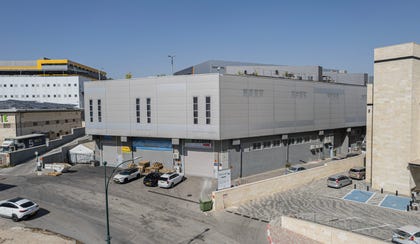
Two new multidisciplinary research centers have recently been added to this list. The Center for Sustainable Processes and Catalysis, which was inaugurated last year, is dedicated to advancing sustainable production processes by developing new types of catalysts; substances that trigger or speed up chemical reactions and play key roles in the production of foods, drugs, materials, energy and many other products. The Carasso FoodTech Innovation Center, which will soon be opened on campus, will serve as a multidisciplinary hub for developing alternatives to animal-based foods that would be more sustainable, healthier, and animal-considerate.
From ideas to real-world impact
The new Sustainability Frontier will also spur the process of transforming scientific breakthroughs emanating from the Technion’s labs into actual products and technologies that can be applied in the real world. Many inventions have the potential of making a real difference in the battle to mitigate the global climate crisis, but scientists are not necessarily innate entrepreneurs capable of translating their innovations into start-up companies.
The Technion’s technology transfer office, T3, is an important link between academia and industry and has a proven track record helping budding entrepreneurs commercialize sustainable, high-impact inventions. In fact, some of the ClimateTech start-ups that were born at the Technion and nurtured by T3 are today successful companies whose cutting-edge products are reaching markets around the world.
One example is H2PRO, a pioneering start-up that uses innovative green energy technology invented at the Technion to produce hydrogen efficiently, inexpensively and safely – heralding a new era of green hydrogen production. H2PRO was founded in 2019 by Technion researchers Prof. Gideon Grader of the Wolfson Faculty of Chemical Engineering, and Prof. Avner Rothschild and Dr. Hen Dotan of the Department of Materials Science and Engineering, in collaboration with entrepreneur Talmon Marco. The company, which received an exclusive license from T3 to commercialize the technology, has raised more than $100 million and its R&D Center in Caesarea employs more than 100 people, many of whom are Technion alumni.
Aleph Farms is another example of a successful start-up nurtured by T3 that addresses the climate crisis. The company is a pioneer in the field of cultivated meat, having developed the world’s first cell-based ribeye steaks, produced through bioprinting. The novel technology, invented in the lab of Prof. Shulamit Levenberg of the Technion’s Faculty of Biomedical Engineering, provides an excellent solution to the challenge of producing sustainable food that can feed the world while preserving the planet. Aleph Farms has also raised more than $100 million.
Green campus
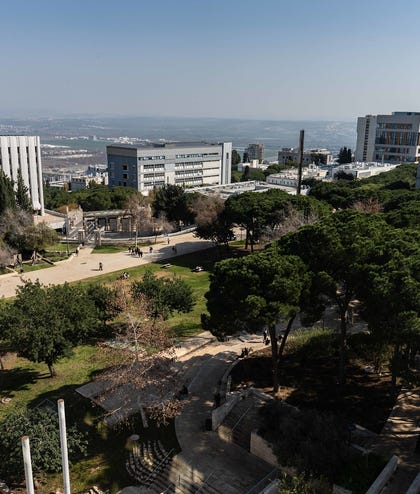
The Technion’s commitment to promoting sustainability is visible throughout the beautiful campus on Haifa’s Mount Carmel. Every effort is made to reduce energy consumption and waste throughout the university. Recently, the Technion has engaged in conducting a comprehensive survey aimed at assessing its total carbon footprint. The study not only analyzes electricity and water use, but also food, transportation and other areas that impact the environment. “We are actively working to reduce our carbon footprint,” explains Prof. Rothschild, adding that, “last year, we stopped purchasing all disposable plastic dishes. The step was a big success.”
In fact, the Technion is a vibrant community of almost 15,000 students, several thousand employees, and almost 700 faculty members and as such, serves as a large “living lab” for assessing novel technologies to reduce consumption and save energy. The university’s dorms, for example, have been used to test innovative ways to decrease the use of electricity.
An important part of the Technion Sustainability Frontier’s platform is to foster outreach programs with the community at large. “We work with the Haifa Municipality, the Haifa port, local industry, government agencies and others to promote an agenda of sustainability in Haifa, Israel and worldwide,” elaborates Rothschild.
As it has in the past 100 years, the Technion is determined to continue to be a pioneer that looks towards the future and strives to improve the
world.
Partnered with the Technion