“Unlike many others in the autonomous vehicle industry, Imagry isn’t a car manufacturer, and we don’t build hardware as computers, cameras, sensors or chips,” Says Eran Ofir, CEO of Imagry. “We are a software company that has developed a mapless autonomous driving technology that uses deep neural networks to make complex driving decisions instantly, much the same way, if not better, than humans do.”
Using perception and motion-planning to make the drive human like
By use of Visual Imaging Sensor (VIS) cameras that offer a view of the car’s entire surroundings, Imagry generates robust functional road perception. The Imagry system is based on two main principles:
Perception: The MiniMap system scans the car surroundings in 360 degrees, up to a range of 200 meters. All available road data of every possible form (traffic signs, traffic lights, lanes, roundabouts etc.) is processed and the road topology is reconstructed. The system then classifies the objects in the car’s vicinity (pedestrians, bikers, parked and moving vehicles etc.), positioning them in the 3D-space and predicting future trajectories.
Motion Planning: SpaceNet, the spatial reasoning deep neural network, uses human-like AI performance to learn to drive, by mimicking a human driver’s reactions in an assortment of common, and not so common, situations. The learned behaviors can later be applied to new situations, even those that the system has not been trained to handle.

Ofir explains the Imagry system as “Humans learn via a combination of observation, imitation, and practice. We have designed a system that works on the same principles. Imagry's bio-inspired technology does supervised learning, collecting and processing peripheral information from the cameras. This data is sent to a computer in the vehicle whose purpose is to perform, in real time, the actions that will allow the vehicle to drive autonomously.”
A unique system, changing the face of transportation
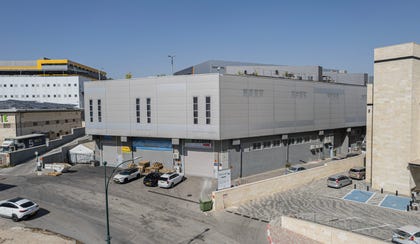
The Imagry system is unique in that it is mapless, with no complex and expensive high definition (HD) mapping required, eliminating localization and communication issues. The Imagry map is based on road data, allowing the cars to be driven in unmapped areas, and to cope with unexpected situations. It can serve a variety of vehicles, offering self-driving options to cars, buses, shuttles and other types of vehicles, with various hardware requirements. “Our patented technology is made ready for L3 (with driver supervision) and L4 (fully autonomous) driving use, and it couldn’t come at a better time. There is a global shortage of professional drivers resulting in supply chains being cut off and public transport disruptions. Using autonomous buses will solve that problem, and will offer more service lines, better customer service, and safer, greener, journeys. We already have a bus route at Sheba Hospital, Israel’s largest medical center, and within a couple of months we aim to go fully autonomous, changing the face of public transport worldwide. More service lines will go live in 2023 and 2024. In the meantime, in Germany and the U.S. we already built the enabling technology for autonomous valet parking, allowing your car to drop you off at your destination and then go seek parking on its own, and Traffic Jam Assist capability, so that where allowed by the law, you can relax and read your paper while the car negotiates the bumper-to-bumper daily traffic,” elaborates Ofir.
Eliminating both human and IT errors
When discussing the advantages of Imagry’s system, Ofir’s eyes light up. “The processing is quicker than a human brain is capable of, with rapid reflexes in any eventuality. It’s our simple design that makes the system so efficient, and more so – self-sufficient. Being unbound to external data sources, without the need for high bandwidth communication and independent of HD maps or multi-sensor fusion, decreases IT related errors, and results in a cost-efficient system that also eliminates cyber security problems.“
Imagry has spent the past 3+ years test driving, collecting data and experience, and mastering ‘supervised learning’ in Israel, the U.S., and Germany. “We are probably one of the most diverse startup companies employee-wise, and I have no doubt that in good part this is what has allowed us to be so creative in our work. The various eyes and viewpoints involved in creating our unique system are priceless, each person bringing their own perspective and culture. We have offices in Haifa, San Jose California, and Rawabi in the Palestinian Authority, training our neural networks, the basis of our system. We are now ready, willing, and able to welcome other transportation operators that want to integrate self-driving buses into their fleet, efficiently and cost-effectively, and join us in revolutionizing the face of public and private transportation.”
Partnered with Imagry