Every hour, the sun provides the Earth with more energy than all of humanity consumes in an entire year, but until just a few decades ago, the ability to harness this energy and use it for our needs was considered unrealistic. Today, the technology that enables us to harness the forces of nature to produce energy is emerging at a faster pace than ever, and with it are companies that think outside the box to develop new capabilities and solve the challenges of the future.
The Israeli company Ener-T, which has been operating behind the scenes for forty years, builds large-scale projects around the world and is known for its creative, integrated and unconventional developments. "Ener-T is first and foremost a technology company," says CEO Asaf Harats. "We are unique thanks to our ability to develop, design, produce, build and operate projects from end to end."
The Waste Disposal Crisis
Israel is facing a significant waste disposal crisis, which is worrying the experts. "This stems primarily from the fact that there is no longer any space for waste landfills in the country, and this is especially true in areas like the Eshkol Regional Council, which includes the Gaza Perimeter communities. This area is known as 'Israel's breadbasket.' It has tens of thousands of dunams of greenhouses that produce over a hundred thousand tons of agricultural waste crops per year, which simply has nowhere to go," says Harats.

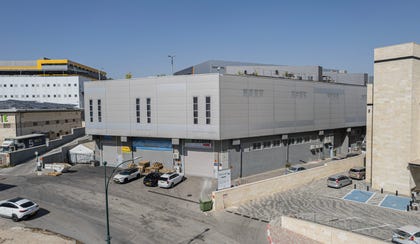
Currently, Ener-T is building a facility in the area, in partnership with Mivtach Shamir Energy, that will process over 300,000 tons of waste per year – 150,000 tons of municipal waste and 150,000 tons of agricultural waste. "We put everything into anaerobic processing facilities, which are sealed units that operate oxygen-free and break down the waste biologically, converting it into methane gas (a natural gas emitted from organic waste). "The methane is used to power generators and produce green electricity, while the remaining material is dried and turned into rich fertilizer known as compost."
And this is just one example of the company circular economy solutions: waste that is transformed into clean energy and high-quality compost. The facility, expected to become operational in 2026, is receiving extensive state support with grants from the Ministry of Environmental Protection and Western Negev localities. Beyond the facility in the Gaza Perimeter, the company plans to initiate and build additional biogas facilities in Israel, some of which are already in advanced stages. Over the next three years, Ener-T plans to invest over 700 million shekels in biogas facilities.
Fighting Against Water Evaporation
Water reservoirs are, of course, a vital resource for agriculture, but they also pose an inherent and familiar challenge. In Israel's hot climate, reservoirs exposed to the sun lose tens of percent of their water each year from evaporation, which reduces water availability for irrigation and other needs. To address this challenge, Ener-T developed a floating photovoltaic system – a solar system installed on reservoirs that generates energy from the sun, with an improved ability to reduce water evaporation, and with the advantage of dual-use of an existing resource.
"We are the first company in the world to fully cover a water reservoir to produce green electricity. In our system, we apply flexible floats using advanced engineering methods that allow us to adapt to situations when the reservoir is emptying or if its bottom and banks are not flat. Thanks to this innovation, we were able to produce complete coverage, including thebanks, and install systems with higher electricity output while increasing water savings."

The project, initiated by the company in Mitzpe Ramon in collaboration with the Mitzpe Ramon Local Council, demonstrates the significant advantages of this technology. The project included the deployment of approximately 10,000 solar panels on a reservoir of approximately 60,000 square meters. "Our unique technology enabled the installation of a system with higher capacity, between 30% and 50%. We showed for the first time that it is possible to fully cover a reservoir, produce a larger amount of green energy, and better conserve water. In addition, we were able to bring forward the connection to the national grid by 14 months, and actual performance is proving to be higher than the original design."
"From Camel Caravans to a Production Plant"
Over the years, Ener-T has been at the forefront of major projects around the world – from the East, through Europe to the United States. One story that illustrates its unconventional capabilities comes from a distant part of India. There, in the heart of the Rajasthan desert, the company was tasked to build a 3,000 hectares solar thermal power plant under virtually impossible terrain conditions – intense heat, water shortages and minimal infrastructure. "When we arrived at the site, the first water we received arrived on camel caravans," recalled Harats. But in this particular case, the company chose to turn the challenge into an opportunity.
It set up a full assembly plant on-site, with two production lines operating in the field and managed to transport and assemble thousands of components that arrived in about 3,000 containers from the company's manufacturing plants around the world. "We built a production line that assembled a 72m² solar collector every 12 minutes. Everything was designed like industrial Lego with precise, fast and high-quality assembly. And that allowed us to meet schedules, maintain competitive costs and deliver performance beyond what was expected."
The company's projects in India, valued at hundreds of millions of dollars, have positioned Ener-T as one of the only Western companies to win tenders and build renewable energy infrastructures on such a scale in Asia. The company emphasizes that managing such complex processes requires not only technology, but also expertise in logistics and construction (EPC – Engineering, Procurement and Construction).
Billions in Investments in Spain
In Spain, Ener-T was among the first companies to enter the solar thermal market in the early 2000s, a time when the field was still considered innovative and unknown. As part of government tenders, the Israeli company was selected to participate in setting up Spain's first power plants, a move that was an extraordinary vote of confidence in the company on the global stage.
"These were huge projects with a total budget of over a billion euros," says Harats. "It was the first time an international company built solar thermal power stations on this scale in Europe, with turbines, heat exchangers and complete steam systems. It required not only engineering knowledge but also an advanced supply chain capable of operating in complex field conditions."
The success of the projects in Spain made Ener-T a leader in the renewable energy sector. "The fact that all of our projects were connected on time and continue to produce electricity at the promised performance rates, even twenty years later, is proof that our strategy of leading in technology and applying it in projects is working," adds Harats.
In solar system projects, it's clear that one of the most critical components is storage capacity. Back in 2012, Ener-T connected systems in Europe able to store more than 600 megawatt per hour, and in recent years every one of its new projects, in Israel and worldwide, has included advanced storage systems as an integral part of the package. During the day, the systems generate electricity both for charging batteries and for sale to the electric company. After sunset, the batteries discharge electricity and continue to supply power to the grid even during evening peak consumption hours and with higher profit potential.

Agriculture Meets Smart Technology
Israel has a severe shortage of agricultural land, and authorities rarely approve new renewable energy projects that are built directly on land. Harats believes that the solution to this challenge is dual-use – continuing to use the land for agriculture, while adding a layer of renewable energy production.
For projects of this type, Ener-T has developed and manufactures smart structures, the highlight of which are its proprietary solar tracking collectors – "trackers" – uniquely developed and manufactured by the company, which provide superior performance and cost-effectiveness over competing systems. "We work together with farmers and agronomists so that our systems, which track the sun, can provide optimal levels of solar radiation customized to the needs of various crops," he explains.
This combination creates double value: on the one hand, it increases electricity production in the field, and on the other, it helps improve agricultural yields. "Our initial projects have already proven that the solar systems do not harm crops, but rather the opposite," says Harats. "In some cases, it even has had a positive effect." Ener-T's systems are designed to allow the passage of large, heavy agricultural equipment to pass between the rows without harming the crops or disturbing energy production.
According to Harats, the agro-solar sector is expected to become the most dominant sector in solar energy in Israel and worldwide in the coming decade. "We expect that in the future almost every new project in Israel will be agro-solar. This is not just a technical solution to the issue of land shortage, but a new perception of agriculture and energy as sectors that must work in synergy. This also strengthens the country's food security and energy independence." The competitive developments that Ener-T is spearheading for the Israeli market will enable similar projects to be built in many other places around the world.
These days, Ener-T is establishing, as an EPC contractor in partnership (ENCO) with the Doral Group, the most significant and largest agro-solar projects in the country, alongside floating solar installations on water reservoirs combined with energy storage systems.
Deep Roots and Forward-Looking Vision
Ener-T's story began long before the world started talking about green energy as a strategic goal. Yehuda Harats, one of the founders of the solar thermal sector in Israel, the group's Chair and father of CEO Asaf Harats, was among the first to recognize the potential of renewable energy. Back in the 1990s, he founded Electric Fuel, which developed electric vehicle technologies and went public on NASDAQ, long before the market was ready. "We're sometimes ahead of our time," says Asaf Harats, "but when the world catches up to us, our experience becomes a significant asset."
This long-term thinking has accompanied Ener-T ever since: investing in research and development even when the market is hesitant, while striving to create products and infrastructure that will last for decades. "Renewable energy is a journey that requires patience," explains Harats. "The goal is to develop technologies and build infrastructure that works day after day for at least a quarter of a century, without being affected by background noise and market fluctuations."
One of the main reasons why Ener-T is able to handle complex projects, says the company, is the vertical integration of its operations. They explain that the company doesn't just focus on the entrepreneurial side, but controls all four aspects of the project: Technology development from scratch, engineering, procurement and construction (EPC), operations and maintenance (O&M), and in-house production of key components.
"We initiate projects, establish them as the primary contractor, operate them for decades, and at the same time develop products that the market needs," Harats explains. "This way, even if we discover in the middle of a project that the existing solutions are unsatisfactory, we can develop a new solution ourselves." This is how, for example, the automated cleaning system for solar panels installed in Mitzpe Ramon was born. The system was an internal development that became a patented product, offering an exclusive and proven solution for cleaning solar systems, even those on water reservoirs.
The Vision: Leading Israel Towards a Green Revolution
The extensive experience that Ener-T has gained worldwide is now returning to Israel in the form of unique innovations. The company believes that the technologies developed here have tremendous global potential. "We see great value in producing and developing these products and technologies in Israel," adds Harats. "Here we develop and prove the effectiveness of our technologies, and from here we export them to the world."
According to him, investing in renewable energy is not just a business decision. It is also an important ethical and social statement. Renewable energy projects also reduce the use of polluting fuels, conserve water resources, and promote energy independence and energy security. "We do this because it is good for the economy, the environment, and for creating a better future for the next generations," he emphasizes.
The story of Ener-T is one of a long-term vision that has been realized over four decades. It has grown from a company that was ahead of its time in promoting green energy when many didn't understand the importance of this subject, to a prominent player that today is a major contributor to the renewable energy revolution around the world. "Our vision is simple and clear: To accelerate the renewable energy revolution with responsibility, quality, and in a way that will also meet the new challenges of this industry in the decades to come," they conclude.
collaboration with Ener-T