Israel owes its reputation as one of the world's tech powerhouses and as a global leader in innovation and technology to its unique human resources. Indeed, for decades the country's large pool of highly skilled and educated men and women has been driving the success of the tiny country's outsized high-tech ecosystem. Afeka Academic College of Engineering is an important part of this ecosystem, responsible for supplying an annual 10% of Israel's new engineers and ensuring that the industry's ranks are filled with its well-trained and highly capable alumni.
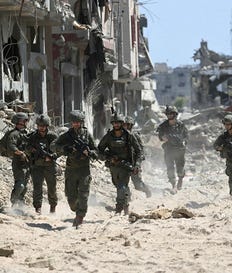
When war broke out last year following the horrific events of October 7, Afeka College soon realized that a large share of its student body had been mobilized. In fact, a whopping 42% of the College's 3,400 students served in the IDF reserves during the Swords of Iron War – leaving behind their civilian lives for weeks or months at a time in order to help protect their country, often at great personal risk. Sadly, one Afeka student and three recent alumni were killed in combat, and two students were murdered by Hamas terrorists on October 7. Many more students and alumni were wounded, some spending long periods in the hospital.
Comprehensive support system
Under the leadership of its energetic president, Prof. Ami Moyal, Afeka College's management immediately took a bold decision: to do everything it could to support its students during these difficult times. The College's chief mission has always been to strengthen Israel by supplying the tech sector with first-rate professionals, and Prof. Moyal was determined not to stray from this goal despite the many challenges. "We are very proud of our students, who come from all over Israel and have a strong connection to their homeland. We want every one of them to succeed, and in the past year we put a great deal of effort into building a comprehensive support system," he points out.

Even though the start of the last academic year was postponed by more than two months, many students still missed much of the first semester because they were in the army, and some missed parts of the entire year. Afeka reached out to every one of the thousands of students serving in the reserves to understand exactly which type of help each one required in order to continue studying. "We tried to find solutions for everyone. Our goal was to prevent them from giving up and dropping out – for their own sake and for the sake of the country, which needs more graduates in the workforce," stresses Prof. Moyal.
Afeka immediately implemented a flexible hybrid teaching model whereby students who are able to attend class in person are encouraged to do so, but all classes are also recorded and can either be attended remotely in real time or watched later. By offering both synchronous and asynchronous learning models, students are able to keep up with their studies even if they are unable to physically come to the campus and even if they can't attend virtually during the actual class time. Guy Chen, a 2nd year Electrical Engineering student who spent months on reserve duty outside of Gaza, was one of the many students grateful for this arrangement. "I connected to WiFi through my phone and logged into Zoom lectures for 5-6 weeks until I was released from the reserves," he recalls.

The College understood that this solution wouldn't be sufficient for many students who were, for example, fighting in Gaza for most of the semester and didn't have time to catch up properly. Therefore, the College decided to offer reservists special time-condensed courses, and also took the radical step of opening courses especially for reservists who needed to repeat missed or failed courses at no extra cost. Moreover, each student reservist received personalized academic support through meetings with an adviser and/or mentor, as well as one-on-one or group tutoring sessions.
Since many of the student reservists found it difficult to transition between the army – where they frequently coped with harsh and even traumatic experiences – and their civilian lives, Afeka also offered subsidized mental health care or counseling for students in need.
Many reservists also reported that their financial situations had worsened significantly while they were in the army, finding it challenging to pay their tuition and other expenses. Once again, Afeka didn't hesitate and decided to substantially increase the financial support they offered students – so that they spend more time focusing on their studies.
In order to meet the needs of all its students during these challenging times and provide each one with an optimal package of benefits, Afeka hired additional personnel specifically to support its student reservists.
Some of Afeka's faculty members were also affected by the war and the College cared for them as well. Dr. Adi Fux, Head of the Engineering & Management Graduate Program, served in the reserves a total of 247 days from October 7, 2023. He says that Afeka's management could not have been more supportive, doing everything they could to enable him to continue teaching. "As a reservist, I'm very proud of the College. If they wouldn't have been so understanding and supportive of me and of my students, we would never have succeeded in getting through the year," he insists.
The AsOne Campaign
All these intensive efforts to ensure that its students make it through the trials and tribulations of the ongoing war have paid off: in May 2024, Afeka celebrated its largest graduating class ever, with more than 700 new engineers entering the workforce and ready to help secure the resilience of Israel's crucial high-tech sector and, indeed, the country's long-term economic health.
Afeka is a public institution, and its decision to support its students wholeheartedly, no matter what it takes, came at a cost. In order to continue meeting the needs of its students during this volatile period, the College launched the AsOne Campaign to cover these substantial expenses. AsOne hopes to raise $4 million, of which $1 million comes from Afeka and $1 million from the Israeli Council for Higher Education.
The remaining $2 million is being raised among friends and supporters worldwide, who understand the importance of supporting Afeka's students and ensuring uninterrupted education for Israel's future engineers – undoubtedly one of the country's most valuable resources.
"The AsOne Campaign" explains Michal Gishri, Head of Resource Development at Afeka Academic College of Engineering, "is an urgent response to meet the needs of Afeka students who are serving their country to ensure they continue their education without compromising quality, even under the most challenging circumstances. This directly impacts their personal and professional futures, as well as Israel's national resilience"
For more information or to contribute, click here.
Partnered with Afeka Academic College of Engineering in Tel Aviv