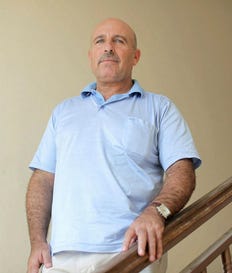
Prof. Shulamit Levenberg is an award-winning scientist from the Technion, renowned worldwide for her expertise in biomedical and tissue engineering. She completed her postdoctoral research at MIT in 2006 and was named one of Scientific American's Top 50 Scientists list as a "science leader" in tissue engineering. During a sabbatical, she served as a visiting professor at Harvard University. Prof. Levenberg is perhaps best known as the co-founder and chief scientific advisor of Aleph Farms, a company pioneering the new and intriguing field of cultured meat production, but her achievements extend well beyond this.
She is currently the head of the Tissue and Stem Cell Engineering Laboratory at the Faculty of Biomedical Engineering, and the head of the Center for Bioprinting at the Technion (which focuses on 3D printing of tissues) at the Technion. In addition to her activities at NurExone and Aleph Farms, she is a co-founder and scientific advisor at NanoSynex.

The fascinating story of NurExone began when the CEO of the Israel Foundation for Spinal Cord Injuries, Israel Goldberg, approached Prof. Levenberg and asked her to apply her knowledge of tissue engineering to heal paralyzed individuals. Professor Levenberg decided to take on the challenge and to explore ways to rehabilitate patients after spinal cord injury.
"Together with my doctoral students and Prof. Offen, we searched for a treatment that is minimally invasive, and we came up with exosomes (extracellular vesicles). They have unique properties that enable localized treatment, nasal administration, penetration of the blood-brain barrier (BBB) and impressive therapeutic efficacy in the spinal cord."
Growth and regeneration of nerve cells of the central nervous system
Exosomes are nanoparticles secreted by various cells, including stem cells. They have therapeutic ability and can migrate to damaged tissues in the body. Additionally, exosomes can be "loaded" with various molecules allowing them to serve as a drug delivery system for targeted medications. To address damage to the spinal cord in preclinical studies, the scientists loaded exosomes with a unique siRNA sequence to inhibit PTEN protein production in affected cells in an injured area. Upon reaching the affected area, the loaded exosomes stimulate nerve cell regeneration and rewiring in the spinal cord.

"We took exosomes and enhanced them in several ways to encourage nerve cell growth and repair. Via nasal administration, they reached the spinal cord. We saw that it worked, and it was very exciting," explained Prof. Levenberg. "We were able to take rats, whose spinal cord was completely severed, and get them back on their feet. Nasal administration of the loaded-exosome drug led to regrowth of the nerves in the spinal cord, without surgery or transplants. Based on these results, we decided to move forward with clinical research and to try to develop a product for people. ExoPTEN is being developed as a drug that can be given soon after a spinal cord injury. Any motor and sensory rehabilitation after this type of injury will be a real achievement. That's why we decided to establish NurExone Biologic together with serial biotech entrepreneur, Yoram Drucker."
Dr. Noa Avni, Director of R&D at NurExone, adds: "Exosomes can both increase regenerative capacity and reduce inflammation, creating an environment that is highly beneficial for healing. It is truly a privilege to work with Prof. Levenberg, the originator of this project, who has a deep understanding of the research and academic discovery phases. She is a great inspiration, and we meet every week to ensure we are in sync. We have a highly dedicated team of knowledgeable people who often lock our lab doors late at night. This is an area with a lot of uncertainty that demands a great deal of hard work and perseverance, and the amazing commitment of the team is a critical element."
Thinking outside the box
NurExone was registered as a company in 2020. "This is actually a tech-transfer process, a transition from science to industry, in an agreement between the commercialization companies of the Technion and Tel Aviv University," explains the CEO, Dr. Lior Shaltiel. "It is important to remember that the discovery that exosomes are therapeutic is new. The world is only now discovering this, and the number of patents being registered in the field is soaring. NurExone is among the pioneers worldwide in the area of exosomes as a platform for drug delivery, and for a young company, this is a highly significant achievement."
Lior Shaltiel is a chemical engineer with a specialization in biotechnology. He holds a master's degree in physiology and a doctorate in pharmacology from LMU University in Munich. He studied and conducted research for eight years in Germany, returning to Israel during Operation Protective Edge. Following his return, he worked at LipoCure as a returning scientist, eventually serving as R&D manager. He joined NurExone Biologic as CEO in April 2021.
In June 2022, the company chose to make a unique and bold move for a startup that is still in the preclinical trial stage: it went public on the Canadian stock exchange in Toronto and has been traded there as a public company ever since. Why would a startup that doesn't yet have a product to sell go public on the stock exchange, as opposed to following the classic process of raising money from venture capital funds?
Dr. Shaltiel: "It was definitely thinking outside the box. When an entrepreneur approaches an initial fundraiser for classic venture capital funds, they often lose some motivation because the ownership of the technology is no longer entirely theirs. With this IPO, I want to prove that there is an alternative to the standard fundraising approach for biotech companies, even in the early stages. It fit me, as CEO, like a glove. After we published our technology platform last January, the stock doubled. Since its founding, the company has already raised $15 million, with the vast majority of the money invested in research and development."
"The IPO on the Toronto Stock Exchange was also a springboard on our way to larger markets, which is part of the company's growth process," he adds. "After we registered there, we were automatically listed on seven different stock exchanges in Germany, which gives us exposure to various technology investors in the biomed field throughout Europe. We have expanded to the OTCQB in the United States."
A company with more than one product
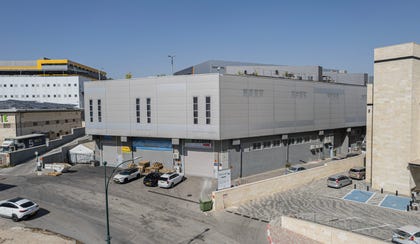
The company currently employs 16 people in Haifa, and next month it will open a new laboratory and facility on the Technion campus.
What is the status of the company regarding regulatory approvals and proceeding to human trials?
Dr. Shaltiel: "At first, my task was to prove feasibility, to show that the results obtained in academia are indeed correct. We repeated the experiments several times, changed dosages, and proved that ExoPTEN, the initial, leading product of the company, works."
"We have already gone through the regulatory stages of several meetings with the FDA. In October 2023, the drug received FDA Orphan Drug Designation, which means that the company will be eligible for significant accommodations in the next stages, market protection of the product for up to 12 years from receiving approval, and support for the product during the clinical trials process."
"I believe that the regulatory process will go smoothly and efficiently thanks both to the excellent communication between R&D and CMC (Chemistry, Manufacturing, and Control) as well as the results of the process so far," says Dr. Ina Sarel, Head of the Regulatory and Clinical Affairs Department, who led the activities that resulted in the granting of orphan drug status to ExoPTEN. Dr. Sarel recently led a workshop at a professional conference on addressing regulatory challenges when developing clinical products based on exosomes in Boston, MA.
Intellectual property
According to Dr. Shaltiel, in addition to ExoPTEN, the company is developing two other products as part of its portfolio. "The other two products focus on the regeneration and growth of neurons through different mechanisms, targeting various proteins. We have a portfolio of products based on six families of patents. The patents cover three significant aspects of the world of exosomes: the first involves the production of exosomes in large quantities, increasing their utilization, potency and healing potential. The second aspect is how medical molecules (like siRNA) are loaded into the exosomes; this enables us to insert a wide range of molecules with specific active pharmaceutical ingredients as a foundation for other products. The third aspect covers the specific siRNA sequences that are loaded into the exosomes."
"Ultimately, our goal is to be a clinical company that brings exosome-based drugs and therapies to market, realizing the commercial potential of our technology platform. The aspiration is to reach collaborations with both large and small pharma companies," concludes Dr. Shaltiel.
Prof. Levenberg adds: "At the moment, the preclinical trials that the company is about to conduct are in animals that are more similar to the clinical situation of humans. We need to implement and test additional clinical models, at different times, at different doses, to better focus the product. Based on the results, we can move on to human clinical trials. I'm waiting for that moment. I would love to see how it works in humans, to see that it can indeed make a difference and help. We don't know how long it will take because it depends on the regulatory process and approvals, but the company is progressing very nicely and the staff is excellent. This development is good news for people with spinal cord injuries."
Women in science and engineering
=Prof. Levenberg is currently working on additional developments that she views as promising candidates for commercialization, including muscle tissue for curing diabetes, engineered bone and muscle tissue for surgery and reconstruction, and innovative developments in 3D tissue printing. Additionally, she is committed to advancing women in science and industry.
How do you see women's progress in science and how can women's involvement in science be improved?
"Women must feel confident in their ability to conduct research and to apply for senior positions. The natural inclination of managers is to promote those who work closely with them and those who are around them. If most managers are still men, the unconscious tendency may be to promote other men. They need to keep their eyes open and recognize that there are other potential candidates, such as excellent women. Today this still requires extra awareness and thought. I would like to see more women in leading positions in research, academia, and industry, and this will be possible when they are given the opportunity. This, of course, also requires increased awareness on the part of the women themselves. Today we are seeing a large increase in the demand by young women for engineering and science studies. We hope that this will continue, and that women will advance to more senior positions. It's a welcome process. Women can combine research and family. We all balance family with work, so there's no reason not to do the same in the world of science and engineering. Today, at the Technion, we are at the intersection of engineering and medicine, an extremely important connection for the future of all of us. We have excellent students, including many outstanding female students."
In association with NurExone Biologic