Every year, industrial companies pay astronomical amounts of money because of problems and leaks, which sometimes also cause safety hazards and environmental damage. In order to detect these issues in time, industries incorporate preventive maintenance solutions. However, these usually require placing a device inside the equipment. Feelit's solution is different: it senses from the outside without requiring an invasive introduction of a foreign body inside the system, without opening the asset or causing any delay in the regular work process.
The revolutionary solution is based on principles of quantum chemistry. Dr. Meital Segev-Bar, Feelit’s CTO, says that they were actually inspired by human skin: Feelit developed a type of electronic skin – sensory stickers that adhere to the pipes or equipment like a Band Aid and report about what is going on inside them. The sensing is achieved using liquid ink that contains tiny particles measuring 5 nanometers (a billionth of a meter). These particles’ high sensitivity towards pressure and temperature provide the attached skin with a type of sense of touch and the ability to analyze the equipment’s condition at a given point in time.

The sticker becomes an integral part of the equipment and is used throughout its lifetime. The data that it extracts is transmitted to the cloud and is analyzed autonomously using advanced AI technologies. The outcome is not 0 or 1 – damaged or intact – but much more nuanced: how urgent is the need to repair? And how much longer can one rely on the equipment in its current state? An addition element incorporated in the sticker is the electronic charging unit with a battery that lasts many years.
This solution is effective for a large variety of industrial equipment and machinery, specifically valves, steam traps, heat exchangers and pipes. The sensors learn how the valves, steam traps, heat exchangers, etc. operate, and alert when the asset starts to malfunction, solving problems before the occur. Feelit solutions promote more efficient, cost effective, safer and more environmentally friendly manufacturing and process systems.
At a power station, for example, it can detect leaking steam emitted to the air, that raises the level of environmental pollution rather than being used for producing electricity. This is a significant opportunity for manufacturers of various parts, from faucets to pumps: they can market a product that alerts users, as well as the manufacturer, when a problem starts to occur, or when the equipment is getting old and must soon be replaced. As more data accrues, there is an additional opportunity for big data studies on maintenance and durability of materials.
In the automotive industry, and especially for electric cars, sensitive sensors enable the systems to be monitored as far as air pollution is concerned, as well as detecting pressure and temperature, in order to improve efficiency, lengthen the battery’s life, etc. An electronic unit is not even needed here – the sensors operate from the car’s battery power and opens new opportunities for Feelit, for manufacturers and for the entire car industry.

Opportunity for sales and service
Feelit’s innovative solution was born in the labs of the Technion-Israel Institute of Technology. Prof. Hossam Haick, a world-renowned chemical engineer, worked on the development of an “electronic nose” capable of identifying the progress of diseases according to smells. Dr. Gady Konvalina, who is the CEO of Feelit, and Dr. Meital Segev-Bar, CTO, were then Prof. Haick’s doctoral students. During their experiments, the three discovered material that is sensitive to changes that are 50 times tinier than other material. They immediately understood the potential for preventive maintenance.

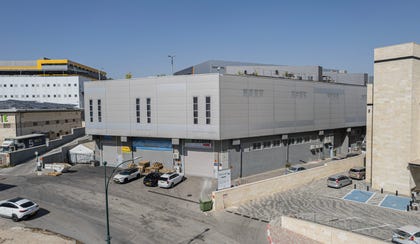
Feelit was registered as a company in 2017, with the Technion as a stakeholder and part owner. The R&D and production is carried out in the company’s headquarters in Yokneam, where there are over 20 employees, including mechanical and chemical engineers, analysts, data analysts and the entire value chain. In 2021, the startup completed its first substantial funding round: the German company Continental, one of the world’s largest Tier 1 suppliers for the auto industry, invested $3M; the German industrial supplier Henkel invested a similar amount; and a fund from Luxembourg also invested, so that the total raised reached $7M. “This was a significant change and enabled us to think long-term about additional applications and the next steps, both in terms of the market and the technology,” says Segev-Bar.
Feelit is aiming for the global market. It currently has large clients in Israel and Europe, and is in advanced stages of signing agreements with others. Noy Zalts, VP Sales & Marketing, describes the business potential: “Manufacturers sell to the whole world but don’t really know where the equipment is installed, whether it works, if the maintenance manager carried out the preventive treatment, etc. Our sensors render the equipment installed in the factories and the cars smart. Now the manufacturers can approach clients on their own initiatives, inform them that it is time to replace a part, suggest sending over a team at their expense, and offer deals. When the manufacturer becomes part of the story, it increases customer loyalty and provides an interesting selling point.”

Even though the solution has already been proven and is operational, research and development continue all the time, according to each client’s needs and pain points. For example, Zalts mentions a client who wanted to detect especially high temperatures, which is essential for the workers’ safety at a steam-driven power station. For the automobile industry, it can be to avoid the production of defective tires that could have been detected at an early stage of production. At oil refineries, the main issue is environmental protection: “Environmental activists sit there with binoculars, and the moment they identify higher pollution than what is allowed, they stop the work. The factory’s ability to monitor the pollution level in an autonomous and precise manner is critical, both for the environment and for the business.”
Planned predictive maintenance is at least ten times less expensive than regular maintenance, which relies on periodic checks and problem fixes, and often entails entirely shutting down the systems. Feelit’s printed sensors transform the equipment and the machines into smart products that constantly transmit their conditions, in real time, to the cloud and provide their operators with an unprecedented view of their interior workings.
Partnered with Feelit