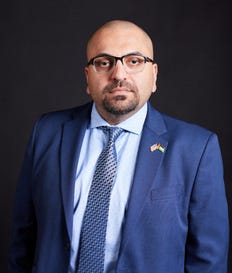
Sa'ar Paz, General Manager of Astronautics: "Most of our products are not off-the-shelf; they are designed and tailored according to the customers' specifications and specific requirements. The company has maximum control over all development and production stages, with very little dependence on subcontractors."
Nir Itzhaky, VP of Business Development and Projects: "We accompany our customers all the way – from the initial design, through execution, production and installation, including maintenance and support for decades."
One of the major changes taking place in the IDF in recent decades has been the strengthening of the Navy. After years during which the Navy was a marginal factor in the military operational concept, certainly compared to the Air Force, it has become a prominent force with advanced operational platforms and extensive advanced armaments, such as the Model 5 and 6 "Sa'ar" ships, which have also proven themselves in the current war. Behind these platforms stands a smart navigation system that enables Navy personnel to carry out highly complex missions using the most advanced weaponry. This navigation system was developed and manufactured by the veteran company Astronautics, which has been working with the military for over five decades in implementing sophisticated electronic systems – in the air, at sea and on land. These systems largely constitute the "brains" behind the operational capability.
"We are the primary supplier for the Israeli Navy regarding integrated navigation systems on all advanced platforms," says Sa'ar Paz, General Manager of Astronautics. "We developed a tailored solution for the Navy's need to fuse and refine navigation data and disseminate it among information consumers on the ships. The system integrates all navigation data from various sensors and sends it to all the ship's consumers in real time, through a variety of communication channels with very high accuracy. It is used, among other applications, by the Navy's newest surface ships, 'Saar 6' and landing crafts."
"Our systems are among the infrastructure systems of the ships and have a critical impact on the performance of the weapons systems. They incorporate sophisticated algorithms, which contribute significantly to the Navy's mission performance, under the challenges of navigational warfare in the current and future era," adds Nir Itzhaky, VP of Business Development and Projects at the company.
Marine navigation systems, data fusion and information dissemination for the Navy are just one component in the company's product arsenal, which enjoys an impressive track record of innovative and high-quality products that have proven themselves on the battlefield. Among other things, the company develops airborne systems, both military and civilian, fire control solutions for ground forces and cyber solutions. Its clientele includes some of the largest aviation corporations in the world, such as Lockheed Martin, Airbus, the Indian aerospace Industry and Leonardo, an Italian multinational corporation engaged in the production of weapon systems and aviation products.
The company, which began manufacturing and maintaining products sold by the American parent company to the Air Force in the 1970s, greatly advanced its engineering in the 1980s and has since developed hundreds of products. Today, the company markets, among other things, a variety of avionics systems that include displays, computers, interface units, air data computers and software for the Air Force's combat systems.
Where did the Iron Swords war find you?
Sa'ar Paz: "During the war, we received a very significant order to develop a new generation of a tactical command and control system for the Air Force's transport fleet. This system has been in use by the Air Force since 2011 and has since undergone several upgrades and adjustments for additional aircraft. The needs of the Air Force dictated extremely short schedules. The operational need arose in February and the system was delivered in May – about a quarter of the time it usually takes to develop this type of system. In order to meet the schedules, many resources were allocated, including the best engineers and production personnel."

Nir Itzhaky: "We received very positive feedback on the use of that system, including on October 7th. We demonstrated here not only the technological capability to develop systems at the cutting edge of technology, but also the ability to upgrade systems during the war. Additionally, we faced a significant increase in maintenance and repair demands due to increased use of our systems during the war, up to two and three times more than usual. And we were able to meet the challenge."
Close relationships with customers
The parent company of Astronautics, Astronautics Corporation of America, was established in Milwaukee, USA in 1959. From a small company operating in one room, it was transformed into a global corporation that also includes the Kearfott company.
The Israeli subsidiary began its activities in 1971 by developing systems for the Lavi aircraft. Over time, it developed high engineering capabilities in the design and production of military electronics systems for air, sea and land applications.
Initially, its main products were displays and mission processors, and from there it moved to airborne displays – including video monitors and multi-functional color cockpit screens, which replaced the outdated engine indicators installed in aircraft at the time – cockpit instruments, air data computers, fire control systems, command and control terminals, navigation systems, monitors and ruggedized computers and 3D digital maps. All this was done alongside maintaining old generation devices for the parent company, which in turn sold systems to the Israeli Air Force. This made it possible for the Israeli subsidiary to enter the avionics field as well.
"In 53 years of working on military and aviation systems, the volume of the company's projects has seen ups and downs. The workforce was adjusted to the volume of activity, but the core of the company's deep and unique knowledge has been preserved in all these years and currently serves the most innovative projects," notes Sa'ar Paz, the General Manager, a graduate of the Faculty of Electronics Engineering at the Technion and who has extensive experience in defense companies.
"Today we develop and market complete systems, which include displays, computers and interface computers, combined with navigation and data distribution systems, cyber defense and more. In this sense, the company is a one-stop shop for customers," adds Nir Itzhaky, Lt. Col. (res.) and former fighter pilot, who also worked as CEO of defense companies and holds a master's degree in business administration. "It is usually an integrated system solution, where we accompany the customer all the way – from the initial design, through execution, production, installation, including maintenance and support for decades. All our products are based on great investment in development and are manufactured and tested while meeting the highest quality standards in the industry."
Do you provide software in addition to hardware?
Sa'ar: "The company has the capabilities and experience required to develop software and algorithms as part of the system. Many systems, such as the Navy's navigation systems and fire control systems for artillery, were supplied with the software. The company can also provide solutions and support for customers who, for various reasons, prefer to develop the applications independently. For example, in some cases, the Israeli Air Force prefers to develop the software itself."
What is the distribution between local and global customers?
Nir: "Approximately 30%-50% of sales are to Israeli end customers, which include on the one hand large companies – such as Rafael, Israel Aerospace Industries and Elbit – and on the other hand end users, like the Ministry of Defense and MAFAT, the Directorate of Defense, Research, & Development. Global sales are sometimes based on systems developed for the local market, in a suitable export version, but there are also many cases where systems are developed specifically for overseas customers. For example, for the major aviation corporations we develop unique systems, some of which are not based on systems developed for the IDF. Of course, sales to the IDF and the defense establishment improve our ability to market abroad. It is important to note that working with aviation corporations such as Lockheed and Airbus requires compliance with the strictest international standards."
Are most of the systems intended for military customers, or also for civilian uses?
Sa'ar Paz: "We provide a civilian system for monitoring and controlling the cargo compartment as part of a project to convert passenger planes into cargo planes, a project that is completely civilian. However, most of the systems are still intended for military customers. However, there is a clear trend among military customers to adopt civilian standards that emphasize safety aspects. The company is one of the few Israeli companies that specialize in civil aviation certification processes."
How involved is the customer in the development process? Are you in contact with end users to understand their operational needs in the field?
Sa'ar Paz: "For the most part, the client is very involved in defining the requirements and after the implementation is presented to them, they approve the design. A significant number of our employees have relevant military backgrounds, and some have served and continue to serve in the reserves. Some of them were even involved in the characterization of the systems we mentioned. As those who understand operational needs on the one hand and technological possibilities on the other, our level of interaction and involvement with customers is high and sometimes we even work together in defining the operational need. We work shoulder to shoulder with the forces, some of whom even have offices in our company. Together we design the right solution for the operational needs that arise from the field. For example, in the artillery field, we use the knowledge and experience of our employees when asked to improve systems for modern versions. In fact, most of our engineers have operational backgrounds at sea, on land and in the air."
Nir Itzhaky: "There are decades of personal acquaintance with the customers, and this creates close relationships. This is true whether we are the main contractor for the Ministry of Defense or a specific corps, and also when we are a subcontractor for a defense industry in Israel and around the world."
In this context, what more can you tell us about your human capital?
Sa'ar Paz: "Our employees make a crucial contribution to the company's success. We are very proud of our team, who are characterized by exceptional professionalism, flexibility and dedication. Often they need to take on urgent tasks, in Israel and abroad, and the work here is very intense. Not long ago, defense companies suffered mass departures to start-ups, which promised incredible conditions, but fortunately our attrition rate was and remains negligible. Knowledge is retained and lessons from projects learned and applied to future projects. No time is wasted on unnecessary handover processes."
Nir Itzhaky: "There is a family atmosphere here and a strong bond between the people, also thanks to the fact that everyone works at the same site. I think what keeps people here is the feeling that they are developing the next generation of defense products and providing creative solutions for operational needs."
Are these off-the-shelf products or customized products?
Sa'ar Paz: "Most of our products are not off-the-shelf products and are designed and tailored according to the customer's specifications and their specific requirements. The company has maximum control over all development and production stages, with very little dependence on subcontractors. This allows for maximum flexibility and quick response, meeting customer needs immediately, as required in many cases by the Ministry of Defense."
Flexibility, agility and the support of a large corporation
These days, Astronautics is preparing to develop the next generations of products and systems, partly based on lessons from the war. Among other things, they are entering the field of unmanned and autonomous vehicles at sea, on land and in the air. "This is a necessary move in light of the global trend to switch to unmanned or remotely operated vehicles," emphasizes the General Manager.
In the end, you are not a big company, maybe even a relatively small one, and yet you manage to compete with larger companies. What do you think is your advantage?
Sa'ar Paz: "First of all, a small company also has an advantage. As a small company we are much more agile and flexible and without bureaucracy. Second, we have the support of the American parent company, which enables the financing needed to invest in developing technological assets. A private company has the opportunity to look long-term and invest without realizing profits immediately. We are a profitable company and have not been tempted by mergers and acquisitions, like other companies of our size. We enjoy the best of both worlds – the support of a large corporation and the flexibility and agility of a small company."
Nir Itzhaky: "Astronautics is currently a leading company in the development and production of avionic, naval and ground systems. In everything we do, we face complex engineering and technological challenges and we have a long list of satisfied customers worldwide."
What is your vision for the coming years?
Nir Itzhaky: "We want to grow further without giving up our uniqueness and while preserving our special DNA as a small and agile company. We want to enter additional areas, with a broader range of tools, and leverage the knowledge we have gained and our operational familiarity, including from recent events."
Sa'ar Paz: "We look ahead to the future battlefield and understand the need for advanced electronic systems that include artificial intelligence applications, autonomous capabilities and data fusion for operational efficiency, and we are preparing for that."
In collaboration with Astronautics