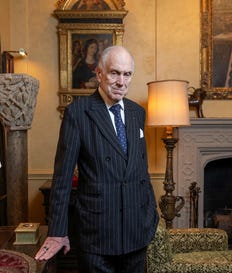
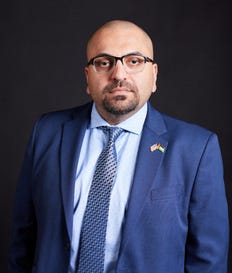
There is one defining moment that Menachem Oren remembers as pivotal in handing over the reins of his company to his daughter, Shira Oren-Nahmias.
"A supplier arrived one day with new marble samples. After a long conversation with him, Shira disappeared," he recalls. "I searched the office and couldn't find her. Then I went outside and saw her carefully examining marble slabs, studying how they looked in natural sunlight. After all, it was marble for exterior cladding - it made perfect sense to see how it behaved outdoors. I hadn't even thought of that. At that moment, I realized she was a true professional - thorough, meticulous, and fully ready for the role."
This small anecdote captures how personal epiphanies often intersect with strategic turning points in business.
But as Oren and his daughter explained to Dr. Nava Michael-Tsabari, an expert on family businesses, the process of passing the leadership baton was far from smooth.
Shira never imagined she would step into her father's shoes in the company he had built with his own hands and managed with an iron grip. Her path began differently; she studied law and computer science and began specializing in intellectual property.
"I went as far away from my father as possible," she says with a smile. "But I quickly realized it wasn't for me. The whole field is adversarial - you spend your days fighting over intellectual property rights, often without creating anything tangible. Sometimes it even felt unfair. I hated every moment. I love to create, to design, to bring something positive into the world. I wanted something else. I even considered venture capital or high-tech. But one thing I swore to myself - I'd never practice law again."
Nava Michael-Tsabari: In the end, you followed your father's footsteps because, like him, you wanted to create something meaningful. As the saying goes: "Where there's an apple tree, you won't find a pear." What were the difficulties at the start?
Shira Oren-Nahmias: "My father is an extraordinary and very dominant personality. The business he built was essentially a one-man show. At first, I asked myself: how do you become a partner in such a structure? What space will be mine? It's not easy to carve out a distinct identity in an organization defined by someone else. In many ways, it even felt like setback. At that point, I was already a grown woman, living independently, having worked through my childhood resentments. And suddenly, I found myself spending most of the day with my father, falling back into the same old traps. It was tough. Then one day, after bringing him an issue and feeling like a little girl again instead of a professional adult, I realized this was actually an opportunity. I needed to build myself a separate professional identity. Despite all the difficulties, it became a challenge I had to overcome. And I understood that if I didn't, it would hurt not just the business but also our family bond. That realization pushed me out of the 'daddy's girl' loop."
Menachem Oren: "I admit, it wasn't easy. You're still authoritative, you think you know better than everyone, and then you realize you have to change. That's quite hard."
Nava Michael-Tsabari: It's like a dance. You have to learn how to move together.
Shira Oren-Nahmias: "It might have been easier for him if I were a 'yes-woman', but I'm not. I have opinions. We didn't always agree. I challenged him."
Nava Michael-Tsabari: And that's precisely what he values in you. Menachem, what did you discover about Shira during this process that you hadn't known?
Menachem Oren: "That she can juggle a dozen balls at once - like the Wizard of Oz. She runs a complex organization, cares for her own nuclear family, and still makes space for the extended family. She never drops a ball. She has strengths I don't, and she has shown talent in everything she touches."
Nava Michael-Tsabari: "And you, Shira, what did you learn about your father?
Shira Oren-Nahmias: "Above all, it was a privilege to see my father in his professional element. Children may know what their parents do, but they rarely grasp the depth. I got to see his professionalism - and if I may say so, his genius - up close. I stepped into very big shoes, and I'm still learning. The more time passes, the more I admire his daring. That quality was central to his leadership. Today, managing the company alongside him, I share with him my fears, doubts, and dilemmas, and I've come to appreciate the resilience such leadership requires."
Menachem Oren: "Shira grew into the role without faltering. Yes, she had advantages - broad education, years of experience - but the core capabilities came from within."
Nava Michael-Tsabari: What I see here is not just a transfer of genes but also a process of mentorship. I don't like the term "transgenerational transfer" - it's jargon consultants use, and family businesses don't relate to it. I prefer "intergenerational partnership", or simple term like "succession process", and that's what happened here. It was a long, gradual process in which knowledge, authority, and responsibility were passed down step by step. Menachem didn't retire - he equipped Shira with tools, guided her, and still walks beside her. Yes, sparks flew, but building a strong family leadership team is the secret that preserves legacy while making room for innovation. Some next generations rebel. Shira chose to continue."
Menachem Oren: "She rebels in her own way, too…"
Inventing a new market
Menachem Oren has always been an outlier in Israel's flamboyant real estate industry. He rarely appears in the press, so only few know he was the man behind the luxurious Royal Beach Tel Aviv Hotel - a project that seamlessly fused hospitality with residential living.
"My philosophy was always to operate under the radar. We succeeded while keeping a low profile. Also, we were pioneers in what I call 'super-luxury construction' - in fact, we were unique in the market. And we did it without PR or advertising. We were simply in the right place, at the right time, doing something truly different."
Shira adds: "It wasn't about secrecy. Media exposure often distracts from execution. The more you chase visibility, the less you focus on the work."
Nava Michael-Tsabari: "I read that you once claimed copyright over the "Golden Kilometer" of Tel Aviv's beachfront, transforming what was once called "Lost Souls Street" into the capital of ultra-luxury real estate.
Menachem Oren: "Yes. From early on, we decided not to get ground down by competition. In an industry where margins are razor-thin, we chose to invent new markets. Everyone was selling vanilla ice cream - it was easy. So, we sold ice cream with a twist…"
That willingness to carve niches, he explains, is what led to the Royal Beach concept: "We sold something unique. Buyers had no comparison point. They came to us. Today you see 17 developers battling it out in the same district, cannibalizing each other. It hurts everyone."
And quality, he insists, was always central: "Building on the seafront is a completely different discipline. We specialized in it. The buyer may not have seen it, but over time they felt it - the durability of our buildings against sea and wind. We used special cement, thick aluminum coatings, oversized windows, the highest-quality materials. No manual teaches this - I learned it myself and applied the technological foundations I gained at the Technion. For example, understanding that wind speed can make water flow counter to gravity."
Shira Oren-Nahmias: "The decision was never to replicate but to create. To build something people saw as truly valuable. Just selling expensively isn't value. Our buyers didn't just make smart financial investments - they made the right lifestyle choice."
Building Community
Shira says the inspiration for their resort living concept for the 60+ generation came from her parents.
"They navigated midlife wonderfully. They moved from Herzliya Pituach to Tel Aviv's beachfront to embrace everything the city offers - morning walks, fitness, hosting grandchildren in the hotel. That was their dream. We took that idea one step further and made it accessible on a larger scale, built on a holistic vision."
The SEA ONE project, designed with lessons learned from the Royal Beach, combines luxury apartments facing the sea with guest suites for family and friends - while adding what the hotel lacked: spaces for connection and community.
"We built areas that encourage residents to meet one another, across ages and life stages. We created a family-friendly atmosphere - pools for young children, open pools for adults - all intentionally placed above ground so grandparents and grandchildren can enjoy them together. Everything is Instagrammable and inviting, bridging generations. We also encourage multi-generational travel and family celebrations. It's a pioneering concept, and as always, we are the first to introduce it."
Menachem Oren: "Our residents are looking for meaning, not just real estate. This place celebrates hospitality and family. We tell them: 'hold your family events here. The facilities are designed for it.' This is how you get an internal community while strengthening family bonds. Families with children who've become religious, for example, can host them for Shabbat in guest suites with kosher dining. We're here to create value - not just another building."
Shira Oren-Nahmias: "I think this is Israel's secret - family, community, mutual responsibility. It's why people call each other 'my brother.' That's the glue. I admit: as a second-generation builder, I can't construct for profit alone. I was raised differently. I could have traded stocks, but I wanted something with meaning, something that adds value. With this project, I feel I've achieved that."

Dr. Nava Michael-Tsabari
Francis Ford Coppola's film, "The Godfather" (1972), based on Mario Puzo's novel, is widely considered one of the greatest and most influential films ever made. On the surface, it tells the story of the Corleone crime family in postwar New York. But viewed differently, it is also a parable about family business succession - two very different attempts to pass leadership to the next generation.
The Apprenticeship that Never Happened
The film begins with Don Vito Corleone, the founding father, at the height of his power - respected, feared, surrounded by loyal lieutenants. He runs both his business and family with authority and success.
But when rivals attempt to assassinate him, he is hospitalized, and his eldest son, Sonny, takes over. It's the family's first real transition. Yet Sonny is reckless, unprepared, and impulsive. Thrust into leadership without the benefit of apprenticeship, he fails disastrously. His rash decisions cost him not only the business but his life.
The Power of Mentorship
Later, Don Vito recovers and gradually grooms his younger son, Michael. Initially uninterested in the business, Michael is drawn in by circumstances. This time, the transition is deliberate. Don Vito mentors him patiently - exposing him to decision-making, entrusting him with responsibility, even ensuring veteran aides Clemenza and Tessio support him.
This long period of apprenticeship blends respect, shared responsibility, and knowledge transfer. In one of their final conversations in the garden, Don Vito passes Michael a piece of priceless wisdom: his enemies will arrange a meeting to assassinate him, and the man who proposes it will be the traitor. It's the kind of insight that no book or university can teach, only lived experience.
Soon after, Don Vito dies. But by then, Michael is ready. He applies his father's wisdom, identifies the betrayer, and outmaneuvers his rivals. A new chapter begins under his leadership.
Partnership, not just Transition
What does this teach us? In family businesses, the idea of an "intergenerational transfer" is misleading. The better term is "succession process." Fathers and children often work side by side for decades. This shared journey is where the true education happens: apprenticeship, role modeling, silent observation, accumulated wisdom.
When circumstances - or impatience - cut this partnership short, the result is often an unprepared successor and a broken learning process. But when it matures, everyone benefits - the next generation inherits not just authority but knowledge, while the founding generation gains respect and validation.
Dr. Nava Michael-Tsabari is a researcher and lecturer specializing in family businesses. She earned Israel's first doctorate on the subject at the Technion. A third-generation member of the Strauss family of industrialists, she previously served as a director on the public board of Strauss Group. Today, she teaches at Tel Aviv University and lectures worldwide. Her research has won academic awards, and she leads executive programs on managing family businesses and assets
In collaoboration with Oranim Group