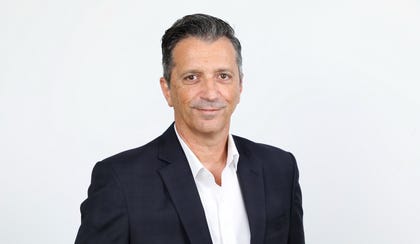
Almost two years into Israel's bitter seven-front war, young Jews from both hemispheres are still choosing to study at Israel's universities. "We have 750 new full-time graduate and undergraduate students starting at our School this academic year," says Jonathan Davis, Vice President for External Relations at Reichman University and Head of its Raphael Recanati International School.
Some of the new students, he acknowledges, have been driven to Israel by the rising tide of antisemitism on their home campuses. A newcomer from Spain felt unsafe in his dorm in a Barcelona university. A straight-A student at a university in New York was awarded B-minus for every assignment in her Middle Eastern Studies class, written and oral, after making the case for Israel in a class discussion. "Her professor's belief in academic freedom seems to have applied solely to his own opinions," notes Davis wryly.
Another is a 19-year-old Jewish student studying at a university in northwestern United States, a campus known for its antisemitism, who experienced a four-month nightmare after her roommate accused her of trying to murder her with a kitchen knife. "No such incident every happened," says Davis, "but university security spent months trying, and failing, to build a federal case against her. In the meantime, the student was presumed guilty, forced to move to a distant dorm and publicly shamed in campus media."

Stories like these are increasingly common. "Life has become unpleasant for Jewish students at universities around the world," says Davis. "And why wouldn't it, when Qatar has spent many years and $7 billion endowing Middle Eastern chairs in the world's top universities and handpicking those who occupy them?"
Such hostility is nothing new. "When I studied at Columbia back in 1969, anti-Zionism had already gained traction alongside student protests against the Vietnam War and for racial equality," he recalls. "After I had the 'temerity' in a class discussion to define Yasser Arafat and his Fatah movement as terrorist because they used murder to advance political goals, I was penalized with consistently low grades."
In this increasingly harsh climate, says Davis, most Jewish students outside Israel manage by keeping a low profile. "From what we can see, today's escalating hostility on campuses, Ivy League to redbrick, through the Americas, Europe and Australasia, isn't sufficient to trigger a massive exodus of Jewish students to Israel. Most are surviving under the radar, maintaining discretion about their Jewish identity or Zionist sympathies. They don't speak out. And although they're often made to feel uncomfortable by peers and teaching faculty, outright shaming or punishment remains, for now, the exception."
A Zionist university
The steady enrolment at Reichman's International School ("a miracle after the turbulent year we've experienced!" says Davis) is not, therefore, primarily driven by antisemitism on international campuses.
"It's not for me to tell a Jewish student on a campus outside Israel that they should come here," says Davis. "They're sufficiently mature and independent to navigate their own academic careers and make their own decisions. I don't believe in fear tactics. What I do tell them is this: Reichman is a Zionist university where they can express themselves freely, both in and outside the classroom."
Reichman University (formerly IDC Herzliya) is Israel's first private, non-profit institution of higher learning. It was founded 30 years ago by Prof. Uriel Reichman, a legal scholar and former politician, who modeled it on the Ivy League schools in the US, aiming to create an institution with a forward-thinking interdisciplinary approach to education that would serve the State of Israel, the Jewish people and the broader world. That vision has matured, and Reichman today boasts over 34,000 alumni in prominent roles across Israel's business, professional and public service worlds.
"Reichman is founded on a vision of humanistic Zionism, inspired by Jewish and democratic ideals championed by figures like Herzl, Jabotinsky, Ben-Gurion and Begin," says Davis. "Its student body, past and present, is pluralistic. And our International School is the largest in Israel, both proportionately and in absolute terms. Its 2,500 students come from 90 different countries and comprise over 30 percent of Reichman's 8,200 students. They're welcomed by the university's Israeli students and their numbers constitute a critical mass. They enjoy a lively campus life, and campus weddings aren't uncommon."
Some 97% of the Raphael Recanati International School's student body is Jewish, with its Druse, Hindu and Muslim students warmly received. "All our students pursue high-level academic study, deepen their connection with Israel and express their identity freely," says Davis.
Supporting soldiers
Among the International School's 2,500 students are more than 300 former lone soldiers, immigrants without immediate family in Israel, who came to volunteer in the IDF. Most have spent many months in IDF reserve duty since the war began in 2023. Three of them are among the 17 Reichman students who have fallen in combat in the war against Hamas.
The most recent is Sgt. First Class (res.) Ariel Lubliner, who was 34 years old and the father of a nine-month-old son when he was killed in Gaza and buried on September 1, 2025. That same day also saw the funeral of 28-year-old Reichman Environmental Sciences student Idan Shtivi, who was abducted and dragged into Gaza from the Nova Music Festival on October 7, 2023. The IDF had recovered his remains two days earlier, along with those of another slain hostage, Ilan Weiss.
"Reichman likely has a higher ratio of students called to fight in this war against Hamas than any other institute of higher learning in Israel," says Davis. "Of the 8,200 young men and women who comprise our student body, more than 4,000 have been mobilized, and dozens of them have been injured in the fighting."
Reichman stands firmly behind its more than 4,000 reservists. "As a Zionist institution, we've always prioritized those who serve our country," explains Davis. "We do everything we can to support them, from the admissions process, to awarding academic credit for elite IDF service, to flexible accommodations like extra classes and extended deadlines."
This academic year, 120 young men and women who were severely injured in battle will begin their studies at Reichman. "We shifted into emergency mode to prepare for them," says Davis. "We increased funding for student wellness, upgraded campus accessibility, hired more psychologists and, last spring, opened our Pearl-Ellen Gordon Resilience Center as well as the Resnick Wellness Center for Veterans, which is Reichman University's lifeline for reservists and veterans, offering dedicated programs and services to help them thrive in academic life."
This new Center builds on Reichman's already active emergency response to physical and emotional trauma. Since October 7, 2023, the university's School of Psychology and its Research & Treatment Psychology Clinic have fielded over 2,500 mental health calls and conducted more than 1,000 critical interventions.
"Our new Resilience Center provides accessible, high-impact mental health care for individuals and communities coping with trauma, anxiety, PTSD and depression," says Davis. "It's also a hub for resilience-building, mentorship and psychological support, designed to restore strength where it's most deeply shaken. It's for young people who have served their country and, on this campus, they have every right to expect the very best we can do for them."
Answer to terror
Every new student enrolling from overseas is a quiet but powerful response to the terror of Hamas, Hezbollah and Iran, says Davis. The decision to study in Israel remains deeply personal. While life for Jewish students on campuses across Europe, North America and beyond becomes increasingly fraught, especially in places like the US, France, Germany and the Benelux countries, a steady stream of individuals is choosing to stand with Israel through the act of showing up.
"Everyone who decides to study in Israel is meaningful," says Davis. "Whether they're driven by ideology, identity or the academic climate, they're making themselves part of something larger."
And if the global situation worsens? "It's not for me to predict," concludes Davis. "But if it does, Reichman — and, no doubt, the rest of Israel's universities too — will be ready. We have the infrastructure, the experience and the will to receive them."
In a time of war, trauma and rising global antisemitism, Reichman University is, he says, a statement of resilience. It is not only weathering the storm but actively building for the future: educating leaders, supporting soldiers, caring for the wounded and offering young Jews from around the world a place to learn, belong and rebuild.
For more information, visit > Reichman University
Click here for the print edition >>
Partnered with Reichman University