Despite substantial investment in technology and processes, as well as ongoing costs and delays to timetables, damage to underground infrastructure during excavation remains one of the most significant challenges in the construction industry. In fact, a report by the U.S. Common Ground Alliance (CGA) indicates that there has been a consistent increase in damage to infrastructure such as communication lines, electricity, water, and gas, with heavy mechanical equipment being the primary cause. It's not a trend to ignore; between 2020 and 2022, infrastructure damage increased by 12%. These damages pose a serious risk to public safety and result in substantial direct and indirect economic losses in an industry estimated to reach a global size of $13.5 trillion by 2024.

"Each year, over a million cases are reported—two every minute—resulting in damages estimated at more than $100 billion annually. In fact, this is just the tip of the iceberg," explains Moshe Dalman, Co-founder and CEO of RodRadar. "The actual number of incidents, including unreported cases, is believed to be ten times higher. The damages affect all aspects of a project, from harm to human life to the direct costs of repairs, disruptions in resource allocation, legal fines, and significant delays in schedules. In addition to damaging infrastructure, there is often a severe negative impact on the environment."
The rise in incidents is attributed to accelerated urbanization and the increasing installation of new infrastructure alongside extensive historical systems that often remain unmapped.

"RodRadar realized that the industry's fundamental miscalculation is its focus on locating and mapping infrastructure before starting a project, and not on preventing damage to infrastructure during excavation,'' Yossi Gershon, Co-founder, and chief strategist, points out. Existing processes have been proven incomplete or ineffective, and are based on ground-level scanning using technologies that are limited both in their ability to locate some infrastructures and identifying their exact location and depth. "The industry continues to do the same things and yet expects different results," says Gershon. "Even when information is collected, however sophisticated the tools may be, it does not solve the challenge of preventing damage due to the lack of real-time warning to the operator in the excavator cab."
The company recognized that a system that can identify the location of the infrastructure and alert the operator during the excavation itself is the key to solving the problem and preventing damage.

RodRadar's Unique Solution
"RodRadar created the Live Dig Radar® technology, which includes a groundbreaking, patented Ground Penetrating Radar (GPR) that is embedded right in the excavator's digging bucket," explains Yuval Barnea, the company's VP of Marketing and Sales. "The system detects and warns the operator in real time about underground utilities – of any type and in all ground conditions – during the excavation. Using advanced algorithms, the system presents the excavator operators real-time alerts that include both the position and depth, allowing them to react in time and avoid damaging the infrastructure. The alerts are automatic, without the need for an expert to analyze the radar data, as is currently required for mapping prior to the project."

Like any excavator bucket, the LDR system is resistant to harsh environmental conditions and can be easily installed on any existing or new excavator. The system also includes a mobile app that provides the rest of the project team and other stakeholders with immediate access to the collected data.

Game-Changer
Among RodRadar's customers are leading contractors with an annual turnover of billions of dollars, who describe the technology as profoundly game-changing: "With LDR, I can finally see into the ground," notes Shay Stutsman, CEO of Stutsman & Gerbaz (U.S.), one of the company's clients. Josh Marriott, the Innovation Director of Weitz, one of the oldest contracting firms in the U.S., remarked that "for years, the industry has struggled with utility data that is missing, inaccurate, and unreliable," adding that "RodRadar's technology is the first to provide us insights at the point of impact – exactly where it matters most."
CEO Dalman cites a project at a U.S. military base as evidence of the system's effectiveness in preventing infrastructure damage and its substantial economic contribution: "After approximately six months of utilizing three LDR systems, around 200 unidentified utilities were detected, saving over $1.5 million in potential damage. Given the project's success, the contractor is now acquiring LDR systems valued in the millions of dollars."
RodRadar is growing rapidly
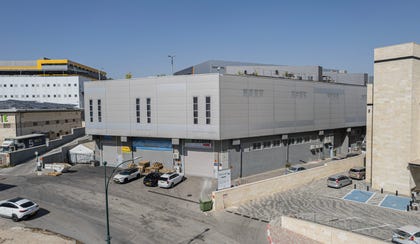
This unique international high-tech company manages its activities from its offices in Rinatya, adjacent to Tel Aviv, where a ground testing lab facilitates ongoing development and improvements. "The company is pursuing strategic partnerships and distribution channels," Dalman explains, adding proudly that RodRadar is backed by the Israel Innovation Authority and has thus far received nearly $1 million in grants for the first generation of its radar system.
The war that began on October 7 also impacted RodRadar, with a call-up draft resulting in a 20% reduction of its workforce—including the CEO and Global VP of Marketing and Sales. Despite this, customers and partners have continued to express their trust and maintain collaborations, largely due to the company's consistent, uncompromising performance.
Dalman and Gershon conclude: "We continue to enhance our detection and alert capabilities and are constantly adding unique features. RodRadar's solution and its success result in a steady influx of inquiries from leading customers and major companies in the industry, seeking commercial and technological partnerships." They also want to express their gratitude for the trust and contributions of the company's investors, including Brick & Mortar, a prominent North American construction venture capital fund, as well as investment bodies from leading U.S. companies like Haskell, Garney, HOLT CAT, and the Israeli Meir Group.
In cooperation with RodRadar