Since it was founded in 1912, the Technion-Israel Institute of Technology has contributed massively to every aspect of Israel's development. It has trained generations of first-rate scientists, engineers and architects who have consistently taken on leadership positions at the helm of Israeli industry. Moreover, through the years members of the Technion community have shined not only as highly respected scientists and educators, but also as pioneers in a wide variety of technological fields. Indeed, research conducted on the Technion's campus has led to innumerable breakthroughs, many of which have made a real impact on humanity.
Redefining relations with industry
The university's current management, under the leadership of Technion President Prof. Uri Sivan, is deeply committed to ensuring that the institution will continue to be a world-class innovation hub for the next 100 years as well. Since the world is constantly evolving and changing, it is necessary to not only keep up with the changes but to anticipate them. Realizing that the traditional roles held by academia and industry are in the midst of a major transformation, last year the Technion decided to appoint its first Executive Vice President for Innovation and Industry Relations: Prof. Lihi Zelnik-Manor.
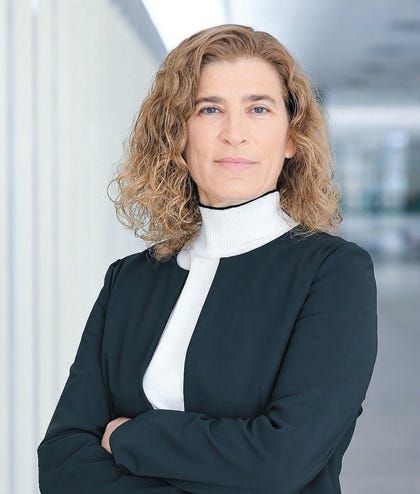
Prof. Zelnik-Manor is an expert on computer vision who previously served as Deputy Dean of the Viterbi Faculty of Electrical and Computer Engineering, as well as General Manager of the Alibaba R&D Center in Israel.
"The world is changing. Until recently, research was conducted almost exclusively by academia, while product development took place within industry. This isn't the case anymore," points out Prof. Zelnik-Manor. "The differences have been blurred. Today, companies do serious research and academics invent new products, establish start-ups and deal with product licensing."
As a result, the Technion has expanded its activities related to commercializing new technologies developed by its researchers. Moreover, the number of new start-ups founded by Technion faculty members and graduate students has tripled in just the last three years. The new role of Executive VP for Innovation and Industry Relations reflects these changes by strengthening the ties between academia and industry, since collaborations between the two are a significant force multiplier for research and development.
Prof. Zelnik-Manor will focus on further deepening collaborative research and commercializing the resulting innovations. She is currently in the midst of leading an intensive university-wide process which will result in a strategic long-term plan for implementing the Technion's vision of deepening its relationship with both local and global industry. These efforts aim to secure the Technion's leadership role on the world stage for the next several decades, and beyond.
Strategic AI research
As most people are aware, artificial intelligence is now pervasive: it has become the central driving force behind most innovations in practically every field, impacting our lives in innumerable ways. Here too the Technion is well ahead of the curve, having invested extensively in AI research and development since the technology was in its infancy. Consequently, for the past 15 years the Technion has consistently been ranked the #1 university in Europe for AI research, and among the top 15 in the world! Needless to say, it is also the leading university in Israel for AI.
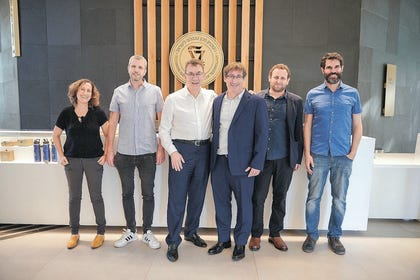
"The Technion identified early on that AI affects every aspect of life. The question is: how can we make the biggest impact?" asks Prof. Shai Shen-Orr of the Technion's Rappaport Faculty of Medicine and one of the university's most active proponents of AI research. He is also a co-director of Tech.AI, the Technion's Artificial Intelligence Hub, which coordinates all of the university's AI-related activities.
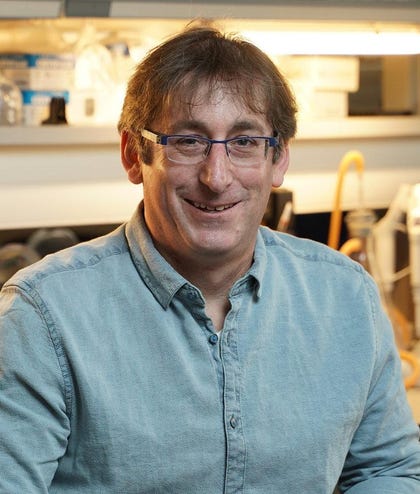
"The Technion's uniqueness comes from engaging the real world. When the Technion does something, the ultimate outcome is different than the average university. It comes from the 'engineering attitude' of not just seeing the long-term value of basic research, but also the need to impact humanity and improve it for the better," notes Shen-Orr.
Approximately 160 Technion faculty members engage in AI research throughout the campus. They can be found in nearly all of the university's departments. Established in 2020, Tech.AI is an umbrella organization dedicated to coordinating and advancing AI research and education within the Technion community, as well as encouraging multidisciplinary collaborations among researchers, including with partners from industry. All three of Tech.AI's co-directors are renowned AI experts who have contributed significantly to its development: Prof. Shie Mannor of the Viterbi Faculty of Electrical and Computing Engineering, Prof. Assaf Schuster of the Taub Faculty of Computer Science, and Prof. Shen-Orr of the Rappaport Faculty of Medicine. Their cutting-edge research has led to important breakthroughs and, in several cases, to the founding of several start-up companies.
Tech.AI is now taking its mission to the next level by defining eight high-priority research domains: BioMed, Generative & LLM, Robotics, Education, Advanced Manufacturing, Sustainability & Environmental, Smart Transportation and Energy. Each of these fields will have its own Executive Director tasked with supporting and optimizing advanced AI research in that particular area. The dedicated Tech.AI teams in each domain help researchers form multidisciplinary research groups and collaborate with outstanding partners in industry and academia.
Improving human health
Over 100 Technion faculty members focus on the use of artificial intelligence in life science and healthcare. As a result, Tech.AI's Bio-Med domain, headed by Prof. Shen-Orr and known as Tech.AI.Bio-Med, is particularly active and industrious. In addition to organizing conferences and academic events for its members, Tech.AI.Bio-Med initiates and nurtures collaborations with partners from the healthcare sector in Israel and around the world. Examples of research projects based on AI include initiatives to understand brain-gut interactions, predict drug responses, and design more efficient treatment processes for hospital settings, among others.
Since the Technion's Rappaport Faculty of Medicine has a very close relationship with the neighboring Rambam Health Care Campus, faculty members and medical professionals from the two institutions work together to develop AI applications with real world benefits. Rambam's large medical database is an excellent resource for healthcare research, and the medical center also conducts numerous clinical trials for innovations that use artificial intelligence.
Tech.AI.Bio-Med also works closely with one of the top pediatric medical centers in the U.S.: Cincinnati Children's Hospital Medical Center. They collaborate on joint research based on computational medicine in early childhood pediatrics and developmental biology, leveraging AI and Big Data for research and clinical care. The University of Toronto is another important North American partner; it is the largest AI healthcare program in the world and has selected the Technion as one of its few university partners.
In line with the Technion's strategy to strengthen ties with industry, Tech.AI in general, and Tech.AI.Bio-Med in particular, have prioritized partnerships with Israeli and international companies. The agreement that was signed last year between the Technion and the pharmaceutical giant Pfizer is a case in point. The strategic collaboration with Pfizer is expected to bring forward scientific breakthroughs at the interface between artificial intelligence and drug development.
As a technical university, the Technion is committed to seeing its basic research mature to applications in the real-world. The Zimin Institute for AI Solutions in Healthcare, a joint initiative of the Technion and the Zimin Foundation, was launched in 2022 to ensure that academic research reaches the real world. The idea is to help researchers at the Technion adapt their research at an early stage to the true needs of actual markets – with an eye towards the commercialization process. "If a faculty member has an idea that could have commercial value, our team chaperones them together with the Technion Technology Transfer Office to think early about the necessary components to make real-world impact and put the solutions in place. This ensures that they develop the best possible product to suit the market, and that their research affects peoples' lives as fast as possible," explains Prof. Shen-Orr.
Tech.AI is now scaling up its activities in other domains as well, with a special focus on fields which the Technion has identified as being strategically important, including sustainability, energy and robotics.
Looking ahead at the next 100 years, the Technion is poised to continue serving as a global leader in a large range of tech sectors, and to help improve humanity thanks to the numerous cutting-edge innovations emerging from the labs on the beautiful Mt. Carmel campus.
For more information about the Technion: www.technion.ac.il/en, and about Tech.AI: tech-ai.technion.ac.il >>
Partnered with the Technion