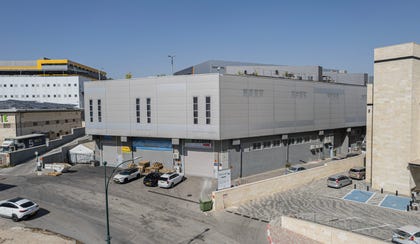
Plasan Sasa is the most prominent player in Israel in the field of armored fighting vehicle (AFV) protection. The company was established in 1985 as a cooperative association in Kibbutz Sasa for the production of rigid plastic products. It did not take long for the company to realize that its original mission had to be changed. After revising its business model, the company became a manufacturer of products in the field of ballistic protection. In the late 1980s, it produced bomb suits for the IDF, and after the first intifada broke out, the company changed its focus to armored vehicles. In the 1990s, it developed protection for the IDF Storm (Sufa) all-terrain vehicles, and toward the end of the millennium, it also began to protect the Hummer vehicles the army operated in southern Lebanon, which were exposed to the threat of improvised roadside bombs.

The high-tech of metal
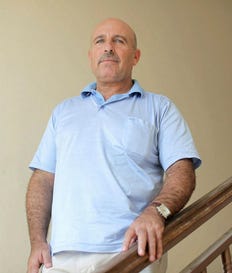
In the last decade, the company has focused on the production of advanced protection solutions for vehicles and armored personnel carriers (APCs). It made a step forward by beginning to assemble vehicles itself and marketing them in various countries in the Far East, Africa, Asia, and Europe. “We quickly understood that to sell a great deal of armor, it is necessary to sell many square meters of it. And the way to do it is to place it on vehicles,” says Dani Ziv, Executive VP and founder of the company. "For the vehicle manufacturers to want to buy the armor from us, it was important that we add value already from the design stage, so that they integrate us into their process from the beginning. Proper design of the protected vehicle prevents many problems later and provides an optimal response to the customer's needs. This is how Plasan became the engineering arm, at least partially, of its customers. It's a completely different world, where we must also act as vehicle people, and in a much more thorough way than we're used to, understand things that a company dealing only with protection doesn’t understand."
This need caused Plasan to conduct a broad study of the field and deploy work methods that differ from those of other companies. "We’re the only company in the world that specializes in delivering a vehicle in a flat box," boasts Ziv. "It can be said that we have entered domains that I call the ‘high-tech of metal.’ Metal is indeed the axis around which our industry revolves, but there’s growth and advanced technological capabilities elsewhere, from the use of composite materials to high-level simulation. The field of composite materials in the world of defense is attractive and challenging. It has a certain charm because it differs from the civilian worlds in the way it is handled and in the high demands placed on it. At the same time, it is a small field that once you get into it and you learn the rules and know how to operate in it, you can grow in it both in depth and in breadth. When it comes to simulation, today we not only design vehicles for our customers but also carry out simulations of the strength and durability of the vehicle, and of course of the armor. Predicting the events that our vehicles are supposed to handle saves a lot of money in the development processes (ballistic and blast tests)."

The transition from routine security to the world of maneuvering
Most of Plasan Sasa customers are abroad, and its operation in the Israeli market is relatively small. Most company customers are spread globally over five continents. The company has three business units: protection and survivability, vehicles, and a relatively new unit dealing with maneuvering robotics. The three units provide solutions to a market that is ever-changing and requires Plasan to keep on top of it. "Since the Russians invaded Crimea, our focus has returned to the threats of symmetric war," says Ziv. In the wars in Afghanistan and Iraq, the orientation was toward an asymmetric war, which led to protection against roadside bombs, mines, and other threats that characterize the fighting of terrorist organizations. Today, as can be seen in the Russia-Ukraine war, we must once again deal with the threats of a regular state army. These are often more difficult to deal with than asymmetric threats. In the asymmetric threat, the biggest risk is surprise. Combatants don’t know exactly what they are dealing with. Against a conventional army, the threats are clearer, and the force can be built in a more orderly manner, even if the threat itself is more difficult to handle."
"In 2010, the last year in which the American army received large equipment budgets for requisitions in the field in which Plasan deals, we realized that APCs, in their various forms, are the future in land warfare. After the Afghanistan and Iraq wars, the market made a transition from track-based to wheel-based vehicles. We adapted to it by creating a complete protection package suited to APCs in their various forms. The most prominent of these is the 8´8 APC that dominates the market and is purchased by many countries worldwide: the US, South Korea, Japan, and European countries. The family of products we have created includes ballistic protection solutions at the highest level available, advanced mine solutions that include, among others, energy-absorbing seats and protection against RPGs. Plasan is currently part of the largest protection programs in the world in the field of AFVs. Before 2010 we were the company that made the most armored cabins for trucks to provide mine-resistant solutions. Today our focus is elsewhere."

For example?
We are the first to provide a high level of ballistic protection against cannons with a diameter of 25-30 mm. Past solutions provided protection only up to a diameter of 14.5 mm. 30 mm cannons are currently used by the armies of Russia, China, and North Korea, so there is a need to deal with them. The problem is that this requires a relatively high weight-bearing capacity, more than what wheeled vehicles can usually handle. It is necessary to develop a lighter armor that provides a very high level of protection without imposing an impossible burden on the APC. It was not an easy challenge, and Plasan was the first in the world to meet it. Such protection has already surpassed that of 8´8 APCs in Europe. The innovation we bring to the market and the level of performance is unique and unequaled. Our biggest competitors are the largest defense companies in the world, and surprisingly, they are also our customers, who purchase products from us because quite often whatever we do suits them better than the products they themselves develop."
Electric energy on the battlefield
Along with the advanced protection solutions, Plasan is also active in the field of maneuvering, whether vehicles are driven by a person, led remotely, or moving autonomously. The vehicles produced by the company come ready for remote control systems. There is a growing demand for these vehicles from various armies.
"We entered the world of maneuvering robotics with solutions that provide customers with a great degree of sophistication," says Ziv. "You don't necessarily have to send soldiers everywhere on the contemporary battlefield. The vehicle can be sent on a mission, whether it's reconnaissance or attack. The weapons systems are also remotely controlled. The goal we faced was to bring energy to the battlefield and preserve the lives of the soldiers. On the modern battlefield, a lot of electrical energy is being consumed, but armies are not structured to bring readily available electricity there, in the quantities that are required for the various systems. According to our concept, mobility on the future battlefield must be much more sophisticated and adapted to the current era, which requires a great deal of energy. Today, to survive you must have a low signature, which means using less noisy and hot diesel engines and more quiet electric motors. We’re working on solutions, such as ATeMM (All-Terrain Electric Mission Module), that make this possible. Another great advantage of the ATeMM is its ability to turn any existing 4´4 vehicle into a hybrid-electric 6´6 or 8´8 vehicle. This is easily achieved by attaching it to the vehicle with three connection points rather than one like a conventional passive trailer. The broad capabilities of ATeMM provide a big advantage that shortens the logistics tail and reduces costs and personnel."
Another development of Plasan in the automotive field was recently introduced at a large military exhibition in Paris. There the company unveiled the Wilder, an armored vehicle weighing 4.5 tons, boasting off-road capabilities similar to the ATVs popular today with armies worldwide – but unlike them, the Plasan vehicle is armored. "In our field, we look at every vehicle from the point of view of two parameters: its ability to survive and its ability to get there," explains Ziv. "Survivability and mobility are the two most essential features for a vehicle, and this is what we keep in mind when we develop our products, also taking into account related parameters such as weight and price. With the end of the wars in Afghanistan and Iraq, the importance of protection was slightly forgotten in the world, and mobility became more important. We realized that it is possible not to compromise on either and create a successful solution that meets both demands. This is how the Wilder was born, a little brother to our Sandcat family, which has been sold worldwide for over 15 years. Recently, the IDF also procured the Tigris vehicle from this family, which provides the army with an optimal solution for tasks like the ones it carries out in Judea and Samaria.”
"Another field that Plasan has entered in recent years is that of maritime defense. With a creative solution that Plasan brought to the market, it was able to prevail over large and veteran companies in the field, and won several highly respected projects in maritime protection, including the protection of British Royal Navy and Australian Navy ships."
Is there a product that Plasan defines as its flagship product?
"Not really, because we are a project company. We don’t have off-the-shelf products. Each project is individually made to order, and even if we sold a Sandcat vehicle and then received another order for one, it doesn’t mean that we’ll be selling the exact same vehicle."
What are the company’s plans for the future?
"We emerged from two difficult years of COVID that were very challenging for us because customers froze purchases. In 2022 we recovered, and we see 2023 as a year of significant growth. The period is very good for our businesses, a time in which the military market is growing and we have a lot to offer to end users, vehicle manufacturers, and large integrators. The three business units of the company have growth plans, each with its own strategy because they are different from each other. In robotics, for example, we try to create a variety of innovative solutions for our various customers. Currently we are on the teams of quite a few large projects all over the world – in the US, Europe, and Australia. We’re part of the overall effort in these projects, from the development stage, through the platform approval and testing process, to reaching the final product, after successfully passing all the landmarks along the way. We regard the decision of large organizations to work with us as a declaration of trust, a stamp of approval, an endorsement that is most significant for the future of the company. The company has a great reputation, and wherever we go in the world, doors open. In the past, there were quite a few companies worldwide providing protection, but their number has decreased dramatically in recent years, which has actually made us the largest and best-known player in the field. Our clients understand the added value that Plasan brings to every project, and appreciate the fact that we are part of most of the leading programs in the world."
In collaboration with Plasan Sasa